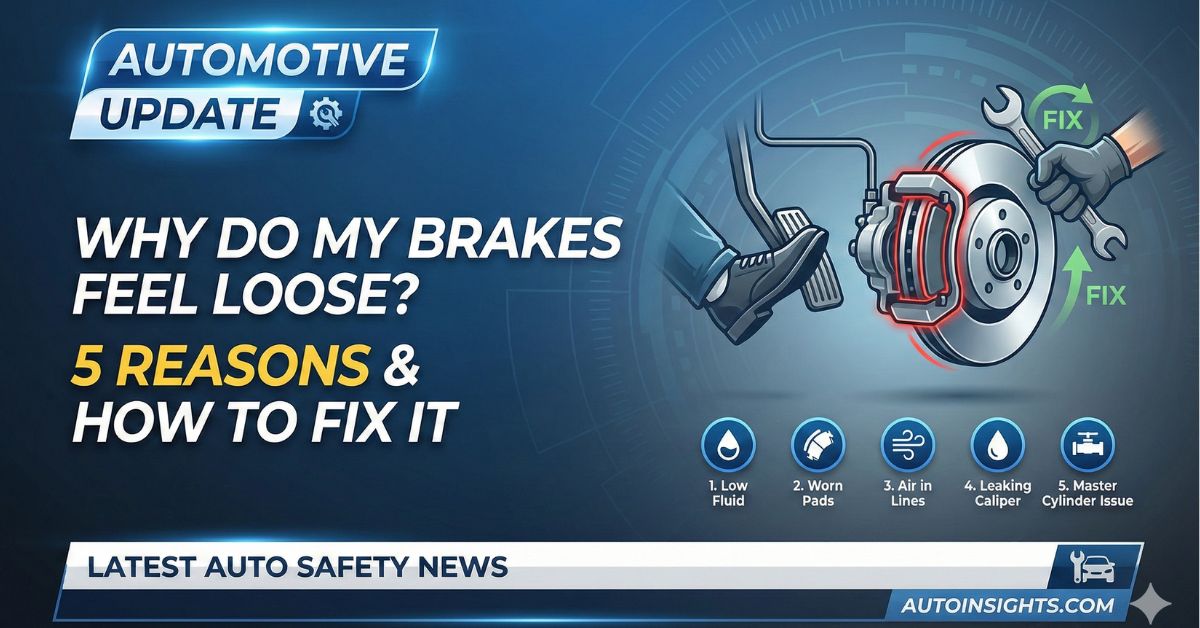
Imagine you are driving through busy city traffic in India. You see a speed breaker or a vehicle stopping suddenly ahead, so you press the brake pedal. But instead of a firm stop, the pedal feels soft, “mushy,” or goes all the way to the floor with little resistance. This terrifying feeling is known as “loose brakes” or a “spongy brake pedal.”
It is one of the most dangerous car problems you can face. In a country where road conditions are unpredictable, your brakes need to be sharp and responsive.
This guide explains exactly why your brakes feel loose, the specific causes relevant to Indian driving conditions, and the immediate steps you must take to fix it.
What Does “Loose Brakes” Actually Mean?
When mechanics talk about loose or spongy brakes, they are referring to the hydraulic pressure in your braking system.
Normally, when you press the pedal, it pushes a special fluid through tubes (brake lines) to clamp the brake pads onto your wheels. This should feel firm and offer resistance. If the pedal feels light, sinks to the mat, or you have to “pump” it multiple times to stop, your hydraulic system is failing. It means the force from your foot is not reaching the wheels effectively.
Top Reasons Why Brakes Feel Loose
1. Air in the Brake Lines (Most Common Cause)
The braking system relies on fluid because liquids cannot be compressed—they transfer force perfectly. Air, however, can be compressed.
- What happens: If air bubbles get into your brake tubes, pressing the pedal just squishes the air instead of pushing the brakes.
- Why it happens: This often happens after a recent repair, or if the brake fluid level dropped too low, allowing air to enter the reservoir.
2. Old or Moisture-Contaminated Brake Fluid
This is a huge factor in India, especially during and after the monsoon season. Brake fluid is “hygroscopic,” which means it absorbs moisture from the air over time.
- The Science: Water boils at a much lower temperature than brake fluid. In heavy Indian stop-and-go traffic, your brakes get very hot. This heat can boil the water trapped in your fluid, creating steam (gas). Since gas compresses like air, your pedal suddenly feels loose.
3. Brake Fluid Leaks
If there is a hole in the system, pressure escapes.
- Where to check: Look under your car after it has been parked. If you see a puddle of clear or yellowish oily liquid near the wheels, you likely have a leak. Leaks can occur in the rubber hoses (which can crack due to heat and age) or the metal lines (which can rust).
4. Worn Out Master Cylinder
Think of the master cylinder as the heart of your car’s braking system. It pumps the fluid to the wheels.
- The Issue: Inside this cylinder are rubber seals. Over years of use, these seals wear out. If they fail, the fluid leaks internally properly instead of being pushed to the brakes. You might find the pedal sinks slowly to the floor even if you hold your foot steady on it.
5. Worn Brake Pads or Shoes
While less common as a direct cause for “sponginess,” extremely worn brake pads mean the caliper pistons have to travel further to touch the disc. This excessive travel can sometimes make the pedal feel lower or looser than normal.
Why This Matters for Indian Drivers
Driving with loose brakes is risky anywhere, but in India, it is critical due to:
- Unpredictable Traffic: You often need to emergency brake for stray animals, jaywalkers, or vehicles cutting lanes. A loose pedal increases your “stopping distance”—the extra few meters could be the difference between a safe stop and a collision.
- Road Conditions: Potholes and speed bumps require frequent speed adjustments. If your brakes fade (lose power) due to heat or fluid issues, you lose control.
Immediate Steps: What to Do If Your Brakes Feel Loose
If you notice this feeling while driving:
- Do Not Panic: Keep your eyes on the road.
- Pump the Pedal: Rapidly press and release the brake pedal 3–4 times. This can sometimes build up enough temporary pressure to stop the car.
- Use the Handbrake: If the foot brake fails completely, slowly pull the handbrake (emergency brake) to slow down. Do not yank it hard at high speed, or you might skid.
- Shift Down: If you are driving a manual car, shift to a lower gear to use the engine’s resistance to slow the vehicle.
- Stop Driving: Once you stop safely, do not drive the car again. Tow it to a mechanic.
How Is It Fixed?
Mechanics use a process called “Bleeding the Brakes.” This involves flushing out the old fluid and air bubbles and replacing it with fresh, high-quality brake fluid (usually DOT 3 or DOT 4).
- Repair Time: Usually 1–2 hours.
- Other Repairs: If the master cylinder or brake lines are leaking, those specific parts will need replacement.
Frequently Asked Questions (FAQs)
Q: Can I drive my car to the mechanic if the brakes feel spongy?
No. It is very unsafe. A spongy brake pedal can turn into total brake failure without warning. It is safer to tow the vehicle or call a mobile mechanic.
Q: How often should I change my brake fluid?
In India, it is recommended to change brake fluid every 2 years or 40,000 km. If you live in a very humid coastal area (like Mumbai or Chennai), you might need to check it more often.
Q: Why do my brakes feel loose only in the morning?
This could be a sign of a small air leak that allows air to settle in the lines overnight, or a failing master cylinder seal that loses pressure when the car sits idle.
Q: Is it expensive to fix loose brakes?
Not always. If the problem is just air in the lines, “bleeding” the brakes is a standard and affordable service. However, if the master cylinder needs replacement, the cost will be higher.
Q: Does rain affect brake tightness?
Indirectly, yes. If your brake components are not sealed well, rainwater can contaminate the fluid. Also, wet brake discs have less friction initially, but this feels like “slipping,” not necessarily a soft pedal.