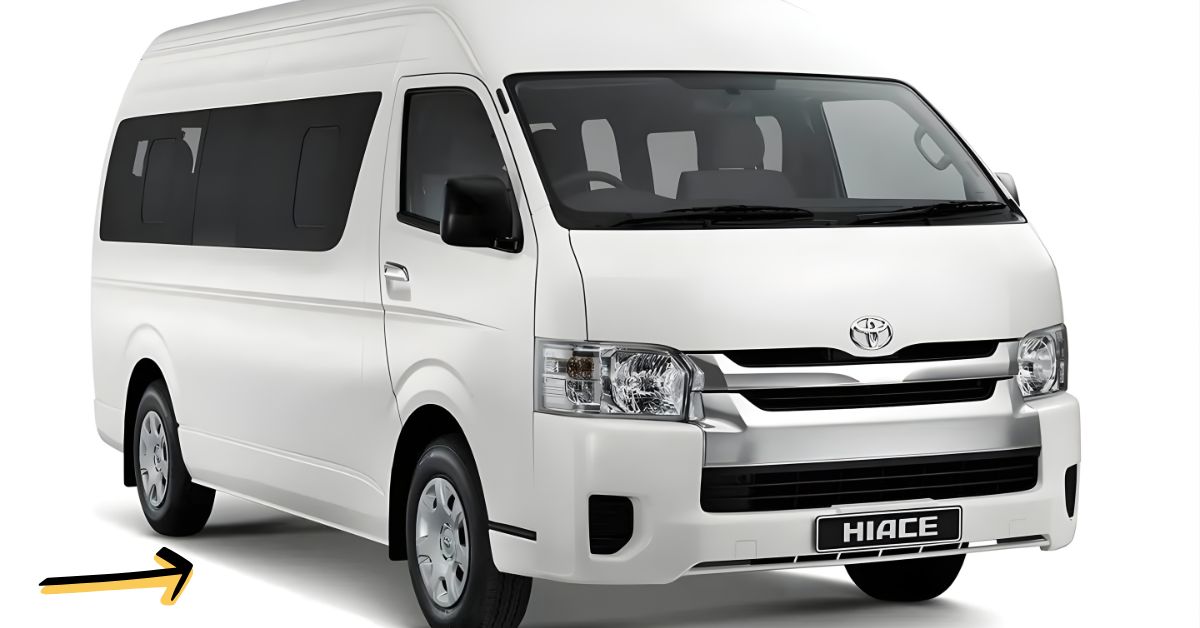
The Toyota HiAce India Price 2025 is one of the most intriguing and complex pricing exercises in the Indian automotive landscape. The HiAce is not a conventional passenger vehicle; it is a global icon of commercial and passenger transport, revered for its “bulletproof” reliability and massive passenger capacity. Its entry into the Indian market, although occurring in a limited, previous-generation form in the past, is primarily aimed at niche premium customers, specifically the luxury hospitality sector, high-end schools, and corporate fleet operators who demand a dependable, high-capacity vehicle with the absolute assurance of Toyota engineering. Consequently, the final price is inflated not just by its advanced specifications, but heavily by its imported status, positioning it far above domestic rivals like the Force Traveller and the Tata Winger. This comprehensive market analysis dissects the specialized diesel powertrain, details the vast seating capacity and core features, and provides a realistic breakdown of the highly speculative $2025$ price and on-road cost in India.
Engine Specifications and Heavy-Duty Performance
The performance and reliability of the Toyota HiAce India Price 2025 subject are anchored by Toyota’s globally renowned diesel engine technology, designed for sustained high mileage and heavy-duty operation.
The 2.8L GD-FTV Diesel Engine
The HiAce sold in international markets, and the version most likely to be brought into India if localized, is powered by the durable $2.8\text{-litre}$ 1GD-FTV four-cylinder turbo-diesel engine. This engine is part of the same GD family that powers the ubiquitous Toyota Fortuner and Innova Crysta, albeit tuned for the specific requirements of a large passenger van—prioritizing low-end torque and longevity over peak speed. In its common configuration for the HiAce, this unit delivers approximately $150\text{ PS}$ to $175\text{ PS}$ of power and a massive $300\text{ Nm}$ to $450\text{ Nm}$ of torque. The higher torque figure is usually available when paired with the 6-speed automatic transmission, which is the preferred choice for fleet operators in traffic-heavy metros, offering smoother operation and reduced driver fatigue. The engine features a variable nozzle turbocharger (VNT) and a common rail direct injection fuel system, ensuring excellent fuel efficiency for a vehicle of its substantial size and weight.
Drive Configuration and Chassis
The HiAce utilizes a classic, robust commercial vehicle layout: Rear-Wheel Drive (RWD). This configuration is essential for a vehicle designed to haul heavy loads and many passengers, as the weight over the rear axle enhances traction. The suspension setup, tuned for durability, typically features a MacPherson strut arrangement at the front for improved steering control, and heavy-duty leaf springs with tube shocks at the rear. While leaf springs are utilitarian and capable of handling significant payload (often exceeding one metric ton), the engineering on the latest generation has been refined to offer a far more car-like ride comfort than its predecessors, crucial for transporting paying passengers on long-distance routes.
Variant Analysis and Key Vehicle Specifications
The Toyota HiAce India Price 2025 model is primarily sold globally in configurations that prioritize maximum seating capacity and cargo flexibility, positioning it uniquely against smaller MPVs and larger buses.
Expected Variants and Capacity
Given the specialized market targeting high-end tourism and corporate transport, the HiAce would likely be offered in two key configurations in India:
- Commuter: The high-capacity variant, designed to seat 13 to 15 passengers (depending on local regulations), often featuring a standard roof and bench-style seating. This is the volume variant for large commercial fleets.
- Deluxe/Tourism: A slightly more premium variant, potentially seating 10 to 12 passengers with a high roof and offering more comfortable semi-reclining seats or optional captain seating in the middle row.
The vehicle’s dimensions are vast: the long-wheelbase version measures approximately $5.915\text{ metres}$ in length and $2.28\text{ metres}$ in height. This generous size is the primary specialization of the HiAce, providing superior headroom and legroom for all passengers across its multiple rows, ensuring comfort even on arduous interstate journeys.
Core Interior and Safety Features
While the HiAce historically maintains a utilitarian interior to maximize durability and minimize maintenance costs, the latest generation does include essential features for passenger comfort and safety:
Climate Control: Dual-zone air conditioning with dedicated AC vents for every passenger row, ensuring effective cooling throughout the massive cabin—a necessity in the Indian climate.
Driver Assistance: Standard features typically include dual front airbags, Anti-lock Braking System (ABS) with EBD, Vehicle Stability Control (VSC), and rear parking sensors or a rear view camera. Higher-end international specifications include Toyota Safety Sense, which packages features like Pre-Collision Safety System and Lane Departure Alert, and this advanced suite is often included in the premium CBU imports.
Convenience: A basic touchscreen infotainment system with wireless connectivity, power windows, and a dash-mounted gear selector (for automatic variants) define the cockpit experience.
Mileage Test and Running Costs Analysis
The fuel efficiency of the Toyota HiAce India Price 2025 subject must be assessed in the context of its heavy-duty usage and size. Achieving the mileage of a compact SUV is impossible, but the efficiency of the 2.8L GD-FTV engine is commendable for a vehicle of this scale.
Real-World Efficiency and Engine Tuning
Official international figures suggest the HiAce achieves efficiency in the range of $9.5\text{ kmpl}$ to $11\text{ kmpl}$ in mixed conditions. For Indian fleet operators, this translates to a reliable real-world economy of approximately $8\text{ kmpl}$ to $10\text{ kmpl}$ under heavy loads and constant air conditioning use. While this figure may seem low compared to smaller family cars, it is highly competitive and reliable within the commercial van segment. The long-term benefit for fleet owners is the engine’s proven durability and low maintenance requirement over hundreds of thousands of kilometres, a signature of the GD engine family, significantly reducing the Total Cost of Ownership (TCO) compared to less robust rivals.
Read More : Tata Nexon
Expected Price in India and On-Road Cost Breakdown
The pricing of the Toyota HiAce India Price 2025 model is highly contentious, primarily because Toyota initially tested the market via the expensive CBU (Completely Built Unit) import route for limited batches, resulting in exorbitant pricing that limited its appeal exclusively to the most premium fleet operators.
Estimated Ex-Showroom Price Range
Based on the market whispers and the last known CBU pricing (around $\text{₹}55\text{ Lakh$), the $2025$ price is subject to two scenarios:
- Limited Import (CBU): If the HiAce is imported directly, the Ex-Showroom price for the Commuter variant would start around $\text{₹}58\text{ Lakh}$ to $\text{₹}65\text{ Lakh}$, reflecting the high import duties on fully built vehicles.
- Aggressive Localization (SKD/CKD): Should Toyota decide to assemble the HiAce in India (CKD/SKD) to compete more aggressively with vehicles in the premium end of the mid-size SUV segment, market analysts speculate the Ex-Showroom price could drop dramatically, potentially starting around $\text{₹}35\text{ Lakh}$ to $\text{₹}42\text{ Lakh}$.
On-Road Cost Estimation
For the current context, using the more realistic $\text{₹}35\text{ Lakh$ to $\text{₹}42\text{ Lakh}$ Ex-Showroom figure for a speculated localized launch, the final On-Road Price in India would include RTO registration charges (which vary wildly by state and vehicle segment), mandatory insurance, and dealer handling charges.
A simplified On-Road Price breakdown in major metros (like Delhi or Mumbai) for a $\text{₹}38\text{ Lakh}$ Ex-Showroom variant would look like this:
Ex-Showroom Price: $\text{₹}38,00,000$
RTO/Registration (Commercial/Taxi Permit): $\text{₹}3,80,000$ to $\text{₹}5,70,000$ (approx. $10\%$ to $15\%$ for commercial vehicles)
Insurance (1st Year Comprehensive): $\text{₹}1,50,000$ to $\text{₹}2,00,000$
Total Estimated On-Road Price: $\text{₹}43\text{ Lakh}$ to $\text{₹}46\text{ Lakh}$
The Toyota HiAce India Price 2025 confirms that the vehicle occupies a high-value niche. Its price is justified not by luxury features, but by its core specialization in uncompromising reliability, superior passenger capacity, and proven commercial durability, attributes that are essential for the high-stakes hospitality and corporate transport sectors in India.
The market for high-capacity, luxury passenger vehicles in India—the space occupied by the Toyota HiAce and its direct competitors—is rapidly evolving from a niche commercial segment into a key indicator of personal and corporate affluence. These vehicles, which range from full-size vans to ultra-luxury MPVs, specialize in delivering supreme comfort, advanced safety, and massive capacity for high-end hotel fleets, corporate shuttles, and wealthy private families. The $2026$ segment is defined by a strong emphasis on electrification and sophisticated interior technology, positioning the price points for these specialized people movers well into the multi-crore bracket.
The Ultra-Luxury Flagships: Mercedes-Benz V-Class and Lexus LM
At the absolute pinnacle of this segment are the imported, ultra-luxury offerings that prioritize bespoke comfort and sensory isolation over pure utility.
Mercedes-Benz V-Class: The Executive Shuttle
The Mercedes-Benz V-Class, and its successor models like the EQV (the electric variant), define the segment of executive mobility in India. The V-Class is not merely a van; it is a premium saloon that happens to seat six or seven people. Its specialization lies in its unparalleled cabin refinement, advanced active safety systems, and the prestige of the Mercedes-Benz badge. Features include reclining, ventilated, and heated captain seats in the second row, high-quality Nappa leather upholstery, a sophisticated MBUX infotainment system, and a supremely comfortable air suspension system that glides over road imperfections. The pricing reflects this exclusive positioning, with the V-Class (or its equivalent new generation) carrying an expected On-Road Price starting around 1$\text{₹}1.10\text{ Crore}$ to 2$\text{₹}1.40\text{ Crore}$ for higher-spec variants, catering exclusively to the corporate C-suite and five-star hospitality sector.3
Lexus LM: The Japanese First-Class Suite
The Lexus LM (Luxury Mover) represents an even higher level of specialization, offering a truly first-class, chauffeur-driven experience. The LM is designed as a direct competitor to private jets and bespoke rail carriages. Its defining feature is the four-seat configuration in the top variant, which includes a fixed partition separating the driver from the passenger cabin, a massive $48\text{-inch}$ display screen, a dedicated refrigerator, and airline-style reclining ottoman seats that offer full massage functionality. The LM’s specialization is acoustic isolation and serenity, utilizing active noise cancellation and specialized glass to create a near-silent environment. The price is commensurate with this level of luxury, with the Lexus LM carrying an On-Road Price exceeding 4$\text{₹}2.15\text{ Crore}$, making it the most expensive, non-bespoke MPV currently available in the country.5
The High-Capacity Contenders: Kia Carnival and Toyota HiAce
The space below the ultra-luxury models is dominated by specialized vehicles that balance capacity and premium features, making them highly relevant for discerning families and tourism operators.
Kia Carnival: The Feature-Rich Family MPV
The Kia Carnival (known in some global markets as the Kia Sedona) provides a formidable challenge to the HiAce, specializing in a powerful blend of car-like driving dynamics, high-tech features, and flexible seating. Unlike the HiAce’s rugged, body-on-frame, Rear-Wheel Drive (RWD) architecture, the Carnival uses a Front-Wheel Drive (FWD) monocoque platform, offering superior handling, greater stability at speed, and a more compliant ride quality.6 The latest generation is packed with technology, including Level 2 ADAS features, massive 7$12.3\text{-inch}$ dual digital displays, and multi-zone automatic climate control.8 While the Carnival offers exceptional space and luxury features, its maximum seating capacity (7 to 8 people) is lower than the HiAce’s 14-seater configuration.9 The Kia Carnival’s expected On-Road Price for its highest Limousine Plus variants is around $\text{₹}40\text{ Lakh}$ to $\text{₹}45\text{ Lakh}$, positioning it as the premium choice for affluent families rather than high-density fleets.
Toyota HiAce: Uncompromising Durability and Capacity
The Toyota HiAce occupies the crucial segment of high-capacity, commercial-grade passenger transport. Its specialization is its unmatched durability, massive 14-to-15 seater capacity, and the reliability of its $2.8\text{-litre}$ turbo-diesel engine. It is engineered to perform for hundreds of thousands of kilometers under harsh conditions, a necessary specialization for the tourism and fleet industry. Its Rear-Wheel Drive (RWD) configuration and heavy-duty leaf spring suspension are mechanical decisions prioritizing payload and longevity over high-speed cornering finesse.10 As detailed previously, the estimated On-Road Price in India for a localized version starts around $\text{₹}43\text{ Lakh}$ to $\text{₹}46\text{ Lakh}$, a high cost justified by its low Total Cost of Ownership (TCO) over a lifespan that far exceeds its rivals.
The Future Frontier: Electrification and High-Tech Utility
The $2026$ segment is also anticipating the arrival of specialized electric and hybrid models, signaling the future direction of large passenger transport.
The MG M9 and Electric MPV Segment
The MG M9, a highly anticipated all-electric premium MPV, has been showcased and is expected to enter the market soon.11 This vehicle is set to specialize in electric efficiency and high-tech utility, offering a potential range that could exceed $450\text{ km}$ on a single charge. As an EV, it offers silent, smooth operation, which is highly desirable for luxury transfers and corporate use. The MG M9 will leverage the brand’s commitment to technology, featuring large digital displays and ADAS functionality, positioning itself competitively in the $\text{₹}55\text{ Lakh}$ to $\text{₹}70\text{ Lakh}$ bracket.
The Volvo Camper Van Rumor
The highly specialized and much-rumored Volvo 2026 Camper Van represents the ultimate niche luxury proposition: a vehicle designed for high-end adventure and long-term habitation. Rumors suggest this vehicle would utilize an electric or hybrid powertrain and feature a highly modular, luxurious interior complete with a kitchenette and sleeping suite, all wrapped in Volvo’s minimalist Scandinavian design.12 This is a specialization in lifestyle luxury and sustainable exploration, carrying a massive estimated price tag of $\text{₹}1\text{ Crore}$ to $\text{₹}1.5\text{ Crore}$, demonstrating the extreme diversification of the high-end people-mover market.