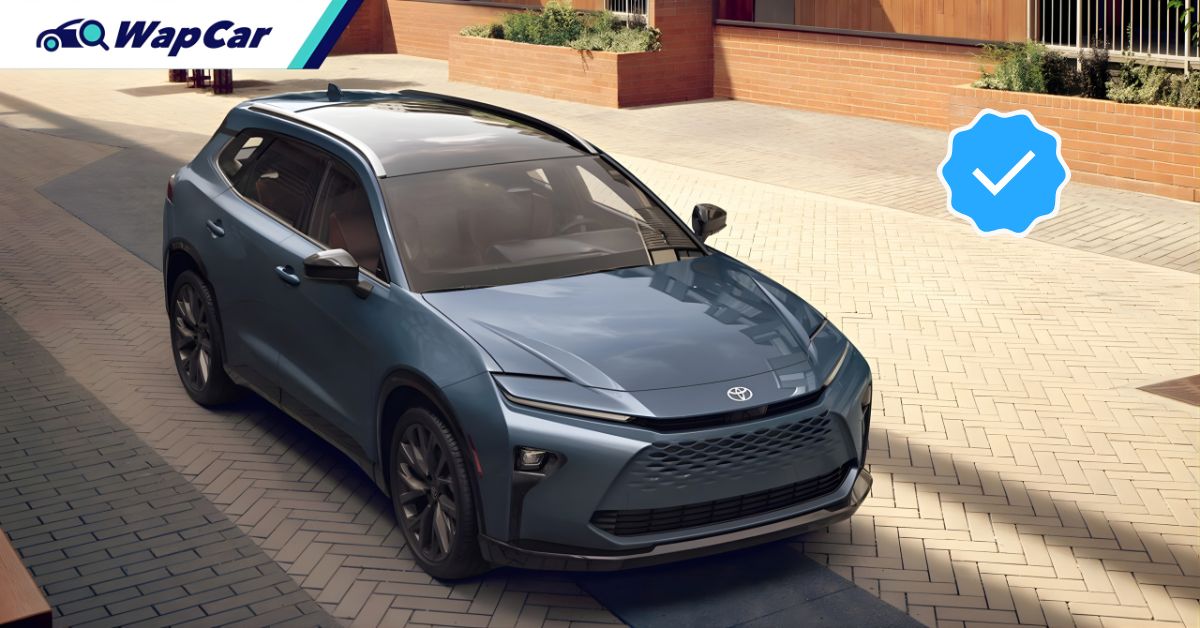
The Toyota Harrier 2025 Review is an exclusive market analysis of a vehicle that embodies Toyota’s global shift towards refined, coupe-styled SUVs and advanced strong hybrid powertrains. For the Indian consumer, the arrival of the Harrier—a name synonymous with premium positioning in Asian markets—would mark the introduction of a genuine, high-tech alternative to conventional diesel-focused full-size SUVs. The Harrier is engineered to offer a smooth, serene driving experience and exceptional fuel economy, marrying the reliability of Toyota’s TNGA platform with sophisticated interior amenities and a distinctively elegant aesthetic. Since the Harrier is currently unavailable through official channels in India, this review evaluates its global specifications and specialized features, assessing its potential competitive impact and determining the substantial estimated price for its inevitable entry into the premium SUV segment.
Engine Specs and Powertrain: The Strong Hybrid Specialization
The foundational excellence of the Toyota Harrier 2025 Review subject lies in its commitment to strong hybrid technology, a specialization that prioritizes silent operation, reliability, and superior fuel economy.
The 2.5L Dynamic Force Hybrid System
The Harrier is primarily powered by the efficient $2.5\text{-litre}$ Dynamic Force four-cylinder petrol engine paired with a powerful electric motor and a robust hybrid battery system. This combination creates a self-charging strong hybrid setup that generates a combined system output of approximately $215\text{ horsepower}$ and $221\text{ Newton-metres}$ of torque. The high-efficiency engine is designed to operate primarily on the Atkinson cycle, maximizing thermal efficiency, while the electric motor provides instantaneous torque fill during acceleration and operates the vehicle exclusively at low speeds.
The system utilizes an Electronically Controlled Continuously Variable Transmission (E-CVT), which is meticulously tuned for seamless, refined power delivery. Unlike traditional automatic transmissions, the E-CVT ensures that acceleration is linear and smooth, contributing significantly to the Harrier’s luxury-oriented ride quality. While the overall system output is not designed for blistering performance, the instant torque from the electric motor allows the Harrier to achieve a brisk $0\text{ to } 100\text{ km/h}$ time of under $8\text{ seconds}$, which is more than sufficient for confident highway overtaking and responsive city maneuvering.
Drive System and Structural Rigidity
The Harrier is built upon the Toyota New Global Architecture (TNGA-K) platform, which is also shared with global models like the Camry and RAV4. This monocoque structure provides inherent stability, a low center of gravity, and high structural rigidity, significantly enhancing safety and driving dynamics. The vehicle is often offered globally with a choice between a Front-Wheel Drive (FWD) layout, which maximizes efficiency, and an Electronic All-Wheel Drive (E-Four) system, which utilizes a dedicated electric motor on the rear axle to provide on-demand traction without the mechanical complexity of a traditional 4×4 system. This E-Four specialization ensures dependable grip on slippery roads while maintaining the high efficiency of the hybrid setup.
Features and Cabin Technology: Electrochromic Luxury and Digital Integration
The interior of the Toyota Harrier 2025 Review subject is a clear statement of its premium positioning, utilizing advanced digital technology and unique luxury appointments rarely seen in its segment.
The Panoramic Roof and Digital Mirror
A signature feature that defines the Harrier’s luxury specialization is the Electrochromic Panoramic Sunroof. This full-length glass roof can instantly switch from being transparent to opaque at the touch of a button, utilizing electrochromic technology to modulate light and heat entry into the cabin without the need for a physical sunshade. This high-tech feature elevates the cabin ambiance and passenger comfort. Complementing this is the Digital Inside Rear View Mirror (IRVM), which uses a high-definition camera mounted at the rear of the vehicle to provide an unobstructed view of the road behind, regardless of how high the rear passengers’ heads or luggage are stacked. This ensures superior safety and visibility compared to conventional mirrors.
Infotainment and Driver Interface
The driver cockpit is highly advanced, typically featuring a large $12.3\text{-inch}$ touchscreen infotainment system that supports seamless smartphone integration and cloud-based navigation. The instrument cluster utilizes a combination of a digital driver’s display and analog gauges, providing a clean, user-friendly interface. Comfort features are comprehensive, including power-adjustable and ventilated front seats, a highly effective dual-zone automatic climate control system, and a premium JBL sound system on higher variants, ensuring a comfortable and connected journey for all five occupants.
Mileage, Safety, and Ride Quality
The overall value proposition of the Toyota Harrier 2025 Review subject is cemented by its class-leading efficiency and commitment to structural safety.
Mileage Test and Efficiency
The fuel efficiency of the $2.5\text{L}$ strong hybrid system is exceptional. Global test cycles confirm an efficiency rating around $21\text{ kmpl}$ to $22\text{ kmpl}$. In demanding real-world Indian conditions, where the engine will be working harder, the Harrier is expected to consistently return an impressive mileage of $16\text{ kmpl}$ to $19\text{ kmpl}$ in mixed highway and city driving. This efficiency is a massive financial specialization, offering dramatically lower running costs compared to conventional petrol and even many diesel SUVs of comparable size.
Toyota Safety Sense and Structural Integrity
Safety is guaranteed by the TNGA-K platform’s high structural rigidity and the inclusion of Toyota Safety Sense (TSS) 3.0, a comprehensive Advanced Driver Assistance Systems (ADAS) suite. TSS 3.0 includes features such as Dynamic Radar Cruise Control (DRCC), Lane Tracing Assist (LTA), Pre-Collision System (PCS) with pedestrian and cyclist detection, and Automatic High Beams (AHB). The vehicle is also equipped with seven SRS airbags as standard, ensuring a high level of passive protection that is a hallmark of Toyota engineering.
Ride Comfort
The ride quality of the Harrier is tuned for comfort and composure. The MacPherson strut front and double-wishbone rear suspension setup is calibrated to absorb road undulations effectively, providing a smooth, compliant ride quality that is often described as feeling more akin to a luxury sedan than a rugged SUV. This focus on ride refinement makes it an ideal vehicle for long-distance family travel.
Read More : Ford Everest 2025
Pros, Cons, and Expected Price in India
The Toyota Harrier 2025 Review concludes that the vehicle would be a formidable premium SUV, offering a unique blend of style, efficiency, and advanced technology.
Pros (Advantages)
The primary advantages are the segment-leading fuel efficiency provided by the $2.5\text{L}$ strong hybrid system, the superior ride comfort and handling balance of the TNGA-K platform, the high-tech features like the Digital IRVM and electrochromic roof, and the uncompromising reliability of the Toyota brand. Its elegant, coupé-like design also offers a refreshing aesthetic alternative to the boxy styling of the Fortuner.
Cons (Drawbacks)
The major drawbacks are the absence of a true low-range 4×4 system (making it unsuitable for serious off-roading), the relatively high price due to import costs, and the limited engine lineup compared to its diesel-heavy rivals.
Expected Price in India
The pricing of the Toyota Harrier 2025 is highly speculative but must reflect its superior technology and strong hybrid powertrain. The estimated Ex-Showroom Price in India for the strong hybrid variants is projected to start around $\text{₹}38\text{ Lakh}$ to $\text{₹}45\text{ Lakh}$. The final On-Road Price in India for a fully loaded, high-spec variant is estimated to fall between $\text{₹}50\text{ Lakh}$ and $\text{₹}60\text{ Lakh}$, positioning it as a direct, refined competitor to the higher trims of the Toyota Fortuner and entry-level European luxury SUVs.
The Hyundai IONIQ 5 N Detailed Review is an examination of the definitive electric performance vehicle (EV), a machine that single-handedly redefines the meaning of “driving fun” in the electric era. This vehicle, the inaugural all-electric model from Hyundai’s high-performance N division, is not merely a faster IONIQ 5; it is a specialized technical marvel engineered to deliver the visceral, sensory engagement often missed by electric sports cars. The IONIQ 5 N adheres to the three core pillars of the N brand—Corner Rascal, Racetrack Capability, and Everyday Sportscar—blending its immense power with motorsport-derived chassis control and unique simulated acoustic and gear-shift technologies. This comprehensive analysis dissects its groundbreaking performance hardware, details the specialized N-specific features that engage the driver’s senses, evaluates its practical range and charging capabilities, and outlines the expected high-value pricing strategy for the Indian market.
Core Specifications and Performance: The 650 PS Electric Shove
The uncompromising performance of the Hyundai IONIQ 5 N Detailed Review subject is derived from a sophisticated, dual-motor, all-wheel-drive (AWD) system integrated into the robust 800V E-GMP platform.
Powertrain and N Grin Boost
The vehicle utilizes permanent magnet synchronous motors on both the front and rear axles. Under normal operation, the motors deliver a combined output of 601 horsepower and 740 Newton-metres of torque. The true performance specialization, however, is unleashed via the dedicated N Grin Boost (NGB) button on the steering wheel. Activating NGB for a period of 10 seconds temporarily increases the power output to a staggering 650 PS (641 horsepower) and 770 Newton-metres of torque. This instant surge of power allows the IONIQ 5 N to launch from $0\text{ to } 100\text{ km/h}$ in a blistering $3.4$ seconds (with NGB engaged and N Launch Control active), making it one of the fastest accelerating SUVs available globally. The top speed is electronically set at a track-ready $260\text{ km/h}$.
Battery and Charging Architecture
The IONIQ 5 N is powered by a fourth-generation, high-capacity $84.0\text{ kWh}$ battery pack (liquid-cooled lithium-ion). This large battery is essential for both maximizing track endurance and supporting the high demands of the 800V architecture. Charging is lightning-fast: the 800V system allows the battery to charge from $10\text{ percent}$ to $80\text{ percent}$ in a remarkable 18 minutes when connected to an ultra-fast $350\text{ kW}$ DC charger, minimizing downtime during track sessions or long road trips. The vehicle also supports a highly useful Vehicle-to-Load (V2L) function, allowing the car to act as a powerful mobile battery source (up to $3.6\text{ kW}$) for powering external devices or tools.
Racetrack Capability and Specialized N Technologies
The IONIQ 5 N features an array of software and hardware specializations that enable it to be genuinely track-capable, unlike most electric vehicles.
N e-Shift and N Active Sound+
To address the sensory void often felt in high-performance EVs, the IONIQ 5 N introduces two groundbreaking technologies: N e-Shift and N Active Sound+. The N e-Shift function simulates the “jolt” feeling and gear ratio changes of an 8-speed dual-clutch transmission (DCT) by controlling motor torque output. This provides the intuitive feedback and shifting points that performance enthusiasts crave. N Active Sound+ complements this by utilizing a 10-speaker system (eight internal, two external) to generate three distinct, high-fidelity acoustic modes—Ignition, Evolution, and Supersonic—which dynamically change based on driving speed and throttle input, giving the driver a tangible sonic reference to the power being used.
Corner Rascal Hardware and Software
The car’s “Corner Rascal” identity is supported by specialized chassis technology:
- N Torque Distribution: This feature allows the driver to manually adjust the torque split between the front and rear axles across 11 different levels, customizing the car’s handling bias from subtle understeer to aggressive oversteer.
- N Pedal: This intelligent software function prioritizes fast, aggressive weight transfer during corner entry by utilizing the immense decelerative force of the regenerative braking system, simulating the lift-off oversteer effect of a rear-wheel-drive car.
- N Drift Optimizer: This feature assists the driver in initiating and maintaining a sustained drift angle by optimizing torque and damping, and even simulates the clutch-kick action of an ICE car, reinforcing the fun-to-drive philosophy.
Practicality, Comfort, and Price in India
Despite its track focus, the IONIQ 5 N is engineered to maintain the practicality necessary for everyday use, adhering to the “Everyday Sportscar” pillar.
Interior and Ride Dynamics
The interior receives specialized N Light Sport Bucket Seats with deep bolstering for superior lateral support during cornering, complemented by a new N-exclusive steering wheel that provides direct access to the NGB and driving modes. The chassis features Electronically Controlled Suspension (ECS), which allows the driver to adjust the stiffness for either racetrack precision or a softer, more comfortable ride quality suitable for daily urban commuting. The large 3,000mm wheelbase ensures that the cabin remains spacious, offering excellent legroom and a highly usable cargo volume of 480 litres in the rear.
Practical Range and Price
While the extreme power draws heavily on the battery during performance driving, the IONIQ 5 N offers a respectable WLTP-rated range of $448\text{ km}$ when driven normally. The key specialization for the track enthusiast is N Battery Preconditioning and N Race mode (Sprint/Endurance), which actively manage battery temperature and output to ensure sustained performance over multiple laps.
The Hyundai IONIQ 5 N is a specialized, imported high-performance model, and its pricing reflects its unique position. While the standard IONIQ 5 is priced at $\text{₹}46.30\text{ Lakh}$ (ex-showroom), the N model, imported via the CBU route, commands a significant premium. The expected Ex-Showroom Price in India for the IONIQ 5 N is projected to be around $\text{₹}85\text{ Lakh}$ to $\text{₹}90\text{ Lakh}$. The final On-Road Price in India for this ultimate electric corner rascal is estimated to fall between $\text{₹}1.05\text{ Crore}$ and $\text{₹}1.15\text{ Crore}$, positioning it as a highly exclusive, yet highly technologically advanced, alternative to established petrol performance vehicles.