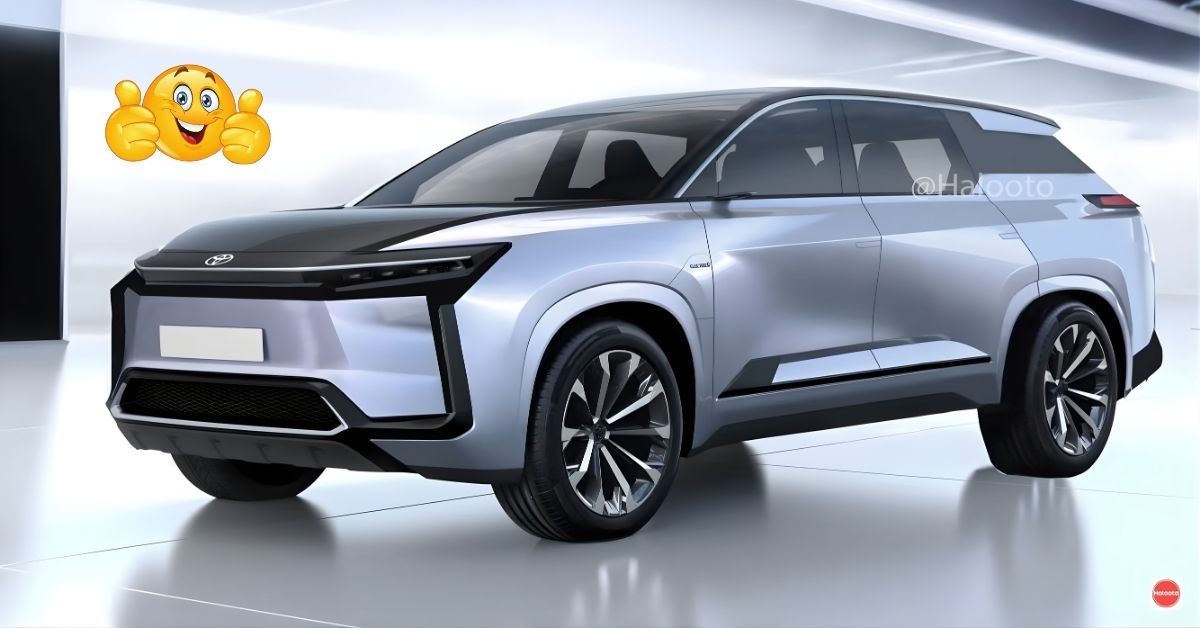
1. INTRODUCTION (The Hook)
For decades, the name ‘Toyota Century’ was whispered only in the highest echelons of Japan’s corporate and political elite. It was a silent, V12-powered sedan, a symbol of Omotenashi (wholehearted Japanese hospitality), designed to be driven, not to be seen driving. Fast forward to 2025, and that era is over.
Toyota has finally taken its ultra-luxury badge global, and they’ve done it with a colossal, four-seater SUV. The moment the Toyota Century SUV 2025 was revealed, the auto world collectively gasped. This isn’t just a big Toyota; this is the brand establishing a new tier of luxury above Lexus. With a rumoured ex-showroom price expected to cross the ₹2 Crore mark (and likely ₹2.5-3 Crore on-road for the initial CBU units in India), this machine is directly challenging the established giants like the Land Rover Defender, high-end Range Rover models, and even hinting at the territory of a Rolls-Royce Cullinan.
The hype is real. But the real truth is, this is an SUV for the back seat, not the driver. It’s a statement of power and prestige, yes, but for a very specific, chauffeur-driven buyer. Don’t waste your money if you plan to drive it yourself every day; you’re paying for a lounge on wheels, not a performance monster.
Let’s tear down the hype and see if the Century SUV is the real deal for the Indian ultra-luxury market.
2. QUICK SPECS TABLE: Toyota Century SUV (2025 Model)
| Specification | Detail (Global Spec/Expected Indian Spec) | Significance |
| Engine | 3.5L V6 Plug-in Hybrid (PHEV) | First Century to ditch the V8/V12, focus on electric silent drive. |
| Max Power (Combined) | $300 \text{ kW}$ (approx. $406 \text{ BHP}$) | Plenty of power, but not brute-force supercar territory. |
| Max Torque | $810 \text{ Nm}$ (Estimated) | Excellent low-end thrust for a smooth, silent city drive. |
| Drivetrain | E-Four All-Wheel Drive (AWD) | Ensures stable, confident handling and traction. |
| Transmission | E-CVT (Continuously Variable) | Smooth, seamless power delivery, ideal for chauffeured driving. |
| Dimensions (L x W x H) | $5205 \text{ mm} \times 1990 \text{ mm} \times 1805 \text{ mm}$ | Longer and wider than a Land Cruiser 300; massive road presence. |
| Seating Capacity | 4-Seater (VIP Executive Layout) | Crucial differentiator—pure focus on the two rear passengers. |
| Weight (Kerb) | $2570 \text{ kg}$ | Heavy, premium build quality contributes to a plush ride. |
| Rear Seat Features | Full Recline, Heating, Ventilation, Massage, “Whisper Mode” | The core value proposition—unmatched rear comfort. |
| Expected India Price | ₹2.0 – ₹2.5 Crore (Ex-showroom) | Ultra-luxury segment pricing. |
3. DESIGN & BUILD (Deep Dive)
The Stance: Commanding Respect, Not Aggression
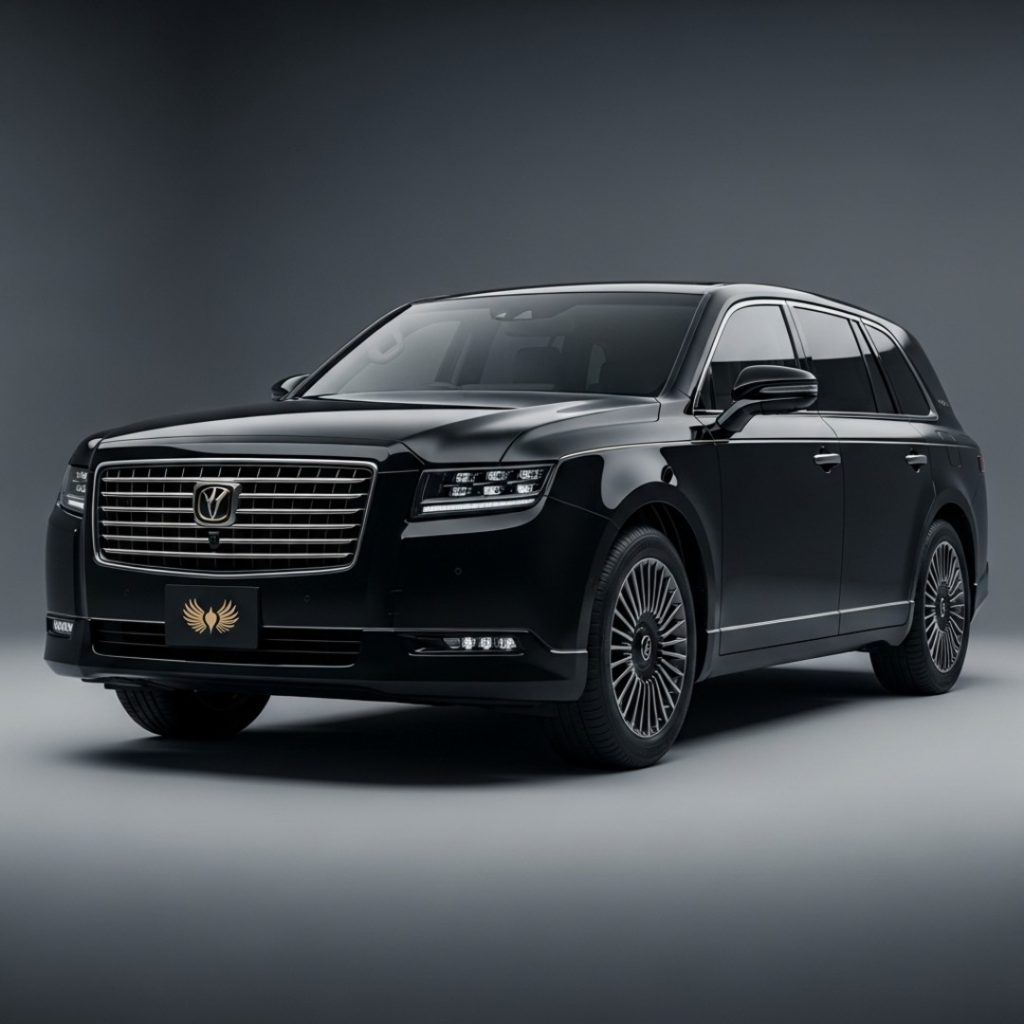
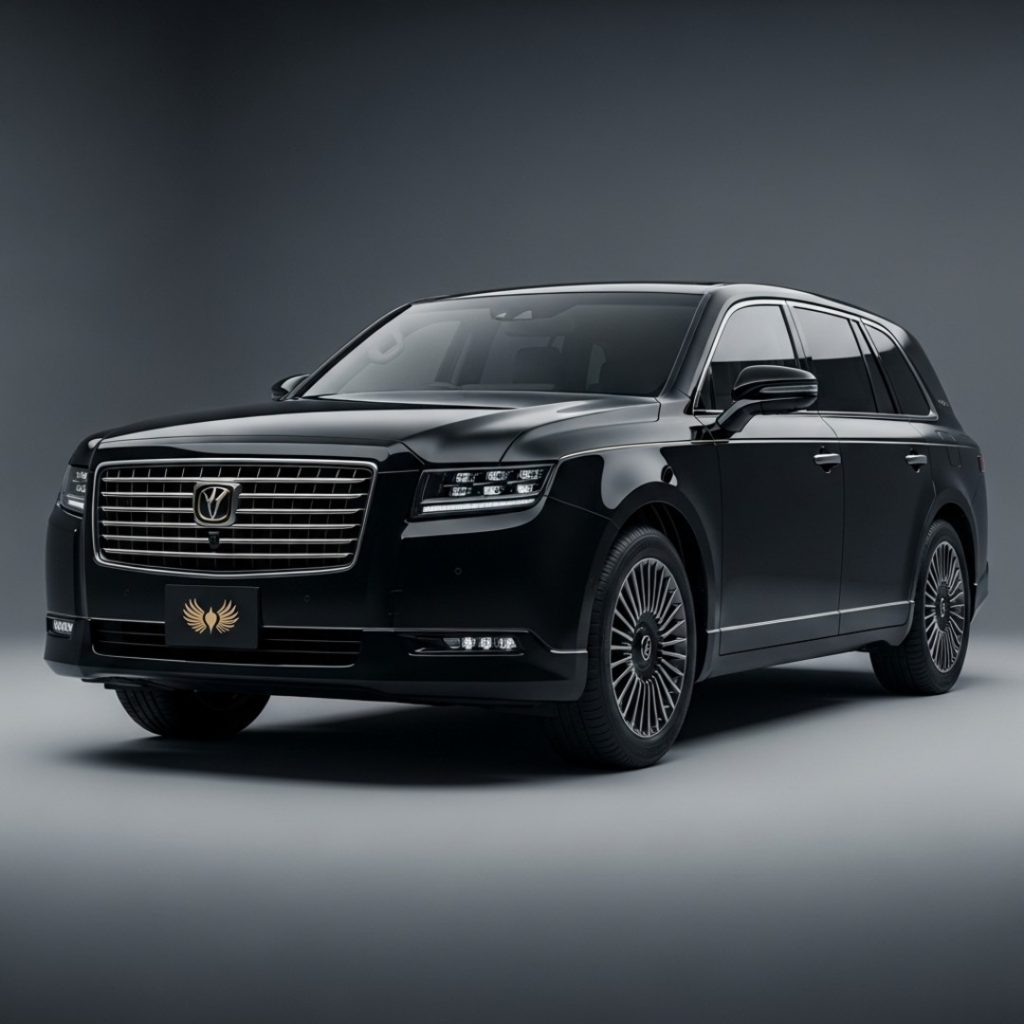
The Century SUV follows a design philosophy that’s quintessentially Japanese: understated power. It doesn’t scream for attention like some Italian or German rivals; it commands it. The shape is boxy, upright, and almost formal—a trait shared with the classic Century sedan.
- Front Fascia: The most striking element is the grille, which features an intricate Kumiko-style latticework pattern. It’s not just plastic; it’s a piece of art. Flanking it are quad-LED headlamp units. But the true symbol is the Hand-Carved Phoenix Emblem. Every single emblem is reportedly carved by a master artisan. This tells you all you need to know about the attention to detail.
- The Build Material & Weight: Tipping the scales at a hefty $2570 \text{ kg}$, the Century SUV’s build is substantial. It uses the TNGA-K platform (shared with the Grand Highlander/Camry), but it’s been heavily modified and reinforced to handle the massive size, the PHEV system, and, crucially, to isolate the cabin from the outside world. This weight isn’t accidental; it’s necessary for that “vault-like” feeling of security and the signature Century ride quality.
The Rear Doors: A Masterstroke
Toyota has introduced optional Sliding Rear Doors (like on a minivan/MPV) on some variants, which is highly unconventional for a luxury SUV.
- Pros of Sliding Doors:
- Maximum Graceful Entry/Exit: No more awkward maneuvering in tight parking spots.
- Perfect for Security: Opens up the entire side of the rear cabin.
- Unobstructed Access: Easier to load bags or briefcases into the rear footwell.
- Cons:
- Unorthodox: Might feel less “premium” or traditional than a standard hinged door to some buyers.
- Complexity: More components mean a higher chance of a mechanical issue down the line.
The side profile is where you appreciate its heft. The rear pillar is thick, ensuring maximum privacy for the VIP passenger. This isn’t a show-off car; it’s a privacy booth.
4. INTERIOR & VISUALS: The Back-Seat Nirvana
If you buy a Century, you are buying the back seat. This is where the ₹2 Crore goes. The Century SUV is built around a concept Toyota calls “The Chauffeur Driven Space.”
The VIP Cabin: The Ultimate Visual Experience
The Century SUV is strictly a 4-seater, eliminating the cramped middle seat and focusing entirely on the two rear occupants.
- Seats: The rear seats are full recliners, inspired by a First-Class jet cabin. They come with integrated heating, ventilation, and a Shiatsu-style massage function. The real killer feature is the electrochromic dimming glass dividing the cabin from the boot space. This means the VIP can electronically adjust the opacity of the glass, completely blocking out the boot area for ultimate privacy and peace of mind.
- Infotainment: Each rear passenger gets a massive, dedicated high-definition screen. While specific screen sizes haven’t been finalized for the Indian market, expect $12.3 \text{-inch}$ displays at a minimum. The audio system will likely be a bespoke, top-tier setup (potentially a Mark Levinson tuned system, as seen in high-end Lexus models), engineered to deliver concert-hall acoustics in the silent cabin.
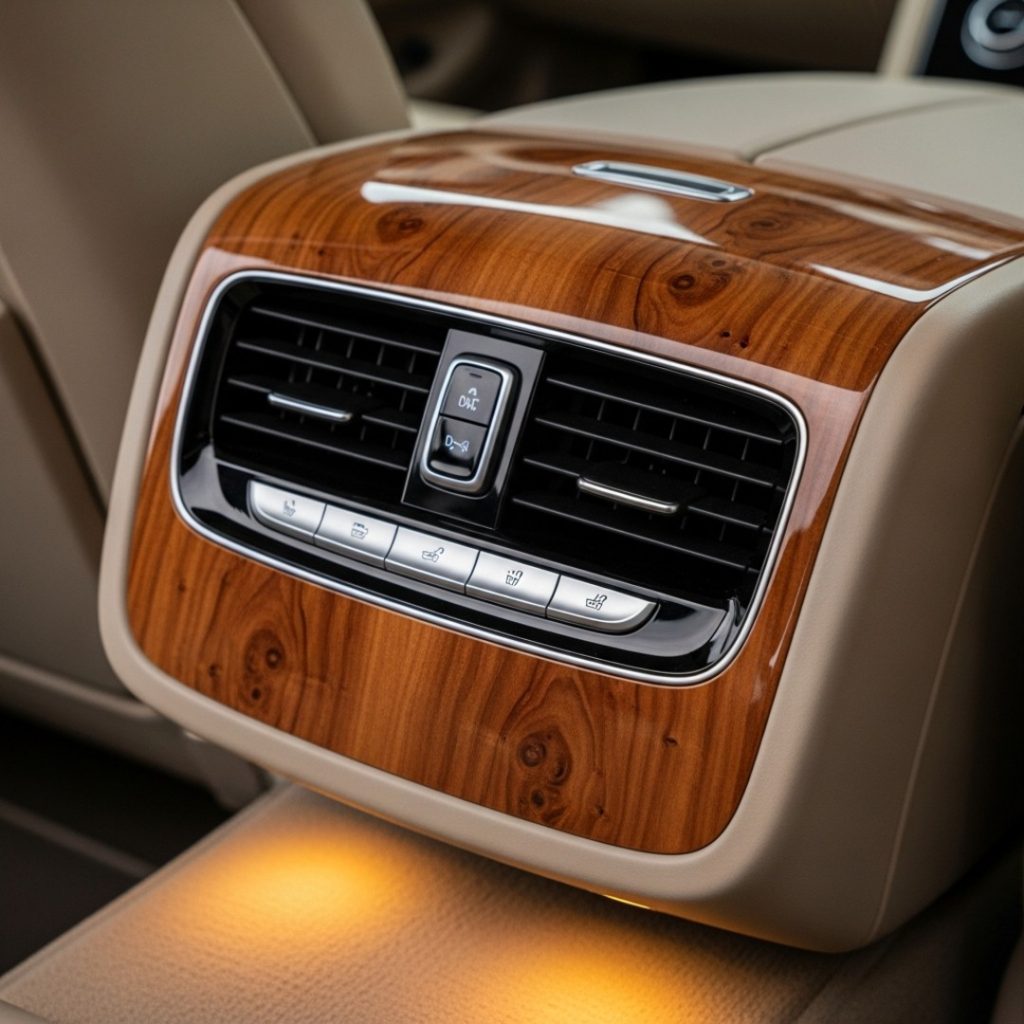
- Craftsmanship: Forget plastic. The cabin features extensive use of real wood veneers, intricate Nishijin-ori (traditional Japanese weaving) patterns in the headliner and trim, and rich, supple semi-aniline leather. The air vents, switches, and door handles all have a heavy, tactile feel—they don’t click, they thud.
The “Quiet Mode”
This is critical. The PHEV powertrain, combined with extensive sound-deadening and acoustic glass, allows for a near-silent travel experience. Toyota calls one of the drive modes “Rear Comfort Mode,” which specifically controls the braking and acceleration in a way that minimises the jerk and pitch felt by the rear passenger. The result is a ride so smooth, your glass of champagne won’t even ripple.
Read More: Tata Sierra
5. PERFORMANCE & THE ENGINE: PHEV for the Chairman
The biggest shocker for the Century brand is the engine: a 3.5L V6 Plug-in Hybrid (PHEV). Traditionalists might scoff at the loss of the majestic V12/V8, but for the target market, this is a massive upgrade.
The Power of Silence
- Cruising in Electric: The PHEV system allows the Century SUV to cruise silently in pure-electric mode for significant distances (expected $40-60 \text{ km}$ of EV range). In a city like Delhi or Mumbai, the ability to glide through traffic noise-free is the ultimate luxury.
- Combined Output: The system delivers a robust $406 \text{ BHP}$ and a massive $810 \text{ Nm}$ of instant torque. While the $0-100 \text{ km/h}$ time of around $11 \text{ seconds}$ isn’t headline-grabbing, the power delivery is instantaneous and seamless, which is exactly what a chauffeur needs for effortless overtaking without disturbing the passenger.
- Dynamic Rear Steering (DRS): To mask its massive $5.2 \text{ meter}$ length, the Century SUV comes with a four-wheel steering system. This allows the rear wheels to turn slightly opposite to the front wheels at low speeds, effectively shrinking the turning radius. The benefit? Easier U-turns and parking in our notoriously tight city spaces. The DRS system is a non-negotiable feature for a vehicle this size in India.
Endurance & Fuel Economy
While no one buying a ₹2 Crore SUV is worried about mileage, the PHEV system does offer real-world efficiency gains. Toyota claims around $14 \text{ km/l}$ (combined cycle), which is phenomenal for a $2.5 \text{ tonne}$ SUV. More importantly, the ability to run on pure electricity for short trips means you can pull into your office or airport drop-off with zero emissions and zero engine noise—the ultimate flex.
6. THE COMPETITION (Auto-Selected Rivals)
The Toyota Century SUV 2025 is not competing with the Fortuner. It is competing with the established global ultra-luxury flagships in the Indian market. Its key rivals are vehicles that also prioritise the rear-seat experience above all else.
Toyota Century SUV vs. The Ultra-Luxury Titans
| Feature | Toyota Century SUV 2025 (Expected CBU) | Land Rover Defender 110 (Top Spec) | Lexus LX 500d (Flagship) |
| Expected Price (Ex-Showroom) | ₹2.0 – ₹2.5 Crore | ₹1.18 – ₹2.30 Crore | ₹2.82 Crore |
| Engine | 3.5L V6 PHEV (Hybrid) | 3.0L Inline-Six Petrol/Diesel | 3.3L V6 Twin-Turbo Diesel |
| Focus/USP | Ultimate Rear-Seat Comfort & Japanese Craftsmanship | Unrivalled Off-Road Capability & Iconic Design | Toyota Reliability & Traditional Luxury/Space |
| Seating Configuration | 4-Seater (VIP Executive) | 5/6/7-Seater (Highly Versatile) | 7-Seater (Spacious SUV) |
| Ride Quality | Whisper-Quiet, Isolating (Air Suspension + PHEV) | All-Terrain, Rugged Yet Refined (Air Suspension) | Solid, Plush, but More SUV-Like |
| Prestige/Exclusivity | Extremely High (Limited Edition, Phoenix Badge) | High (Global Icon) | Very High (Toyota’s Premium Arm) |
Analysis
- Vs. Land Rover Defender 110: The Defender is the king of rugged, go-anywhere luxury. It’s for the millionaire who still wants to drive himself and occasionally get his boots muddy. The Century is for the CEO who must arrive at the office feeling zero vibrations. The Century is far superior in pure passenger comfort and silence, while the Defender crushes it in driving dynamics and off-road ability.
- Vs. Lexus LX 500d: The LX is a traditional, ladder-frame-based, imposing luxury SUV. It is reliable, spacious, and extremely capable. However, it’s fundamentally an upgraded Land Cruiser in philosophy. The Century is a purpose-built sedan-replacement for the VIP. The LX offers a more practical 7-seat option; the Century offers an incomparable 4-seat experience. For pure chauffeur-driven focus, the Century wins hands-down.
Winner: Century SUV (For the Back Seat)
If your sole purpose is the silent, luxurious, and supremely comfortable transportation of two people (you and your partner/guest) in the back seat, with max privacy and minimal fuss, the Toyota Century SUV is the undisputed winner. It is an ultra-niche product that has no direct, focused rival in India for rear-seat opulence until you step up to a Bentley Bentayga or Rolls-Royce Cullinan. Its PHEV silent drive is a game-changer for Indian city commutes.
7. FINAL VERDICT: The Japanese Masterpiece
The Toyota Century SUV is more than just a car; it’s a mobile declaration of taste, subtlety, and focus. It’s for the buyer who is tired of flash and wants true, meticulous luxury based on decades of Japanese hospitality design.
Buy it if:
- You are 100% Chauffeur-Driven: If your daily commute involves sitting in the rear-right ‘Boss Seat’ and you demand absolute isolation and a whisper-quiet ride.
- You Value Omotenashi Luxury over Brute-Force Performance: Your priority is the finest materials, hand-finished quality, and technical features like the electrochromic glass and Rear Comfort Mode.
- You Want Exclusivity: This is a limited-volume car. The Phoenix badge is a statement that says you own something far rarer and more discreet than a mass-market luxury brand.
Skip it if:
- You Love Driving Yourself: The E-CVT and focus on rear comfort make this a less engaging driver’s car than a Defender or a Porsche Cayenne.
- You Need a Versatile 7-Seater: The 4-seater executive layout is uncompromising. If you need to ferry more than two passengers regularly, look at the Lexus LX or a top-spec Range Rover.
- You Want a V8/V12 Roar: The 3.5L V6 PHEV is silent, refined, and powerful enough, but it simply cannot replicate the theatre or sound of a large displacement engine.
Rating: / 5 Stars
It’s a masterpiece of passenger luxury and Japanese engineering, but the hefty price and niche focus prevent a perfect score. It is, however, the new benchmark for chauffeured-driven comfort in its class.
8. FAQs (People Also Ask)
Why is the Toyota Century SUV so expensive?
The high cost comes from three main factors: Limited Production & Hand-Crafting (many elements, including the Phoenix badge and interior trim, are hand-finished by master artisans), Ultra-Luxury Features (like the 4-seater VIP cabin, Rear Comfort Mode, and electrochromic glass), and India’s CBU Import Duties. It’s priced as a bespoke Rolls-Royce rival, not a typical Toyota.
Is the Toyota Century SUV better than the Rolls-Royce Cullinan?
“Better” is subjective. The Cullinan offers a V12 engine, a higher level of customisation, and a more globally recognized ultra-luxury badge. The Century SUV offers superior silence and a more technically advanced, focused luxury experience (especially with the PHEV system and unique features like the sliding door option and dimming rear glass). The Century offers Rolls-Royce-level comfort at a significantly lower, though still very high, price point.
What is the Century SUV’s mileage (fuel economy)?
Due to its Plug-in Hybrid Electric Vehicle (PHEV) system, the Century SUV is expected to deliver excellent mileage for its size and weight, estimated around $14 \text{ km/l}$ (combined cycle), with the ability to cover short city distances ($40-60 \text{ km}$) in a pure-electric, zero-emission mode.
Is the Century SUV a true off-roader like the Land Cruiser?
No. While it features an All-Wheel Drive (E-Four) system and air suspension, the Century SUV is built on the unibody TNGA-K platform and is designed for maximum on-road comfort and handling. It is not built with the heavy-duty, body-on-frame architecture or off-road gear of the legendary Land Cruiser 300. Its focus is on the tarmac, not the trail.
When is the Toyota Century SUV 2025 launching in India?
The Toyota Century SUV is confirmed for global markets, and an Indian launch, likely as a Completely Built Unit (CBU), is expected in mid-to-late 2025. It will be available through select, high-end Toyota dealerships or by special order only.