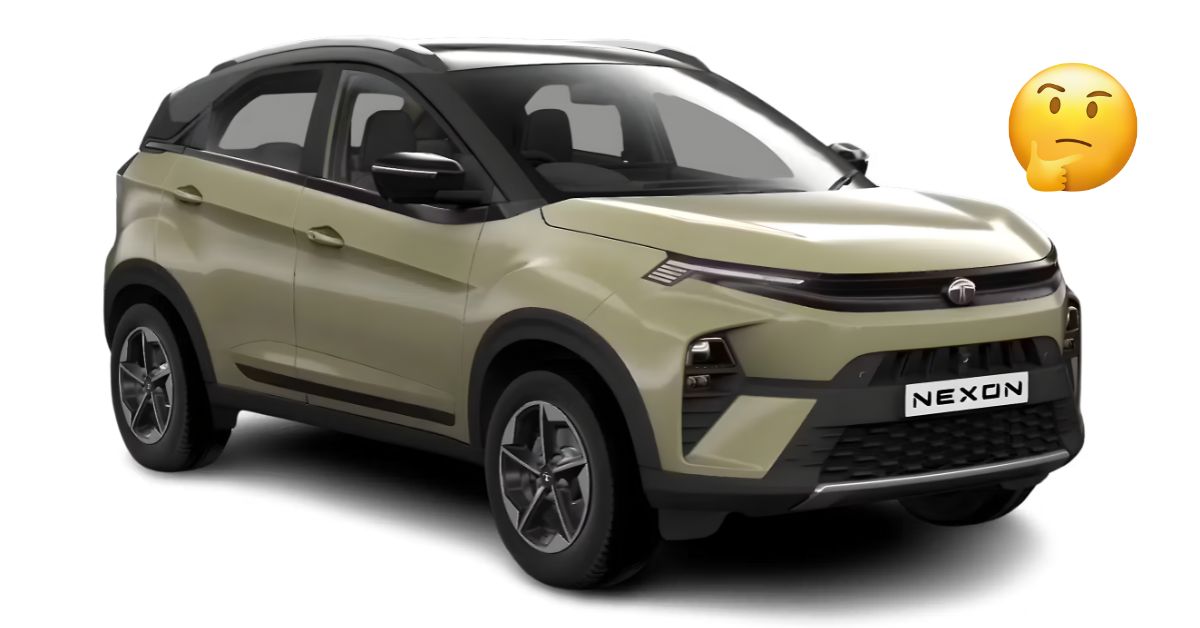
The Tata Nexon Detailed Review is an examination of the vehicle that has successfully redefined the compact SUV segment in India, moving the goalposts from mere affordability to a compelling combination of world-class safety, cutting-edge technology, and diverse powertrain options. The latest iteration of the Nexon, with its radical design facelift and significant feature upgrades, stands as the undisputed segment leader, cementing its position through structural integrity and a feature list previously unseen in its price bracket. This vehicle is more than just a volume driver for Tata Motors; it is a symbol of Indian engineering excellence and the most popular choice for families prioritizing safety, style, and superior ground clearance. This comprehensive, in-depth analysis dissects the performance characteristics of its dual engine lineup, evaluates its industry-leading safety standards, explores the specialized technology within its cabin, and confirms the highly competitive final on-road price in the Indian market.
Engine Specs and Performance: The Versatility of Turbocharged Power
The Tata Nexon Detailed Review subject is offered with a choice of two potent turbocharged engines—one petrol and one diesel—each paired with multiple transmission options, providing tailored performance for every driving style and requirement.
The Revotron Turbo-Petrol Engine
The core petrol engine is the $1.2\text{-litre}$ Revotron Turbo-Petrol unit. This three-cylinder engine is tuned to deliver a spirited performance of $120\text{ PS}$ (118 bhp) of power and $170\text{ Nm}$ of peak torque. The strength of this engine lies in its broad torque delivery, which starts low down in the rev range (from $1,750\text{ rpm}$), ensuring quick and effortless acceleration in city traffic. This engine offers an unparalleled choice of three automatic transmission options, a specialization unique in the segment: the traditional 5-speed Manual Transmission (MT), the ubiquitous 6-speed Automated Manual Transmission (AMT), and the highly desirable 7-speed Dual Clutch Automatic (DCA). The 7-speed DCA provides the smoothest, fastest, and most refined automatic driving experience, making it the preferred choice for enthusiasts and those seeking maximum comfort in urban driving.
The Revotorq Turbo-Diesel Engine
For buyers prioritizing high mileage and raw pulling power, the $1.5\text{-litre}$ Revotorq Turbo-Diesel engine remains a powerful and efficient option. This four-cylinder engine generates $115\text{ PS}$ (113 bhp) of power and a massive $260\text{ Nm}$ of torque. The high torque figure, available early, makes the diesel Nexon particularly adept at climbing steep inclines and comfortable for sustained high-speed cruising on the highway. This diesel unit is available with both the 6-speed Manual Transmission (MT) and the reliable 6-speed Automated Manual Transmission (AMT), providing an efficient and capable powertrain package. All variants, both petrol and diesel, feature three dedicated drive modes (Eco, City, and Sport), allowing the driver to instantly tailor the engine’s response and throttle mapping to suit specific driving conditions or fuel economy priorities.
Mileage Test: ARAI Claims Versus Real-World Efficiency
The fuel efficiency of the Tata Nexon Detailed Review subject is highly dependent on the chosen powertrain, but both engines provide competitive figures, particularly the diesel unit.
ARAI and Real-World Mileage
The Petrol MT variant carries an ARAI-certified mileage figure of approximately $17.44\text{ kmpl}$, while the Petrol DCA offers a slightly lower, but still respectable, $17.01\text{ kmpl}$. In real-world city conditions, the turbocharged petrol engine typically delivers around $12\text{ kmpl}$ to $14\text{ kmpl}$, with highway runs pushing this closer to $16\text{ kmpl}$ to $17\text{ kmpl}$. The Diesel MT variant is the segment leader in fuel economy, boasting an impressive ARAI-certified figure of $23.23\text{ kmpl}$. The Diesel AMT performs even better, with an ARAI claim of $24.08\text{ kmpl}$. Real-world highway usage often sees the diesel comfortably returning $18\text{ kmpl}$ to $21\text{ kmpl}$, making it an exceptionally economical choice for long-distance drivers.
Interior Features: The Digital Revolution and Comfort Specialization
The cabin of the Tata Nexon Detailed Review subject underwent a significant design and technology overhaul in its latest iteration, setting a new standard for features in the compact SUV space.
Digital Cockpit and Aesthetics
The dashboard is dominated by a dual-screen setup that brings a premium, high-tech feel. This includes a large $10.25\text{-inch}$ floating touchscreen infotainment system that runs the latest, smoother operating software from Tata Motors, featuring wireless Android Auto and Apple CarPlay connectivity. This is complemented by a fully configurable $10.25\text{-inch}$ Digital Driver Display, which provides navigation directions directly on the screen. The tactile experience is enhanced by the new two-spoke steering wheel, which features a centrally illuminated Tata logo—a specialized aesthetic touch that lights up when the car is started, adding a modern, premium flair.
Comfort and Convenience Specialization
The most impactful comfort upgrades are segment-leading specialized features:
- Ventilated Front Seats: This highly valued feature, typically reserved for higher-segment cars, is offered on the Nexon, providing immense relief during the hot Indian summer by circulating cool air through the seat upholstery.
- $360\text{-Degree Surround View Camera: This system provides a comprehensive, synthesized view of the car’s surroundings, making parking and maneuvering in tight city spaces significantly easier and safer, especially given the car’s high ground clearance.
- Advanced Convenience: The Nexon includes an Air Purifier integrated into the cabin, improving air quality, wireless smartphone charging, a premium nine-speaker JBL audio system on top variants, and an Electric Sunroof, ensuring the cabin is well-equipped for comfort and modern connectivity.
Ride Comfort, Handling, and Uncompromising Safety
The overall driving dynamics of the Tata Nexon Detailed Review subject are defined by its robust structure, high ground clearance, and best-in-class safety credentials.
Ride Comfort and Handling
The Nexon’s high ground clearance of $208\text{ mm}$ is a practical specialization that allows the vehicle to easily glide over large speed breakers, deep potholes, and rough rural roads without scraping its underbelly. The suspension setup—MacPherson struts at the front and a twist beam at the rear—is tuned specifically for ride comfort, absorbing road shocks effectively and providing a stable, compliant experience even on broken surfaces. While the ride quality is soft and comfortable, the handling remains predictable and planted at moderate speeds, making it a reliable performer for family use.
Read More : Mahindra XUV.e9
The 5-Star Safety Benchmark
The most crucial specialization of the Tata Nexon Detailed Review subject is its uncompromising safety architecture. The Nexon has achieved the highest possible 5-Star Safety Rating from both Global NCAP and Bharat NCAP, becoming one of the safest cars ever tested in India. This rating is backed by a suite of essential safety features now standard across all variants, including six airbags, Electronic Stability Control (ESC), Hill Hold Control, and a Tire Pressure Monitoring System (TPMS), ensuring the vehicle provides an unmatched level of passive and active safety protection for all occupants.
Latest On-Road Price in India
The final purchasing decision rests on the price, and the Tata Nexon Detailed Review subject is priced competitively across its vast variant range, which includes Petrol, Diesel, and even CNG options.
The ex-showroom prices for the latest iteration of the Nexon start at a highly accessible $\text{₹}8.15\text{ Lakh}$ for the base Smart Petrol MT variant. The prices for the most sought-after mid- and top-spec variants (Creative Plus, Fearless Plus) range significantly. The top-end Fearless Plus Diesel AMT variants are priced up to $\text{₹}15.80\text{ Lakh}$ ex-showroom.
The final On-Road Price in India for the popular mid-to-high-end variants is estimated as follows:
Mid-Range Petrol AMT/DCA (Creative Plus): $\text{₹}12.5\text{ Lakh}$ to $\text{₹}14.5\text{ Lakh}$
Top-End Diesel AMT (Fearless Plus): $\text{₹}18.0\text{ Lakh}$ to $\text{₹}19.5\text{ Lakh}$
This pricing ensures that the Tata Nexon Detailed Review subject continues to offer superior value by combining benchmark safety, a choice of six transmissions, a comfortable ride, and a feature-rich, modern cabin, solidifying its position as the undisputed segment leader.
The Tata Nexon Detailed Review confirmed its status as the segment benchmark, defined by its industry-leading 5-Star safety rating, diverse transmission options, and powerful engine choices. However, the compact SUV segment (sub-$4$ metre) is the most aggressively contested arena in the Indian automotive market, with every major manufacturer fielding a technologically advanced and highly competitive model. The Nexon’s sustained dominance is under constant threat from rivals who specialize in different areas, ranging from fuel efficiency and cabin refinement to cutting-edge ADAS technology. This extensive analysis dissects the specialized competitive positioning of the Nexon’s primary rivals—the Maruti Suzuki Brezza, the Hyundai Venue, the Kia Sonet, and the Mahindra XUV 3XO—and examines the significant challenges posed by new entrants slated for the 2026 market.
The Safety and Mechanical Rivalry: Brezza and XUV 3XO
The most direct and philosophical challenges to the Nexon come from rivals who offer either superior brand reliability or more intense feature sets at the price point.
The Maruti Suzuki Brezza: Mileage and Reliability Specialization
The Maruti Suzuki Brezza positions itself as the segment’s undisputed champion of refinement and effortless ownership. While the Nexon specializes in raw diesel torque and structural safety, the Brezza’s core strength lies in its proven $1.5\text{-litre}$ K15C naturally aspirated petrol engine. This unit generates a modest $101.64\text{ bhp}$ and $136.8\text{ Nm}$ of torque, but it excels in two critical areas: superior real-world mileage and the backing of Maruti Suzuki’s expansive service network. The Brezza’s use of mild-hybrid technology ensures smooth start/stop operation and aids fuel economy, consistently returning real-world mileage figures that often edge out the Nexon’s turbocharged petrol variant. The Brezza’s ride quality is typically praised for its comfortable, compliant suspension tuning and spacious, upright cabin structure, which makes it particularly attractive to family buyers prioritizing peace of mind, high resale value, and low maintenance costs over outright performance aggression.
The Mahindra XUV 3XO: Feature Overload and ADAS Supremacy
The Mahindra XUV 3XO (previously XUV300) represents the market’s aggressive pursuit of feature supremacy. While the Nexon holds the 5-Star safety title, the XUV 3XO targets the feature-conscious buyer by offering a combination of potent performance and advanced technology. The XUV 3XO’s specialization lies in its powertrain, offering a highly powerful $1.2\text{-litre}$ turbocharged petrol engine that rivals the Nexon’s power output while also featuring a high-torque diesel option. Crucially, the XUV 3XO has democratized Level 2 ADAS (Advanced Driver Assistance Systems) at an aggressive price point, offering features like Adaptive Cruise Control and Lane Keep Assist—features the Nexon currently lacks. The XUV 3XO also introduced high-end cabin amenities, such as a panoramic sunroof, which is a significant psychological draw for Indian consumers, directly challenging the Nexon’s feature-rich cabin with a more extensive sunroof option and premium interiors.
The Feature and Design Rivalry: Venue and Sonet
The South Korean manufacturers, Hyundai and Kia, prioritize cabin technology, rapid shifting automatic transmissions, and distinct styling, directly competing with the Nexon’s technological lead and safety reputation.
Hyundai Venue: Connected Technology and DCT Refinement
The Hyundai Venue specializes in connected technology and urban convenience. While the Nexon introduced the 7-speed DCT transmission, the Venue perfected the technology in the segment and offers a smoother, more refined version of the 7-speed DCT paired with its potent $1.0\text{-litre}$ Turbo Petrol engine, an ideal combination for stop-start city driving. The Venue’s cabin is defined by its superior BlueLink connected car technology, offering remote vehicle operation, superior voice commands, and integrated navigation, catering to the digitally savvy urban user. The 2025/2026 Venue is expected to feature further aesthetic and ergonomic refinements, including the potential addition of ventilated seats (a feature currently unique to the Nexon/Sonet in the segment) and continued expansion of its digital cluster, maintaining its strong appeal among buyers who value sophisticated infotainment and convenience.
Kia Sonet: Styling and Premium Aesthetics
The Kia Sonet is the segment’s champion of styling and premium aesthetics, drawing consumers with its aggressive “Tiger Nose” grille, sharp LED lighting signatures, and sophisticated exterior design. Where the Nexon emphasizes ruggedness, the Sonet focuses on a sporty, youthful appeal. Mechanically, the Sonet is a strong competitor, offering a powerful $1.5\text{-litre}$ turbo-diesel engine that closely matches the Nexon’s torque output, often delivering a slight edge in ARAI-claimed mileage. The Sonet also shares key luxury features with the Nexon, such as the ventilated front seats and a high-end audio system, but wraps them in an interior finish that many perceive as being marginally more premium and detailed. The Sonet’s specialization is thus a powerful blend of strong diesel performance, efficient DCT automatic, and a cabin that prioritizes a luxurious, design-forward experience.
The 2026 Future Challenge: New Entrants and Platform Shifts
The biggest threat to the Nexon’s continued dominance comes from the scheduled launch of entirely new generations and platforms expected to hit the market in 2026, bringing new technologies that could redefine customer expectations.
The Next Generation Hyundai Venue (2026)
Hyundai has already begun revealing details for the 2026 New Generation Venue, which promises a larger footprint and a completely redesigned structural platform. This new iteration is expected to challenge the Nexon’s safety lead by targeting a higher safety rating and introducing more sophisticated features, including a more comprehensive Level 2 ADAS suite across higher variants. Furthermore, the 2026 Venue is rumored to receive powertrain upgrades, potentially including a mild-hybrid system or an enhanced focus on its DCT transmission to improve both efficiency and driving pleasure, directly attacking the Nexon’s strong powertrain versatility.
The Return of the Renault Duster
The long-awaited Renault Duster is confirmed for a return in early 2026, built on the modern, flexible CMF-B platform. This platform provides the mechanical foundation for a completely modernized, more spacious, and safer Duster. Critically, the new Duster will challenge the Nexon’s performance and efficiency by offering advanced powertrain options, including a $1.2\text{-litre}$ turbo-petrol engine with strong hybrid technology. This hybridization promises to deliver fuel efficiency figures that could rival the diesel Nexon while maintaining the smooth, refined performance of a petrol engine, a highly compelling proposition for the modern Indian buyer focused on low running costs and superior driving dynamics. The Duster’s legacy of ruggedness and superior ride quality over rough roads will also serve as a strong historical specialization against the Nexon.
In conclusion, the Tata Nexon Detailed Review subject remains the leader due to its uncompromising 5-Star safety rating and the versatility of its six different transmission and engine combinations (Petrol MT, Petrol DCA, Petrol AMT, Diesel MT, Diesel AMT, and the upcoming CNG). However, the market is quickly catching up, with rivals like the XUV 3XO offering ADAS and a panoramic sunroof, and the upcoming Duster threatening to disrupt the mileage equation with hybrid power. The Nexon must rely on its core strengths—structural integrity, high ground clearance, and the excellent ride comfort provided by its suspension setup—to defend its crown against this sustained and multi-faceted competitive assault.