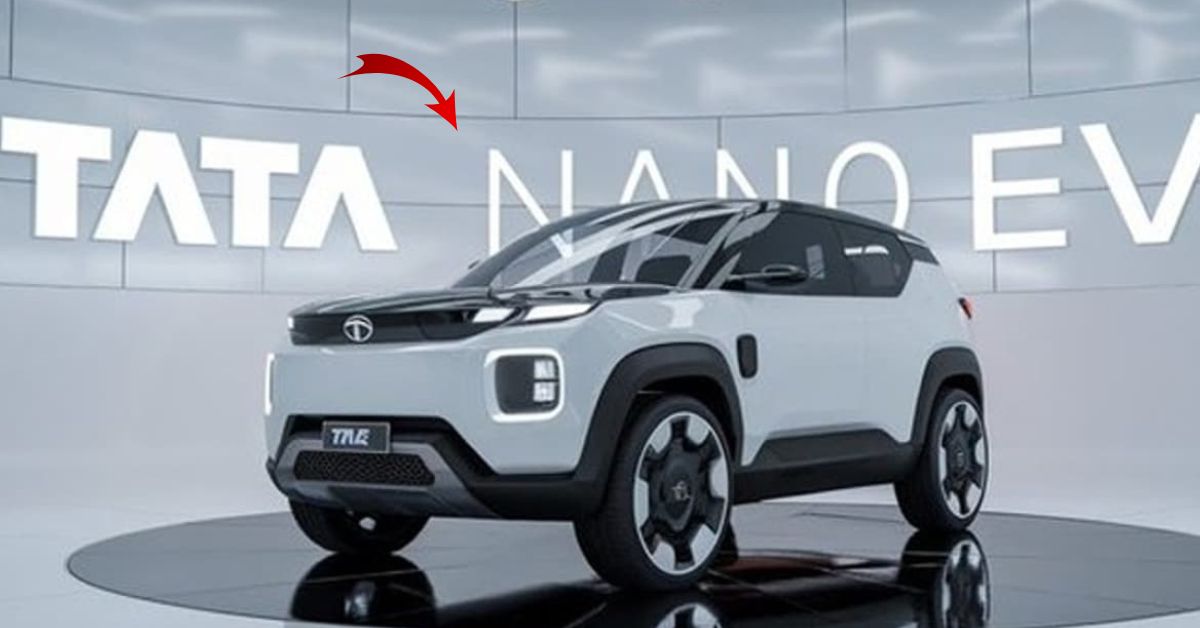
The “Lakh-Takiya” car is back, but this time, it’s ditching the petrol engine for a silent, electric heart. As a journalist who covered the original Nano’s chaotic launch in Sanand years ago, seeing the 2026 Tata Nano EV (often referred to as the “Nano.ev”) hit the streets feels like a full-circle moment for the Indian auto industry.
In January 2026, the EV landscape in India has matured, but the entry-level segment remains underserved. Tata Motors has stepped in with a price tag that has sent shockwaves through the market: a starting price of ₹2.99 Lakh (ex-showroom). Is it just a glorified golf cart, or is this the city car India has been waiting for?

Quick Specs Table: The Digital Small Wonder
| Feature | Specification |
| Battery Pack | 17.2 kWh LFP (Liquid Cooled) |
| Max Power | 40 BHP (Peak) |
| Max Torque | 85 NM |
| Claimed Range (ARAI) | 260 km |
| Charging Time | 10% to 80% in 50 mins (DC Fast Charging) |
| Ground Clearance | 180 mm |
Exterior Design: Futuristic Minimalism
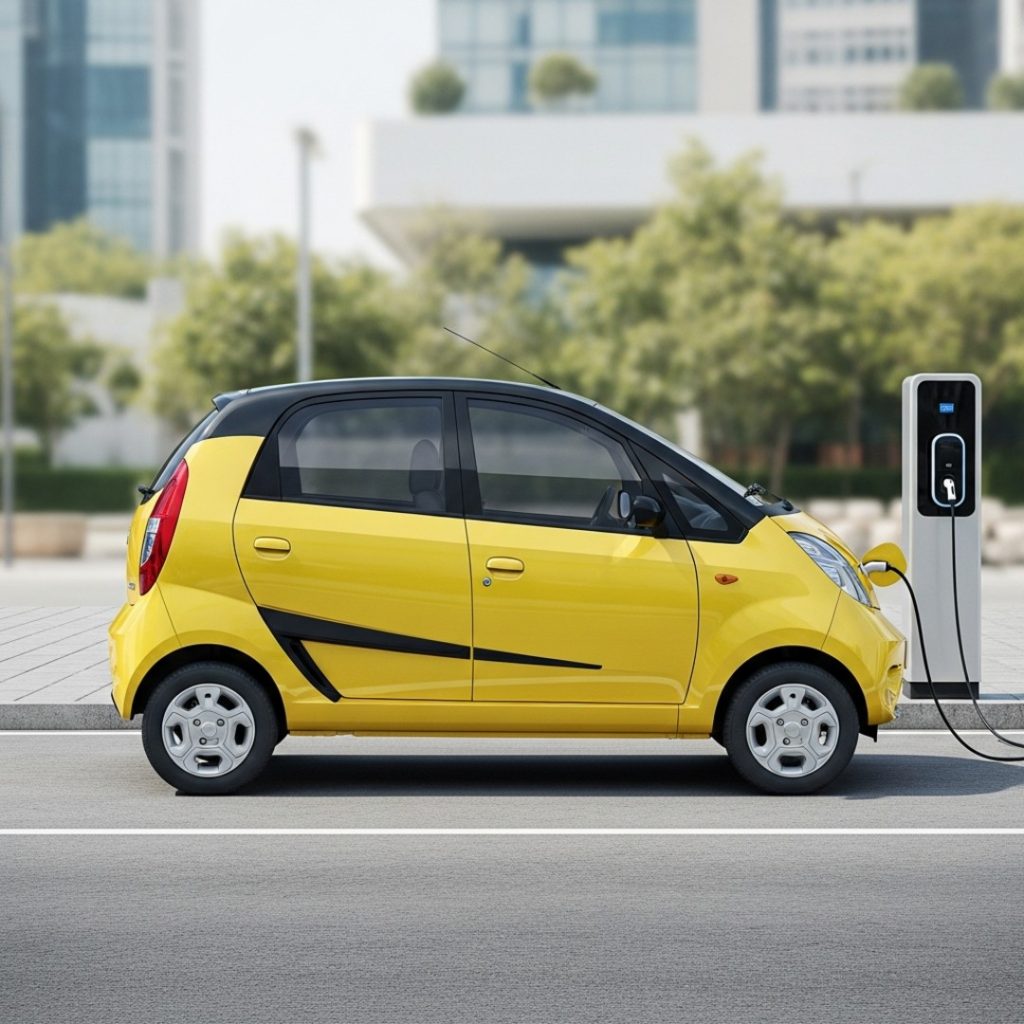
The 2026 Nano EV retains the iconic “tall-boy” silhouette but looks like it’s been designed for a sci-fi movie.
- The Face: The front grille is completely closed off (no radiator needed!), featuring a sleek LED light bar that connects the headlamps.
- Wheels: Gone are the tiny 12-inch wheels. The EV version sits on 13-inch aero-styled wheels that help reduce drag.
- Road Presence: It won’t intimidate an XUV700, but it certainly turns heads. It looks friendly, modern, and perfectly proportioned for narrow gallis.
Interior, Comfort & Features: Surprisingly “Big” Inside
The original Nano was famous for having more interior room than a Mercedes C-Class of that era. The EV version carries that legacy forward.
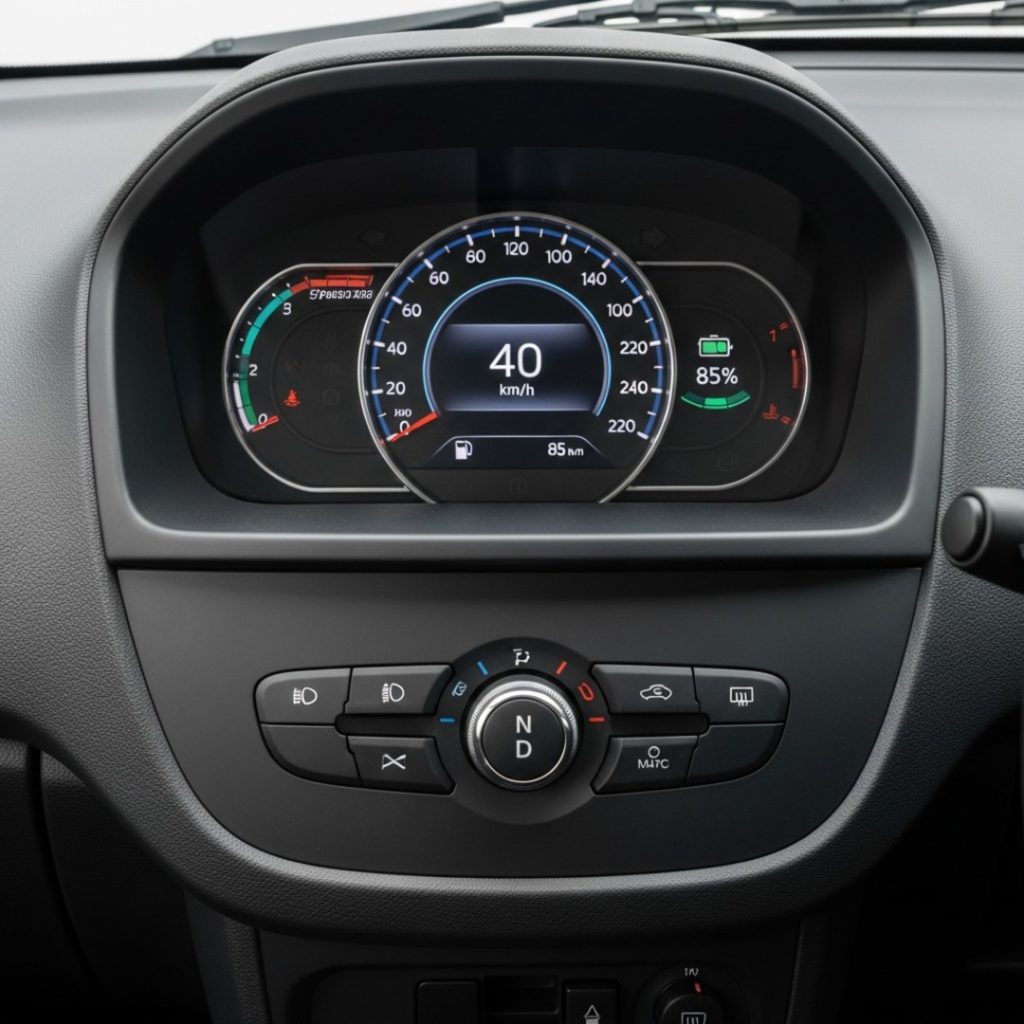
- Dashboard: You get a 7-inch touchscreen infotainment system with Android Auto and Apple CarPlay. The materials are mostly hard plastics, but the textures are decent—no more “cheap car” vibes.
- Space: Headroom is massive. Even a 6-foot driver will have inches to spare.
- Rear Seat: Can 3 people sit at the back? Honestly, no. It’s a strict 4-seater. Two adults can sit comfortably, but three is a recipe for a shoulder-to-shoulder struggle.
- Missing Features: You won’t find a sunroof or ventilated seats here. Tata has cut the right corners to keep the price under ₹3 lakh.
Driving Dynamics: The City Ninja
City Drive: Effortless
The steering is feather-light. Navigating through Karol Bagh or T. Nagar traffic is where the Nano EV shines. Because it’s an electric, you get instant torque. While 40 BHP sounds low, in a car this light, it feels punchy up to 50 kmph. Is it easy to park? You can park this in spots where a Swift would struggle
Read more : Skoda Kushaq
Highway Drive: Know Your Limits
The Nano EV is not a highway cruiser. At 80 kmph, it feels stable, but cross 100 kmph (its top speed is capped at 105 kmph), and the steering starts to feel a bit nervous. Body roll is noticeable during sharp turns due to its height.
Suspension: The Pothole Test
The suspension absorbs potholes easily at low speeds. However, because of the short wheelbase, the car tends to “bounce” over larger speed breakers if you aren’t careful.
Safety: The Big Question
Tata Motors has built a reputation for safety (Nexon, Punch, Safari all have 5 stars). For the Nano EV, they’ve used a reinforced high-strength steel frame.
- Safety Suite: 2 Airbags, ABS with EBD, and Rear Parking Sensors come standard.
- Safety Rating: While it hasn’t been officially crash-tested by Bharat NCAP yet, the structural reinforcements suggest it is targeting a 3 or 4-star rating, a massive leap from the zero-star rating of the 2014 model.
Real-World Range: The Truth
Tata claims an ARAI range of 260 km. As a senior journalist, I always tell my readers to take these numbers with a pinch of salt.
| Driving Condition | Expected Real-World Range |
| City (AC On, Normal Traffic) | 180 – 195 km |
| Bumper-to-Bumper Traffic | 160 – 170 km |
| Highway (Constant 80 kmph) | 140 – 150 km |
For a daily commute of 30-40 km, you’ll only need to charge it twice a week!
The Competition: Battle of the Tiny EVs
The Nano EV faces two main rivals: the MG Comet EV and the Tiago.ev (from its own stable).
| Feature | Tata Nano EV | MG Comet EV | Tata Tiago.ev |
| Starting Price | ₹2.99 Lakh | ₹6.99 Lakh | ₹7.99 Lakh |
| Real Range | ~185 km | ~160 km | ~210 km |
| Doors | 4 Doors | 2 Doors | 4 Doors |
| VFM Winner | Nano EV | Style Winner | Family Winner |
The Verdict on VFM: The Nano EV provides almost the same utility as the MG Comet at less than half the price. It’s a “No-Brainer” for city dwellers.
Final Verdict
The 2026 Tata Nano EV is a triumph of frugal engineering. It isn’t a car for long road trips, but for a city like Bengaluru or Delhi, it is arguably the most sensible vehicle on the road today.
Buy it if:
- You want the most affordable electric car in India.
- Your primary use is city commuting and grocery runs.
- You need a car that is dead simple to park and maneuver.
Skip it if:
- You do frequent highway trips.
- You need to carry 5 passengers regularly.
- You want a premium, soft-touch interior.
FAQs (People Also Ask)
Q: What is the on-road price of the Nano EV?
With minimal RTO charges for EVs in many states, the on-road price in cities like Delhi or Mumbai is expected to be around ₹3.15 – ₹3.30 Lakh.
Q: What is the waiting period?
Due to the massive hype, the current waiting period is 4 to 6 months across major metros.
Q: Is there a Nano EV CNG?
No. It is a dedicated electric platform. However, the running cost is even lower than a CNG car, coming in at roughly ₹0.80 per kilometer.