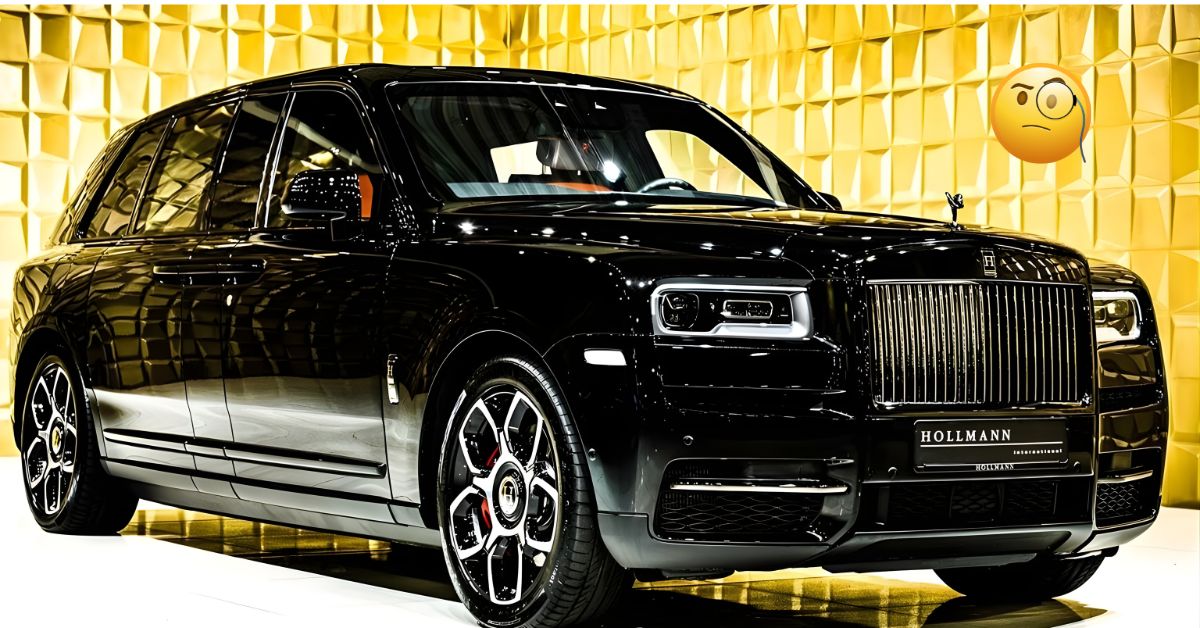
The Rolls-Royce Cullinan Black Badge Review is not an assessment of a mere luxury SUV; it is an examination of an ethos—the deliberate, unapologetic rejection of tradition in favor of a powerful, dynamic, and assertive aesthetic. The Black Badge designation represents the “dark alter ego” of Rolls-Royce, engineered for a clientele defined as “rule-breakers,” “innovators,” and those who demand a more visceral connection with their machine. The Cullinan, already the most luxurious and capable SUV in the world, is transformed in Black Badge guise into a dynamically enhanced, visually intensified powerhouse. The 2026 model, continuing the refinements introduced in the Series II updates, solidifies the Black Badge’s reputation, blending the unmatched “Magic Carpet Ride” with a menacing presence and genuine, driver-focused performance. This comprehensive analysis delves into the bespoke V12 engine tuning, the specialized engineering that delivers its unique dynamic character, the extreme luxury and intricate craftsmanship of its darkened cabin, and the colossal financial commitment required for its ownership in the exclusive Indian market.
Engine Performance: The $900\text{ Nm}$ Visceral Thrill of the Black V12
The fundamental authority of the Rolls-Royce Cullinan Black Badge Review subject rests with its massive, highly tuned $6.75\text{-litre}$ Twin-Turbo V12 engine. While the standard Cullinan V12 is designed for effortless, silent power, the Black Badge variant is meticulously re-engineered to deliver a more dynamic and assertive driving experience. Performance is significantly enhanced over the standard model, with the Black Badge V12 generating an impressive $600\text{ PS}$ ($592\text{ bhp}$) of power and a colossal $900\text{ Nm}$ of peak torque. This increase in output is achieved through specialized calibration of the engine mapping and the ZF 8-speed gearbox, ensuring the extra power is instantly accessible.
The true specialization of the Black Badge V12 is unlocked by the driver via the “Low” button, subtly situated on the gear selector stalk. Activating this mode triggers a suite of dynamic enhancements: the throttle response is sharpened, the air suspension settings are adjusted for greater stiffness and reduced body roll, and the gear shift speeds are increased by $50\%$ when the throttle is applied aggressively. Crucially, the V12’s signature presence is announced through an entirely new exhaust system that, when Low Mode is engaged, delivers a deeper, more pronounced growl, transforming the typically silent experience into a “visceral thrill.” This dynamic tuning allows the $2.7$-ton SUV to sprint from $0\text{ to } 100\text{ km/h}$ in a rapid time of approximately $4.2$ to $4.5$ seconds, a figure achieved while retaining the characteristic serenity and effortless quality that defines the brand. The top speed remains electronically governed at $250\text{ km/h}$, a practical limit that belies its massive acceleration capability.
Specialized Dynamics: The Magic Carpet Ride Meets Dynamic Authority
The Cullinan’s greatest specialization is the Planar Suspension System, which ensures its legendary “Magic Carpet Ride” quality. This advanced technology uses a forward-facing stereo camera to scan the road surface ahead, reading bumps, undulations, and potholes preemptively. This data is fed to the central processing unit, which instantly adjusts the self-levelling air suspension and the damping forces of the active anti-roll bars before the wheels even reach the imperfection. This proactive adjustment allows the car to float over the worst road surfaces, maintaining an unparalleled level of cabin serenity—a vital facility for comfort on uneven Indian highways.
The Black Badge variant intensifies this capability with its unique dynamic tuning. The engineers adjusted the steering rack ratio and provided All-Wheel Steering, which subtly countersteers the rear wheels at low speeds to increase agility and reduce the immense turning circle of the $5.3\text{-metre}$ long vehicle. Furthermore, the brake pedal travel has been reduced and the braking bite point raised, providing a quicker, more confident response to the driver’s input when pushing the vehicle to its limits. This ensures that the dynamic handling is appropriately enhanced without compromising the foundational promise of supreme ride comfort, enabling the Black Badge to provide both the ultimate isolated luxury and the sharpened response of a true driver’s machine.
Read more : Ford GT
Exterior Features: The Darkened Spirit and Unapologetic Presence
The exterior features of the Rolls-Royce Cullinan Black Badge Review subject are defined by the pervasive adoption of black, high-gloss detailing, signaling its status as the marque’s most rebellious model. The most iconic change is the Spirit of Ecstasy mascot, which is presented in high-gloss black chrome, its surface polished meticulously to a flawless mirror finish. This black chrome treatment extends across the vehicle, replacing all traditional brightwork, including the front grille surround, side frame finishers, boot handle, and exhaust pipes, which are treated with a specialized chrome electrolyte to create a mirror-black finish with a final thickness of just one micrometer.
The Black Badge’s powerful stance is further amplified by its exclusive wheel options, including new, commanding $23\text{-inch}$ forged alloy wheels—a first for the Black Badge line—featuring a complex, intricate spoke design that provides clear visibility of the high-performance brake calipers, which are typically finished in a striking signature Red, Turchese, or Mandarin accent colour. The front fascia, especially in the Series II update, is distinguished by an Illuminated Grille with a prominent silver ‘horizon line’ and vertical daytime running lights, recalling the towering skyscrapers of urban landscapes and reinforcing the vehicle’s immense vertical presence and authority on the road.
Interior Features: Technical Carbon and Bespoke Digital Artistry
The cabin of the Rolls-Royce Cullinan Black Badge Review subject is the ultimate exhibition of bespoke craftsmanship, where traditional luxury materials meet futuristic, dark-hued specialization. The signature Black Badge material is the Technical Carbon Veneer, a naked-weave carbon-fibre finish that is incredibly intricate and time-intensive. Each sheet of technical carbon is finished with six coats of lacquer, cured for $72$ hours, and then hand-polished, a process that takes $21$ days per piece, creating a stunning three-dimensional geometrical pattern that symbolizes the pinnacle of modern luxury surfacing.
The interior luxury is complete with features such as the legendary Starlight Headliner, which utilizes hundreds of fiber-optic lights woven into the roof lining to replicate a twinkling night sky, often customized with a unique Black Badge infinity symbol or specific constellation patterns requested by the client. The latest Series II updates introduce a digital Bespoke element, allowing clients to customize the instrument cluster dials with new, vibrant neo-futuristic colorways such as Vivid Grellow or Ultraviolet, seamlessly integrating digital and physical personalization. Furthermore, the seats feature a new Placed Perforation pattern, inspired by the shapes of clouds and created using over $107,000$ individual perforations, guaranteeing absolute comfort and unparalleled visual detail. Optional facilities like the Privacy Suite provide a motorized glass divider, ensuring the rear passengers have complete acoustic and visual isolation from the front cabin, enhancing the vehicle’s appeal as a high-security mobile office or sanctuary.
Benefits and Price in India: The Ultimate Status Symbol
The primary benefit of owning the Rolls-Royce Cullinan Black Badge Review subject is the attainment of the ultimate global status symbol and an investment in absolute exclusivity. The V12 power, combined with the “Magic Carpet Ride” and genuine off-road capability (managed by the dedicated Off-Road button), ensures the Cullinan is a machine without peer. The Black Badge specialization further appeals to a younger, more dynamic clientele who desire a statement that is both opulent and rebellious.
The price of the Rolls-Royce Cullinan Black Badge Review subject firmly places it beyond the reach of conventional luxury cars. The official ex-showroom price for the Black Badge Series II starts at $\text{₹}12.25\text{ Crore}$. However, due to the high degree of personalization (the Bespoke program) and mandatory taxes in India, the final cost is significantly higher. The estimated On-Road Price in India for a well-optioned Black Badge, inclusive of RTO, insurance, and taxes, ranges from $\text{₹}14\text{ Crore}$ (in cities like Delhi) up to $\text{₹}15.5\text{ Crore}$ (in cities like Bengaluru or Mumbai, where taxes are higher). This price confirms that the Black Badge Cullinan is not a competitor; it is the definitive, segment-defining statement of ultra-luxury performance.
The industry of car care and detailing, once rooted in traditional waxes and manual labor, has undergone a fundamental transformation, evolving into a highly specialized field driven by nanotechnology, sophisticated polymer chemistry, and extreme environmental consciousness. As vehicles themselves become high-value, digitally complex assets—such as the new generation of electric SUVs and ultra-luxury flagships—the methods and materials used to protect them have necessarily followed suit, resulting in a market defined by durability, scientific precision, and sustainable practices. The cutting-edge innovations in car care for 2026 are focused on achieving professional-level results at home or through highly efficient, localized service models, profoundly changing the way owners preserve their vehicle’s value.
The Era of Advanced Coatings: Ceramic and Graphene Supremacy
The most significant shift in exterior protection is the maturity and diversification of nano-ceramic coating technology. These coatings have moved into their third generation, transcending the capabilities of traditional waxes and sealants entirely. The specialization of these modern ceramic formulas lies in their ability to form a molecular, semi-permanent bond with the vehicle’s clear coat. This creates a hard, transparent shell that offers unprecedented resistance to environmental contaminants, chemical etching, UV radiation, and paint oxidation, with some premium formulations now boasting certified durability of three to five years or even longer.
A key innovation in this field is the integration of Graphene oxide into the ceramic matrix. Graphene, being one of the strongest and lightest materials known, enhances the coating’s structural integrity, providing superior hardness, flexibility, and anti-static properties. This anti-static specialty is particularly important for electric vehicles, helping the surface repel dust and keep the vehicle cleaner for extended periods. Furthermore, advanced ceramic coatings specialize in extreme hydrophobicity, meaning their surfaces are ultra-repellent to water. When rain or water touches the treated paint, it instantly beads up and rolls off, carrying surface dirt and grime with it, simplifying routine cleaning and dramatically reducing the incidence of water spotting and streaking.
Specialized Protection: Self-Healing Films and Thermal Control
Protection in 2026 extends beyond chemical coatings and now relies heavily on highly specialized polymer films and nanotechnology for both the body and the glass.
Paint Protection Film and Self-Healing Polymers
The demand for Paint Protection Film (PPF) continues to grow, particularly for high-end vehicles. The primary specialization of modern PPF is its self-healing capability. These thick, transparent polyurethane films contain an elastomeric polymer layer that, when subjected to minor scratches, swirl marks, or abrasions, can molecularly reform and repair the damage when exposed to heat (such as warm water or direct sunlight). This capability ensures the vehicle’s paint finish remains permanently flawless, offering the highest level of physical defense against stone chips and road debris. Premium brands are now focusing on enhancing the clarity and anti-yellowing properties of these films, guaranteeing transparency and long-term aesthetic integrity for up to seven to ten years.
Nano Ceramic Window Tints
Interior protection has been revolutionized by Nano Ceramic Window Tints. These advanced films utilize microscopic ceramic particles, rather than metallic dyes, to selectively filter the solar spectrum. This technological specialization allows the tint to achieve supreme heat rejection (blocking over 90% of Infrared, or IR, radiation) and near-total UV protection (blocking over 99% of UV-A and UV-B rays), all while maintaining flawless electronic compatibility. Unlike older metallic films, ceramic tints do not interfere with GPS, mobile phone signals, or fast tag transponders, making them the essential choice for modern connected vehicles that rely on constant communication. By reducing IR heat, these tints significantly lower cabin temperatures, reducing the load on the air conditioning system and indirectly boosting the efficiency or range of both electric and traditional vehicles.
The Sustainability Shift: Waterless and Steam Detailing
Underpinning the entire car care industry is a strong, necessary pivot towards sustainability, driven by tighter environmental regulations and increased consumer awareness regarding water conservation.
Waterless and Eco-Friendly Chemistry
The Waterless Car Wash system has evolved from a niche solution to a mainstream service model. Modern waterless products utilize advanced, biodegradable polymer formulas that encapsulate dirt and grime on the surface, allowing them to be safely wiped away with specialized microfiber towels without the need for copious rinsing. This method drastically reduces water consumption, often saving hundreds of liters per wash. Furthermore, the chemical composition of cleaning agents is changing: manufacturers are increasingly offering pH-balanced, non-toxic, and plant-based shampoos, degreasers, and interior cleaners that are safe for both the vehicle’s specialized surfaces (such as vegan leather and sensitive touchscreens) and the environment, ensuring chemical runoff does not contaminate local water systems.
Steam Cleaning and Interior Sanitization
Steam cleaning has become the specialized method for deep interior sanitization. By using high-temperature steam and minimal water, detailing services can effectively sanitize surfaces, remove stubborn stains, and eliminate bacteria and odors without relying on harsh chemical solvents. This method is highly valued in the post-2020 era, as it provides a deep, chemical-free sanitization process for surfaces ranging from leather upholstery to ventilation systems, improving the overall air quality and hygiene within the vehicle’s cabin.
Digitalization and Convenience: App-Powered Services
Finally, the car care experience in 2026 is being enhanced by digitalization, focusing on consumer convenience and quality control. Mobile detailing services are increasingly becoming app-powered, allowing customers to schedule, track, and pay for services—often waterless or low-water methods—from the convenience of their home or office. Furthermore, high-end franchises are adopting AI-powered diagnostics for paint correction, using advanced sensors to map surface defects with precision, guaranteeing consistent, high-quality polishing and correction before expensive coatings are applied. This fusion of nanotechnology and digital efficiency defines the future of car care, ensuring preservation is as sophisticated as the vehicles themselves.