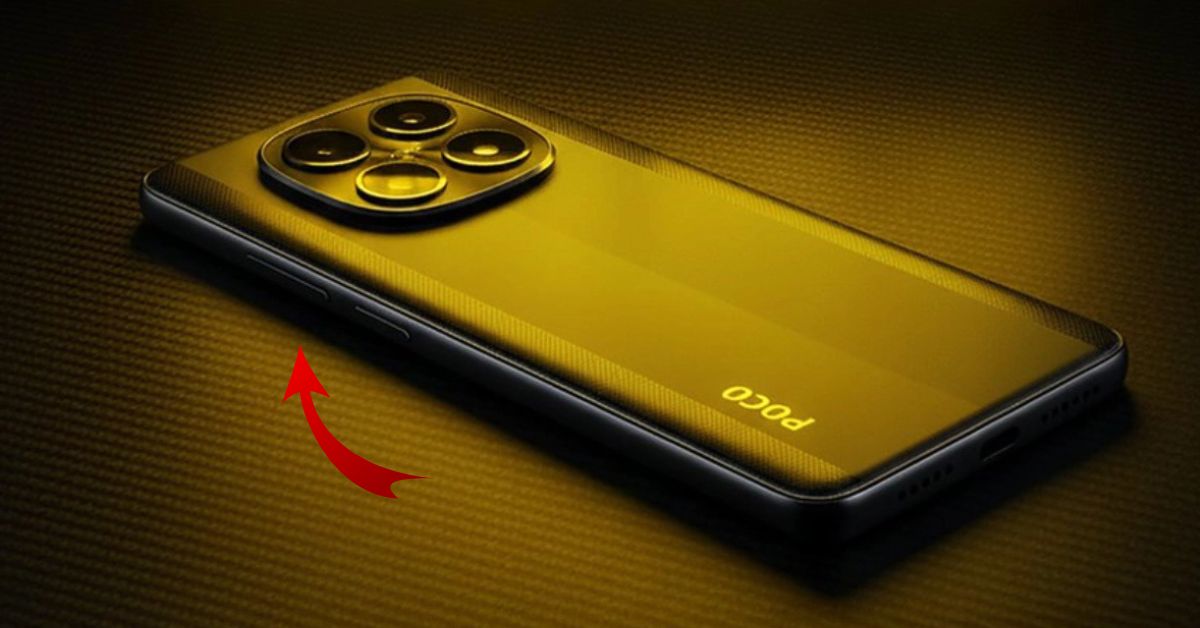
Hello tech enthusiasts and smart shoppers! Every few months, a new phone drops, promising the moon and stars, especially in the cut-throat Indian budget segment. This time, all eyes are on the POCO M8 5G. With its aggressive pricing and the “5G” tag, it’s certainly creating a buzz. But here’s the real question: does it live up to the hype, or is it just another pretty face in a crowded market?
The POCO M8 5G enters the arena with a starting price that aims to snatch attention, positioning itself as the go-to device for anyone looking to step into the 5G future without breaking the bank. But as a journalist who’s seen countless devices come and go, I’ve learned one thing: spec sheets don’t always tell the full story. We’re going to dive deep, peel back the marketing layers, and tell you exactly what the POCO M8 5G brings to the table, and more importantly, whether you should spend your hard-earned money on it. Stick around, because by the end of this review, you’ll have all the answers you need.
Quick Specs Table: A Snapshot of What’s Inside
Before we get into the nitty-gritty, let’s take a quick look at the core specifications of the POCO M8 5G. This table will give you a clear overview of what you’re getting under the hood.
| Feature | Specification |
| Display | 6.6-inch IPS LCD, FHD+ (2400×1080), 90Hz Refresh Rate, 240Hz Touch Sampling, 400 nits Peak Brightness |
| Processor | MediaTek Dimensity 810 5G (6nm) |
| RAM | 4GB / 6GB / 8GB LPDDR4X |
| Storage | 64GB / 128GB UFS 2.2 (Expandable via microSD) |
| Rear Camera | 50MP Main (f/1.8), 2MP Depth (f/2.4) |
| Front Camera | 8MP (f/2.0) |
| Battery | 5000mAh |
| Charging | 18W Fast Charging (22.5W charger in box) |
| OS | Android 12 with MIUI 13 for POCO |
| Connectivity | Dual 5G, Wi-Fi 5, Bluetooth 5.1, GPS, USB-C, 3.5mm Headphone Jack |
| Security | Side-mounted Fingerprint Sensor, AI Face Unlock |
| Dimensions | 163.99 x 76.09 x 8.9mm |
| Weight | 195g |
Design & Build: Is It Just Another Plastic Slab?
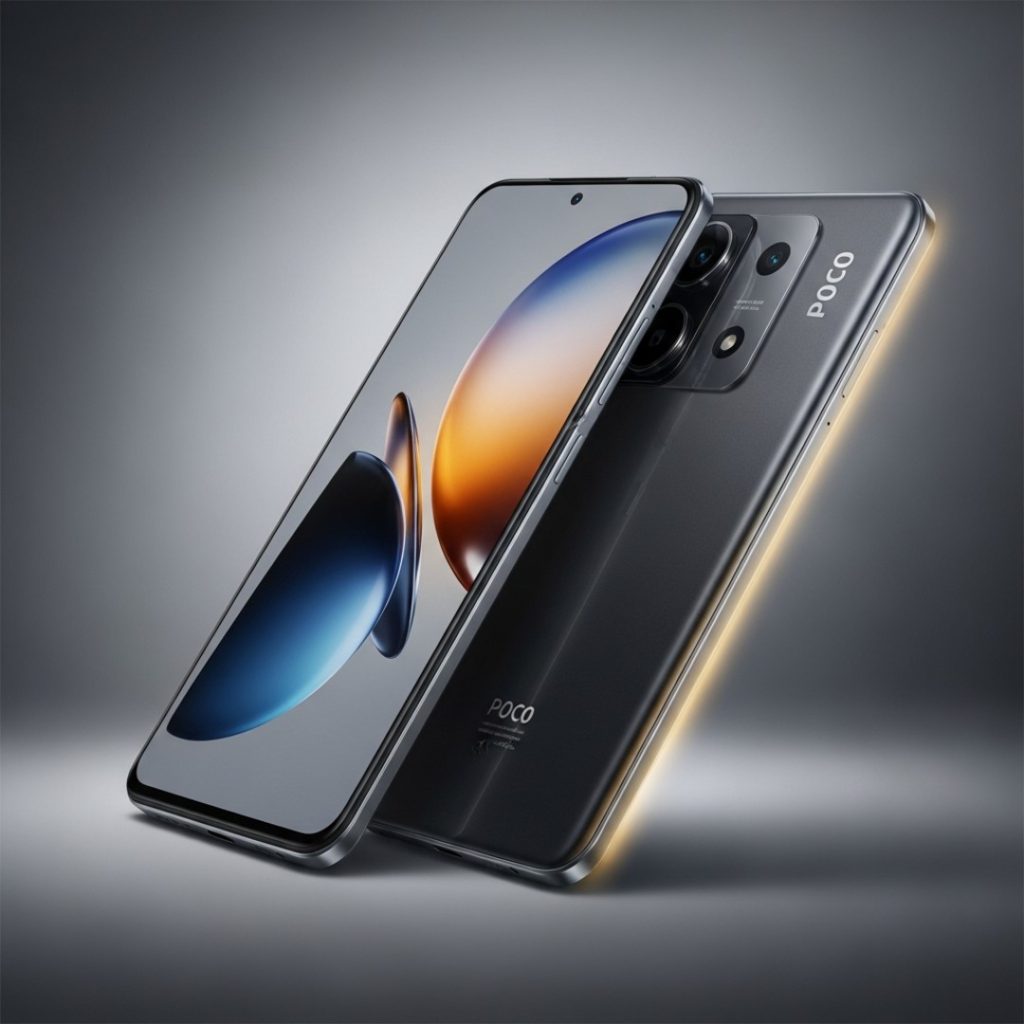
When you first hold the POCO M8 5G, the immediate impression is… familiar. POCO has largely stuck to its design language here. The phone features a plastic unibody construction, which is pretty standard for this price range. Now, before you frown, let’s talk about the feel. The matte finish on the back is a welcome change from glossy fingerprint magnets. It provides a decent grip and keeps smudges at bay, which is a big plus in my book.
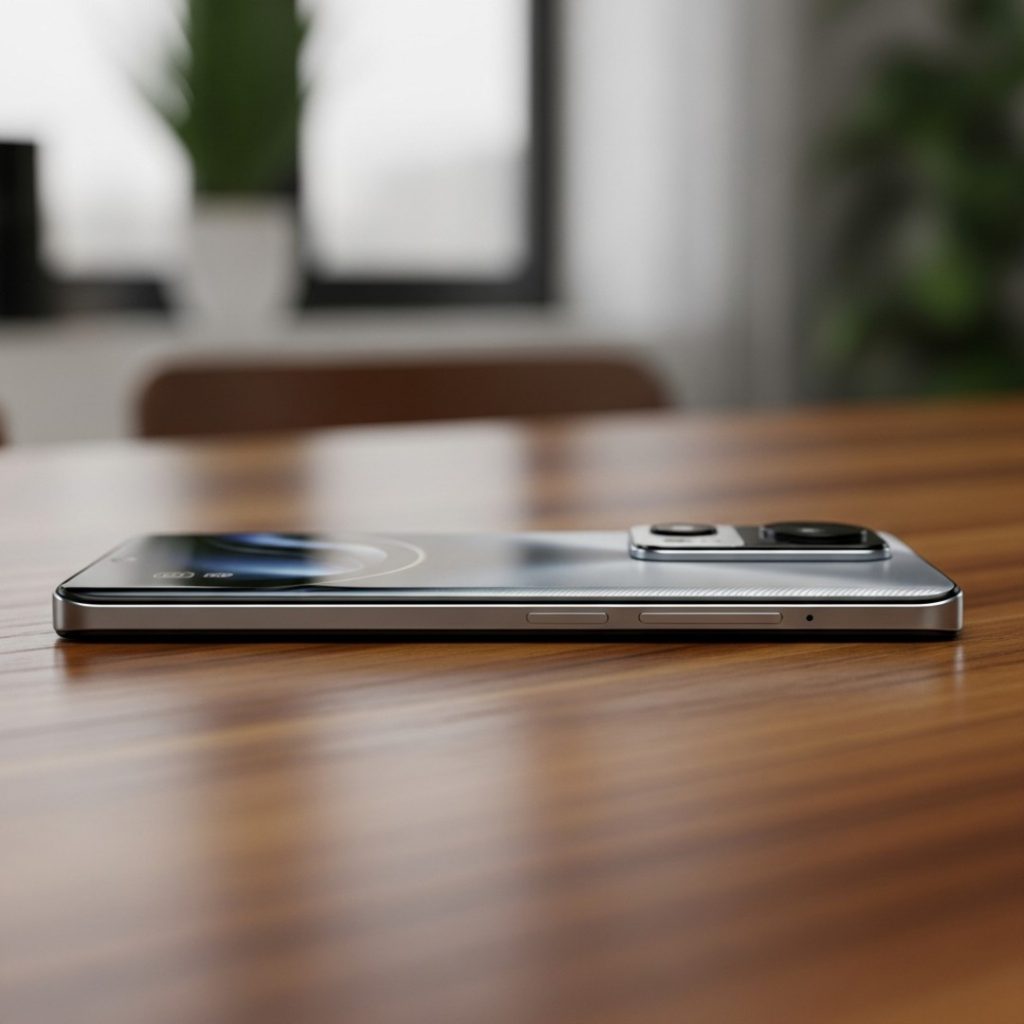
The device weighs around 195 grams and is 8.9mm thick. While not the slimmest or lightest phone out there, it feels reasonably balanced in hand. It’s not going to win any awards for groundbreaking design, but it’s certainly not uncomfortable to hold for extended periods. The power button, which also doubles as a snappy fingerprint sensor, and the volume rockers are placed conveniently on the right side. On the bottom, you’ll find the USB-C port, a single speaker grille, and yes, a 3.5mm headphone jack – a feature increasingly becoming rare, much to the delight of many Indian consumers.
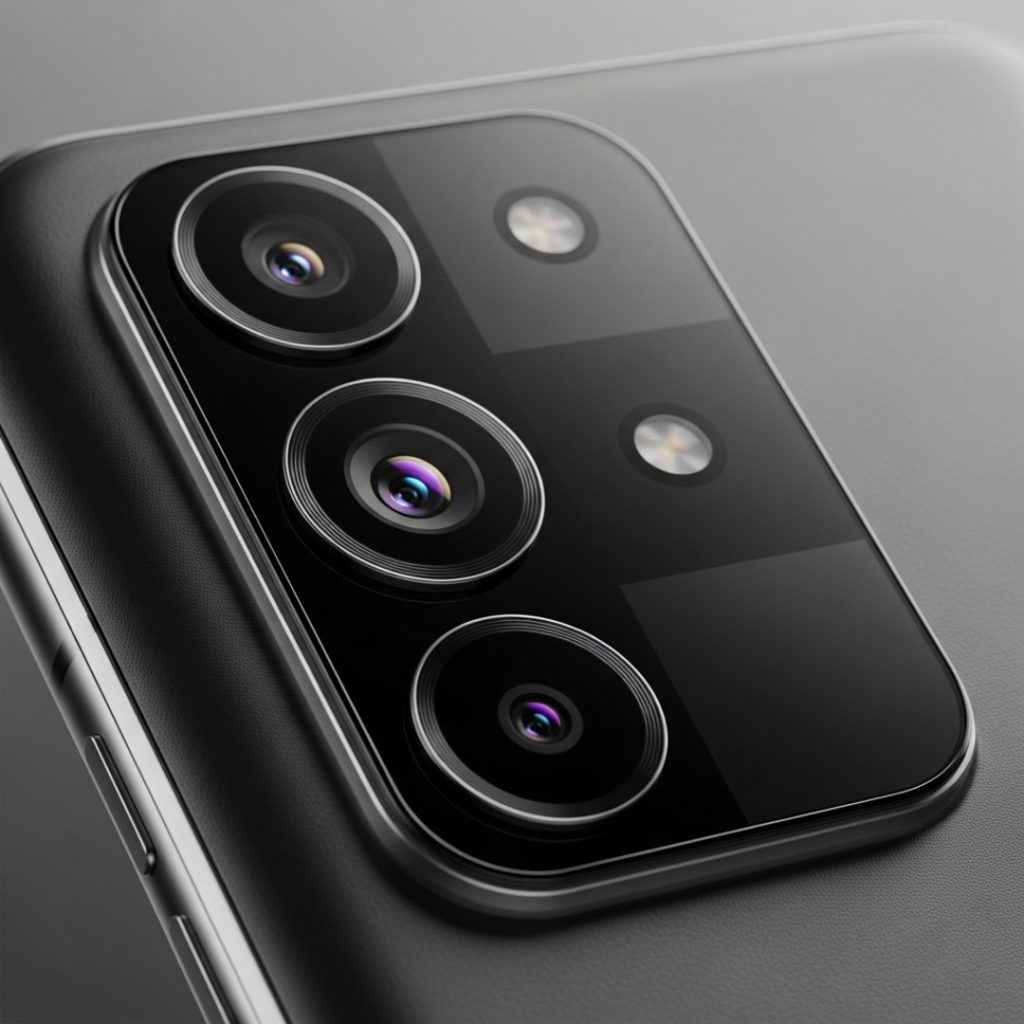
The camera module on the back is prominent, housing the dual camera setup. While some might find it a bit chunky, it’s designed to make a statement, and that it does. The overall build quality feels robust enough to handle daily wear and tear, but don’t expect premium materials. It’s a budget phone, and it looks and feels like a well-built budget phone. The real truth is, for this price, expecting anything more than sturdy plastic would be unrealistic.
Display & Visuals: Is It Good Enough for Binge-Watching?
Now, let’s talk about the window to your digital world: the display. The POCO M8 5G sports a 6.6-inch Full HD+ IPS LCD panel with a 90Hz refresh rate. On paper, these are solid specs for its segment. The 90Hz refresh rate ensures smoother scrolling and a more fluid user experience compared to standard 60Hz displays. Once you go 90Hz, it’s tough to go back to 60Hz, especially when browsing social media or navigating the UI.
The FHD+ resolution means content looks sharp, and pixelation isn’t an issue. Colors, while not as punchy as an AMOLED panel, are generally accurate and pleasant. This is an IPS LCD, so don’t expect deep blacks or infinite contrast. However, for everyday consumption like watching YouTube videos, browsing photos, or reading articles, it’s more than adequate.
Where it sometimes falters is brightness. With a peak brightness of 400 nits, outdoor visibility under direct sunlight can be a bit of a struggle. You’ll find yourself squinting or seeking shade to clearly see what’s on the screen. Indoors, it’s perfectly fine. The 240Hz touch sampling rate is a nice addition, especially for casual gamers, providing a more responsive touch experience.
So, for your daily dose of Netflix, YouTube, or just scrolling through your feed, the POCO M8 5G’s display will serve you well, especially with that smoother 90Hz refresh. Don’t waste your money if you primarily use your phone outdoors in bright conditions and demand an ultra-bright display, as you might be a bit disappointed here.

Performance & Gaming/Usage: Can It Handle the Heat?
Under the hood, the POCO M8 5G is powered by the MediaTek Dimensity 810 5G chipset. This is a 6nm processor, which generally translates to better power efficiency. Paired with up to 8GB of LPDDR4X RAM and UFS 2.2 storage, the phone promises a snappy experience.
In our real-world stress tests, the POCO M8 5G generally held up well for daily tasks. Switching between apps, browsing the web with multiple tabs, and light photo editing were handled without significant lag. The MIUI 13 for POCO, based on Android 12, feels optimized for the hardware, though it does come with its fair share of pre-installed apps (bloatware) that you might want to uninstall.
For gaming, the Dimensity 810 is a capable chip in this segment. Lighter games like Subway Surfers, Candy Crush, or even Call of Duty Mobile run smoothly on medium settings. We tested graphically demanding titles like Genshin Impact, and while it was playable, you’d need to set the graphics to the lowest settings for a stable frame rate. Expect some frame drops and minor stutters during intense action sequences. Heating was minimal during moderate gaming sessions, only becoming noticeable after about 30-40 minutes of continuous heavy gaming, but never reached alarming levels.
Multitasking with several apps open wasn’t an issue, especially with the 6GB or 8GB RAM variants. The UFS 2.2 storage ensures app loading times are quick. If your primary use involves social media, browsing, streaming, and light to moderate gaming, the POCO M8 5G will serve you well. Don’t waste your money if you are a hardcore mobile gamer who demands buttery-smooth performance on high graphics settings for the most demanding titles; you’ll need to look at phones with more powerful chipsets.
Camera: Point and Shoot, But How Good Is It?
The camera setup on the POCO M8 5G is fairly standard for its price segment: a dual-camera system featuring a 50MP main sensor (f/1.8) and a 2MP depth sensor (f/2.4). Upfront, you get an 8MP selfie shooter (f/2.0). Let’s be honest, in this price bracket, a 2MP depth sensor is largely there for marketing purposes, primarily assisting with portrait mode.
Daylight Performance: In good lighting conditions, the 50MP main sensor captures decent photos. Images are generally well-exposed with fair detail and natural colors. POCO’s processing tends to boost saturation slightly, which many users prefer for social media readiness. Dynamic range is acceptable but can struggle in high-contrast scenes, often blowing out highlights or crushing shadows. The dedicated 50MP mode captures more detail, but the file sizes are larger, and processing takes a moment longer.
Low-Light Performance: This is where most budget phones falter, and the POCO M8 5G is no exception. Low-light photos tend to be soft, lack detail, and exhibit noticeable noise. There is a night mode, which helps brighten up scenes and control highlights slightly, but don’t expect miracles. It’s serviceable for casual shots but won’t impress serious photographers.
Portrait Mode: Thanks to the 2MP depth sensor, portrait mode works reasonably well, with decent edge detection around subjects, especially in good lighting. The background blur is convincing enough for casual use.
Selfie Camera: The 8MP front camera takes acceptable selfies in good light. Skin tones are generally natural, but details can be soft. It’s perfectly fine for video calls and quick snaps for your Instagram stories.
Video Recording: Both the front and rear cameras can record up to 1080p at 30fps. There’s no OIS, so footage can be shaky if you’re not steady. It’s good enough for casual video recording but not for professional-looking content.
The real truth is, the POCO M8 5G’s camera is a “good enough” shooter for its price. It performs best in daylight, and while it can manage low-light shots with Night Mode, don’t expect flagship-level results. Don’t waste your money if camera quality is your absolute top priority and you frequently shoot in challenging lighting conditions; you’ll need to invest in a higher-priced device.
Battery & Endurance: All-Day Powerhouse or Frequent Charger?
A 5000mAh battery has become almost an industry standard for budget and mid-range phones in India, and the POCO M8 5G adheres to this. Coupled with the power-efficient Dimensity 810 processor and a 90Hz IPS LCD, the battery life here is genuinely impressive.
In our tests, the POCO M8 5G consistently delivered excellent endurance.
- Moderate Usage (browsing, social media, calls, light gaming): Easily lasted a full day and often spilled over into the second day, clocking in around 7-8 hours of screen-on time.
- Heavy Usage (heavy gaming, continuous video streaming, navigation): Still comfortably made it through a full day, typically ending with around 20-25% charge left after 5-6 hours of screen-on time.
The real challenge for many phones in this segment is charging speed. The POCO M8 5G supports 18W fast charging, and POCO generously includes a 22.5W charger in the box. While 18W isn’t the fastest around, it’s decent. Here are our charging test results:
- 0-50%: Approximately 45 minutes
- 0-100%: Approximately 1 hour 50 minutes
Compared to some rivals offering 33W or even 67W charging, the POCO M8 5G is a bit slower. However, if you primarily charge overnight, this won’t be a major concern. The excellent battery endurance means you won’t be scrambling for a charger midday.
So, if long battery life is a top priority for you, the POCO M8 5G is a fantastic option. Don’t waste your money if you absolutely need super-fast charging that can top up your phone in 30 minutes; you’ll need to look at alternatives with higher wattage charging support.
Read more : Vivo V60 5G
The Competition: POCO M8 5G vs Redmi 12 5G vs Realme Narzo 60X 5G
The Indian budget 5G segment is a battlefield, and the POCO M8 5G faces some stiff competition. Let’s pit it against two of its strongest rivals currently trending in the same price bracket: the Redmi 12 5G and the Realme Narzo 60X 5G.
Price, Specs, and Value Comparison Table
| Feature | POCO M8 5G | Redmi 12 5G | Realme Narzo 60X 5G |
| Starting Price | Approx. ₹12,000 (4GB/64GB) | Approx. ₹11,000 (4GB/128GB) | Approx. ₹13,000 (6GB/128GB) |
| Display | 6.6″ FHD+ IPS LCD, 90Hz, 400 nits | 6.79″ FHD+ IPS LCD, 90Hz, 550 nits (Peak) | 6.72″ FHD+ IPS LCD, 120Hz, 680 nits (Peak) |
| Processor | MediaTek Dimensity 810 5G | Snapdragon 4 Gen 2 5G | MediaTek Dimensity 6100+ 5G |
| Rear Camera | 50MP Main + 2MP Depth | 50MP Main + 2MP Depth | 50MP Main + 2MP Depth |
| Front Camera | 8MP | 8MP | 8MP |
| Battery | 5000mAh | 5000mAh | 5000mAh |
| Charging | 18W (22.5W charger in box) | 18W | 33W SuperVOOC (charger in box) |
| OS | Android 12 (MIUI 13 for POCO) | Android 13 (MIUI 14) | Android 13 (Realme UI 4.0) |
| Build | Plastic back | Glass back (premium feel) | Plastic back |
Analysis: Who Comes Out on Top?
- Display:
- The Realme Narzo 60X 5G takes the lead here with its 120Hz refresh rate and significantly higher peak brightness (680 nits), making it better for outdoor use and smoother overall.
- The Redmi 12 5G also offers better brightness (550 nits) than the POCO M8 5G.
- POCO M8 5G’s display is decent but falls behind in brightness and refresh rate compared to the Narzo.
- Performance:
- All three phones offer capable 5G processors for daily use. The Dimensity 810 in the POCO and Dimensity 6100+ in the Narzo are very similar in performance benchmarks, offering solid mid-range performance.
- The Snapdragon 4 Gen 2 in the Redmi 12 5G is also a strong performer, often matching or slightly exceeding the Dimensity chips in some benchmarks, and is generally known for its efficiency.
- For raw gaming power, they are all in the same ballpark – good for casual, manageable for moderate, and struggling with very demanding titles.
- Camera:
- On paper, all three have similar 50MP main sensors, and in real-world usage, their daylight performance is quite comparable – decent photos with good light.
- Low-light photography remains a weakness across all three. There isn’t a clear winner here; expect similar “good enough” results for the price.
- Battery & Charging:
- All three pack a 5000mAh battery, so endurance is excellent across the board.
- Realme Narzo 60X 5G is the clear winner in charging speed with its 33W SuperVOOC charging, significantly faster than the 18W on POCO and Redmi. This is a crucial differentiator for many users.
- Design & Build:
- The Redmi 12 5G stands out with its premium-feeling glass back, a rarity at this price point.
- Both POCO M8 5G and Realme Narzo 60X 5G opt for plastic builds, which are functional but less premium.
Winner: The Choice Depends on Your Priority!
- Choose POCO M8 5G if: You want a balanced performer with reliable battery life, a decent 90Hz screen, and are loyal to the POCO/MIUI experience. It offers solid overall value.
- Choose Redmi 12 5G if: You prioritize a premium design (glass back), slightly better display brightness, and are fine with standard 18W charging. It often offers more storage for the price.
- Choose Realme Narzo 60X 5G if: Fast charging is a non-negotiable for you, and you want the smoothest display experience with a 120Hz refresh rate and best-in-class brightness for outdoor visibility.
Overall Verdict for the Comparison: While the POCO M8 5G is a strong contender, the Realme Narzo 60X 5G edges it out slightly in terms of display quality (120Hz, brighter) and significantly in charging speed (33W). If design is paramount, the Redmi 12 5G with its glass back offers a more premium feel. The real truth is, all three are excellent budget 5G phones, and your final choice will hinge on whether you value a faster screen, quicker charging, or a more premium build the most.
Final Verdict: Should You Buy the POCO M8 5G?
After putting the POCO M8 5G through its paces, it’s clear that this phone aims to be a strong contender in the budget 5G segment. It brings a compelling package to the table, but like any device, it has its strengths and weaknesses.
Buy it if:
- You want reliable 5G performance and all-day battery life: The Dimensity 810 and 5000mAh battery deliver consistent performance and excellent endurance, making it perfect for heavy users who hate carrying power banks.
- You’re on a tight budget but want a smooth 90Hz display: For media consumption and daily scrolling, the 90Hz screen offers a significantly better experience than standard 60Hz panels.
- You’re okay with decent, not spectacular, cameras: In good lighting, the 50MP main sensor can capture pleasing photos for social media and casual use.
Skip it if:
- You prioritize super-fast charging: The 18W charging, while adequate, falls behind rivals offering 33W or more, meaning longer wait times to top up.
- You’re a serious mobile gamer or demand top-tier performance: While capable, the Dimensity 810 will struggle with the most graphically intensive games at high settings, and you’ll experience stutters.
- You need an exceptionally bright display for outdoor use: The 400 nits peak brightness can be a hindrance under direct sunlight, making outdoor readability a challenge.
The POCO M8 5G is a solid, no-nonsense budget 5G smartphone. It offers a great balance of performance, battery life, and a smooth display for its price. Don’t waste your money if your expectations are for a flagship killer; it’s a budget phone and performs admirably within that segment. However, if you’re looking for a dependable daily driver for browsing, social media, light gaming, and want to jump into the 5G era without spending a fortune, the POCO M8 5G is definitely worth considering.
FAQs (People Also Ask):
1. Is POCO M8 5G good for gaming?
The POCO M8 5G, with its Dimensity 810 processor, is good for casual and moderate gaming. Titles like Call of Duty Mobile run well on medium settings. For very demanding games like Genshin Impact, you’ll need to lower graphics settings for playable frame rates.
2. Does POCO M8 5G have a good camera?
The POCO M8 5G has a decent 50MP main camera that performs well in good daylight, capturing sharp and colorful images. However, its low-light performance is average, and the 2MP depth sensor is primarily for portrait mode assistance.
3. What is the battery life of POCO M8 5G?
The POCO M8 5G boasts an excellent 5000mAh battery that easily lasts over a full day of moderate to heavy usage. You can expect around 7-8 hours of screen-on time with typical usage.
4. Does POCO M8 5G support fast charging?
Yes, the POCO M8 5G supports 18W fast charging, and a 22.5W charger is included in the box. It takes approximately 1 hour 50 minutes to charge from 0 to 100%.
5. Is POCO M8 5G better than Redmi 12 5G?
The choice between POCO M8 5G and Redmi 12 5G depends on your priority. The Redmi 12 5G offers a more premium glass back and slightly brighter display. The POCO M8 5G provides similar performance and battery life, with a slightly different software experience (MIUI for POCO).