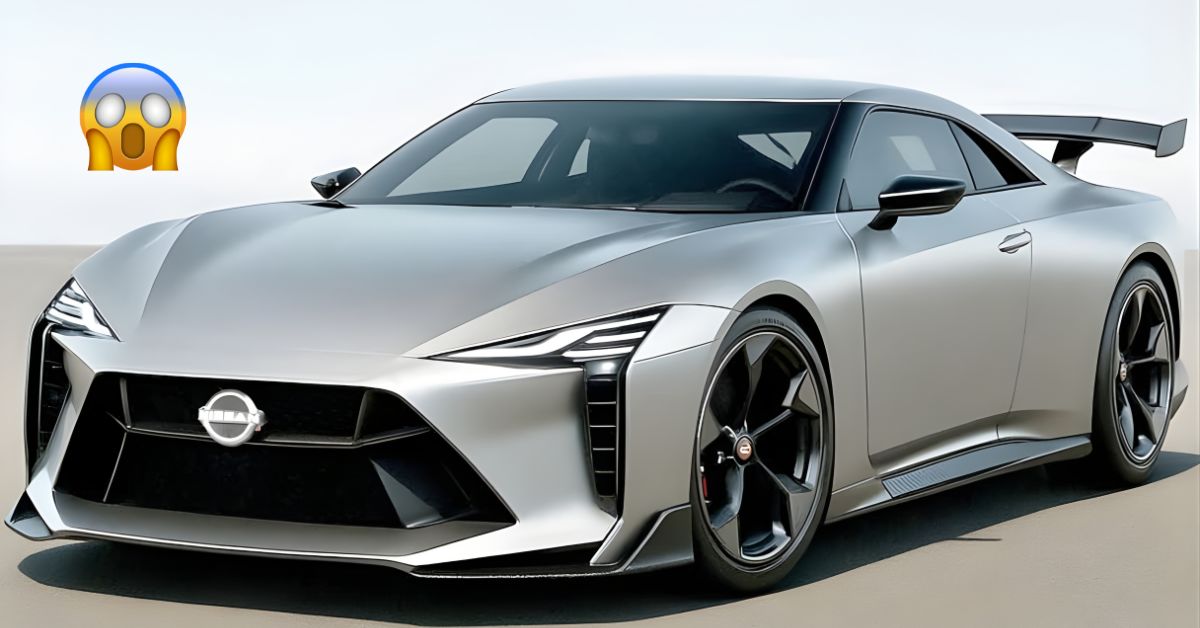
The Nissan GT-R 2025 Review is an assessment of a true automotive legend, a machine affectionately known globally as “Godzilla” for its ability to dominate technologically superior and far more expensive rivals. The GT-R is a uniquely engineered vehicle, now in its eighteenth year of continuous production on the R35 platform, but consistently updated to maintain its status as one of the quickest accelerating cars in the world. It represents a specific, uncompromising philosophy: delivering supercar performance through brutal, accessible technology. For the enthusiast in India, the GT-R is a highly specialized, rare import whose presence signifies a deep appreciation for motorsport heritage and engineering efficiency. This comprehensive analysis dissects the specialized VR38DETT twin-turbo V6 engine, details the cutting-edge ATTESA E-TS all-wheel-drive system, evaluates its aging yet functional cabin, and outlines the significant cost associated with owning this icon in the Indian market.
Engine Specs and Unrivalled Acceleration
The core of the Nissan GT-R 2025 Review subject’s performance is the legendary, hand-built 3.8-litre VR38DETT twin-turbo V6 engine. This is no ordinary V6; each engine is meticulously assembled by one of only five master craftsmen, known as Takumi, in Japan, whose signature plaque is placed on the engine block.
The standard GT-R Premium model for 2025 generates a massive 565 horsepower and 637 Nm of torque (467 lb-ft). The performance is amplified in the specialized Nismo variants, which push the output to 600 horsepower, thanks to upgraded turbochargers and engine tuning. This immense power is managed not by a manual transmission, but by a highly specialized 6-speed dual-clutch transmission (DCT). The transmission itself is mounted at the rear of the vehicle, forming a unique rear transaxle layout. This transaxle placement is a crucial mechanical specialization, contributing significantly to the car’s phenomenal traction and its near-perfect front-to-rear weight balance, optimizing the physics for acceleration.
This combination of a hand-built twin-turbo V6 and the rapid-fire dual-clutch transaxle allows the GT-R to achieve one of the fastest acceleration figures in the world, launching from 0 to 100 km/h in a verified time of under 3.0 seconds, firmly securing its position in the hypercar performance segment. The top speed of the GT-R is rated at approximately 315 km/h (196 mph), a testament to its aerodynamic efficiency and raw engine output.
Specialized Features: ATTESA E-TS AWD and Chassis Dynamics
The true engineering genius of the Nissan GT-R 2025 Review subject lies in its handling capability, which is defined by a sophisticated set of active and passive chassis specializations.
ATTESA E-TS All-Wheel Drive
The GT-R utilizes the highly advanced ATTESA E-TS (Advanced Total Traction Engineering System for All Electronic Torque Split) all-wheel-drive system. This system is a dynamic, intelligent specialization that operates primarily as a rear-wheel-drive vehicle under normal conditions for handling purity. However, when the system detects any hint of wheel slippage, it can instantaneously route up to 50 percent of the torque to the front wheels. This real-time torque vectoring ensures that the GT-R maximizes grip on dry pavement and maintains composure under severe acceleration or in challenging weather, providing the driver with the feel and response of a rear-wheel-drive sports car coupled with the safety assurance of all-wheel drive.
DampTronic Suspension and Braking
The car rides on a highly specialized suspension setup featuring Bilstein DampTronic shock absorbers. These adaptive dampers instantly adjust the damping force based on speed, lateral G-forces, and the selected drive mode (Normal, Comfort, or R mode). This technology is fundamental to the GT-R’s dual personality, offering a relatively compliant ride in Comfort mode for daily driving while stiffening dramatically in R mode for track performance. Braking performance is equally uncompromising, handled by large, powerful Nissan/Brembo ventilated discs with monoblock calipers, providing phenomenal stopping power necessary to manage its immense speed and 1,752 kg kerb weight. The top-tier NISMO models feature advanced carbon ceramic braking systems for superior thermal capacity and reduced unsprung weight.
Interior Features: Functional Cockpit and Analog Feel
The interior of the Nissan GT-R 2025 Review subject is the area where its age is most apparent, yet its design remains resolutely driver-focused and functional. Unlike modern rivals that feature sweeping digital screens, the GT-R’s cockpit maintains a highly analog feel, characterized by tactile controls and an emphasis on durability over visual flamboyance.
The cabin is laid out as a 2+2 seating configuration, meaning there are two fully functional front seats and two small rear seats often better suited for luggage or short trips for small children. The driver-focused design includes a traditional, analog instrument cluster complemented by an 8-inch central touchscreen for infotainment. While this screen supports modern connectivity features like Apple CarPlay and navigation, the overall interface and graphical quality feel dated compared to the current digital cockpits offered by European rivals. Luxury touches include leather-appointed seating and high-quality trim, but the design is utilitarian, reflecting the car’s primary mission as a pure performance machine. The sound system is a specialized 11-speaker Bose premium audio system, custom-engineered for the GT-R’s cabin acoustics.
Mileage, Pros & Cons, and Expected Price in India
The ownership of the Nissan GT-R 2025 subject is defined by its extreme performance specialization, which leads to highly specific benefits and significant drawbacks, particularly in the unique Indian market context.
Mileage and Running Costs
The GT-R’s official ARAI-certified mileage is rated at a low 8.4 kmpl. In real-world Indian city driving conditions, this figure is likely to drop to 6 kmpl to 8 kmpl due to traffic and the persistent demands of the powerful twin-turbo engine. Running costs are a serious consideration: the specialized nature of the DCT transaxle requires rigorous fluid maintenance, often mandated at shorter intervals than standard cars. Furthermore, the car requires premium, high-octane fuel, and the replacement of specialized, high-performance tires and Brembo braking components is exceptionally expensive, requiring specialist mechanics and dedicated Nissan High Performance Centers for servicing.
Read More : Toyota Supra 2025
Pros and Cons Summary
The clear advantages (Pros) of the GT-R are its jaw-dropping, consistent acceleration and performance, its meticulously engineered ATTESA AWD system, and its status as a technological, iconic legend. It remains one of the best handling cars available, offering performance that rivals cars costing twice its price internationally. The main disadvantages (Cons) are the car’s aging interior design and lack of modern digital amenities, the extremely stiff ride quality on imperfect Indian roads due to its track-focused suspension and low 110 mm ground clearance, and the very high long-term maintenance costs and complexity due to its rare, highly specialized components.
Expected Price in India
The Nissan GT-R has historically been sold in India via the CBU (Completely Built Unit) import route. Although official sales have ceased, the last recorded Ex-Showroom price for the standard Premium variant was ₹2.12 Crore. Given the extremely high import duties for high-value vehicles, a current estimated Ex-Showroom price for a new 2025 model would hover around ₹2.15 Crore to ₹2.25 Crore. The final On-Road Price in India for the Nissan GT-R 2025, factoring in RTO registration, insurance, and taxes (which can easily add 30-40 percent to the Ex-Showroom price in major cities), is estimated to range between ₹2.6 Crore and ₹3.0 Crore. This massive final price confirms that the GT-R remains a unique, high-value purchase reserved for the most dedicated performance enthusiasts.
The Electric Showdown: Hyundai Creta Electric vs. Tata Curvv EV—The Battle for India’s Premium EV Segment
The competition in India’s electric vehicle (EV) market is entering a crucial new phase, moving beyond the sub-$4$ metre segment and focusing squarely on the lucrative mid-size SUV category. This battle is currently defined by the intense rivalry between the highly anticipated Hyundai Creta Electric and the already established Tata Curvv EV. Both vehicles represent the pinnacle of their respective brand philosophies—Hyundai prioritizing feature integration, refined comfort, and proven reliability, while Tata focuses on aggressive styling, class-leading range, and structural safety. This detailed analysis dissects the specific performance, range, feature, and pricing strategies employed by both manufacturers in this high-stakes segment.
Electric Range and Powertrain Specialization
The core competitive advantage of any EV is its range and charging ecosystem, an area where both the Creta Electric and the Curvv EV offer sophisticated solutions.
Tata Curvv EV: Range and Fast Charging Prowess
The Tata Curvv EV, built on the versatile acti.ev platform, offers a range specialization that targets segment-leading figures. It is available with two battery packs: a $45\text{ kWh}$ pack offering an ARAI-certified range of $502\text{ km}$ (with real-world usage around $350\text{ km}$ to $400\text{ km}$) and a larger $55\text{ kWh}$ pack offering an even more impressive ARAI range of $585\text{ km}$. The Curvv EV’s powertrain delivers a max power output of $165\text{ PS}$ in the long-range variant and $150\text{ PS}$ in the standard pack, achieving a $0\text{ to } 100\text{ km/h}$ acceleration time of approximately $8.6\text{ seconds}$. Crucially, the Curvv EV supports superior $70\text{ kW}$ DC fast charging, allowing the battery to replenish from $10\%$ to $80\%$ in a rapid $40\text{ minutes}$, providing a significant advantage in minimizing charging stops. The inclusion of Vehicle-to-Load (V2L) technology further enhances its utility, allowing the car to power external devices and appliances.
Hyundai Creta Electric: Refined Performance and Service Network
The Hyundai Creta Electric, leveraging the highly successful platform of its ICE sibling, focuses on refined power delivery and efficiency. It also offers two battery options: a $42\text{ kWh}$ pack (with an increased MIDC range of $420\text{ km}$) and a $51.4\text{ kWh}$ Long Range pack (offering an impressive MIDC range of $510\text{ km}$). The Creta Electric specializes in acceleration, with its long-range variant producing $169\text{ bhp}$ and $255\text{ Nm}$ of torque, achieving a quicker $0\text{ to } 100\text{ km/h}$ sprint time of $7.9\text{ seconds}$. While its fast charging is currently limited to $50\text{ kW}$ DC (taking $58\text{ minutes}$ from $10\%$ to $80\%$), the Creta benefits immensely from Hyundai’s established, pervasive service network across India, offering greater peace of mind regarding maintenance and repairs.
Interior Features and Technological Dominance
Both SUVs are intensely focused on democratizing premium features, but they approach the cabin experience with different specialized philosophies.
Tata Curvv EV: Digital Minimalism and Design
The Curvv EV distinguishes itself aesthetically with its coupé-SUV design and a cabin that embraces digital minimalism. The interior features a large $12.3\text{-inch}$ floating touchscreen infotainment system paired with a fully digital driver display. The design includes a two-spoke illuminated steering wheel and a clean, horizontal dashboard layout. A key specialization is the generous $500\text{ Litres}$ of boot space, significantly more than the Creta’s $433\text{ Litres}$, enhancing its practical utility for long trips. However, the sloping roofline of the coupé design does compromise rear-seat headroom and perceived airiness compared to the boxier Creta.
Hyundai Creta Electric: Feature Overload and Comfort
The Creta Electric leverages the highly successful feature suite of its ICE counterpart, specializing in occupant comfort and connectivity. The cabin features dual $10.25\text{-inch}$ curvilinear screens for the infotainment and digital cluster, offering a modern, integrated feel. Key comfort features include ventilated front seats, a powerful Bose premium 8-speaker sound system, dual-zone automatic climate control (DATC), and 8-way powered driver and passenger seats with memory functions. The Creta also features a unique shift-by-wire column-type gear selector, freeing up space on the central console. The Creta’s taller, boxier structure ensures superior rear-seat comfort, with better headroom and a more upright seating posture, making it the more comfortable choice for long journeys involving four or five adults.
Safety, Dynamics, and Market Positioning
Both the Tata and Hyundai EVs set a high standard for safety and driving dynamics in the segment.
Structural Safety and ADAS
The Tata Curvv EV emphasizes its structural integrity, having achieved a commendable 5-star rating under Bharat NCAP crash tests, carrying on the brand’s reputation for structural safety. The Curvv includes 6 airbags, ESC, and a full suite of modern active safety features. The Hyundai Creta Electric also comes equipped with a comprehensive safety package, including Level 2 ADAS (Advanced Driver Assistance Systems) across higher variants, which offers crucial features like Smart Cruise Control, Forward Collision Warning, and Lane Keep Assist, providing a high degree of active safety and driver assistance that the Curvv EV currently lacks.
Ride and Handling
In terms of dynamics, the Tata Curvv EV is praised for its softer suspension tuning, which effectively irons out potholes and bumps, offering superior ride comfort in city driving. The battery mass under the floor aids in high-speed stability. The Hyundai Creta Electric, while having a slightly firmer setup, offers a more predictable and arguably more engaging everyday driving experience, leveraging its slightly longer wheelbase for enhanced stability.
Price and Investment Verdict
The competitive price positioning of both vehicles ensures this segment offers immense value. The Tata Curvv EV launched with an aggressive starting ex-showroom price of $\text{₹}17.49\text{ Lakh}$ for the base $45\text{ kWh}$ variant, positioning it as a direct price disruptor. The top-end $55\text{ kWh}$ Dark Edition is priced at approximately $\text{₹}22.24\text{ Lakh}$. The Hyundai Creta Electric has a slightly higher entry point, with the $42\text{ kWh}$ Executive variant starting around $\text{₹}18.02\text{ Lakh}$ and the top-end Excellence LR $51.4\text{ kWh}$ variant reaching up to $\text{₹}24.55\text{ Lakh}$.
In conclusion, the Tata Curvv EV specializes in extreme range, superior fast charging (70kW), structural safety (5-star rating), and practical boot space. The Hyundai Creta Electric specializes in quicker acceleration, superior comfort features (powered seats, dual-zone AC), established reliability, and Level 2 ADAS integration. The choice between the two is a matter of prioritizing pure range and coup\eacute; design (Curvv) versus refined comfort and active safety technology (Creta).