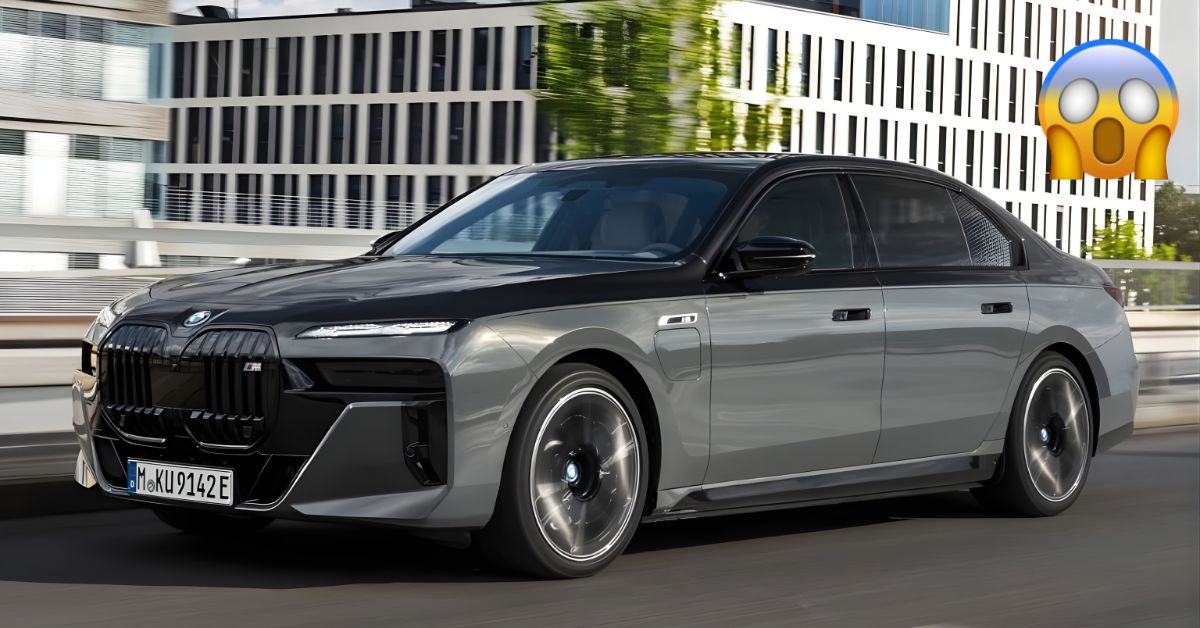
The landscape of luxury motoring in India in 2025 has undergone a profound shift, driven by a dual consumer demand for uncompromising performance and environmental responsibility. The luxury hybrid segment, encompassing both the sophisticated Strong Hybrid and the powerful Plug-in Hybrid Electric Vehicle (PHEV), has emerged as the definitive choice for the elite buyer. These vehicles, primarily from German and Japanese premium manufacturers, specialize in delivering supreme isolation, cutting-edge technology, and a complex powertrain that offers exceptional efficiency without sacrificing horsepower. This extensive analysis dissects the two primary hybrid technologies, details the best models across various luxury categories, evaluates their true mileage and unique features, and provides a comparative cost analysis for the Indian market.
Hybrid Technology Specialization: Strong Hybrid Versus Plug-in Hybrid
To understand the luxury hybrid segment, it is essential to distinguish between the two dominant technological philosophies employed by premium manufacturers. This distinction profoundly impacts performance, daily usability, and ultimately, the total cost of ownership.
Strong Hybrid (SH) Philosophy: Seamless Efficiency
The Strong Hybrid architecture, primarily championed by Lexus and utilized in models like the Lexus RX 350h and Toyota Camry, operates with seamless efficiency as its core specialization. In this system, the electric motor and battery are designed to work harmoniously with the petrol engine to improve efficiency and refinement. The vehicle runs on electric power alone for short periods at low speeds, using regenerative braking to recharge the battery automatically without external plugging. The key benefit of a Strong Hybrid is its consistent, impressive real-world mileage—models like the Lexus RX 350h typically return a reliable figure of $16\text{ kmpl}$ to $19\text{ kmpl}$ in mixed driving conditions, making them exceptionally fuel-efficient for their size without requiring the owner to install a charging unit. The Strong Hybrid offers excellent refinement, utilizing the electric motor to smooth out the engine’s operation, ensuring a serene, quiet urban drive.
Plug-in Hybrid (PHEV) Philosophy: Performance and Electric Range
The Plug-in Hybrid Electric Vehicle (PHEV) architecture, favored by the German premium brands like BMW and Mercedes-Benz (e.g., in the BMW X5 50e), focuses on performance and dedicated electric range. The PHEV system uses a much larger battery pack than a Strong Hybrid, requiring external charging. This allows the vehicle to travel a significant distance—often $80\text{ km}$ to over $100\text{ km}$—on electric power alone. The specialization here is dual-purpose: the massive electric motor delivers instantaneous torque for explosive acceleration, often resulting in combined system outputs exceeding $400\text{ horsepower}$, and the car can operate as a pure EV for the entire daily commute, resulting in effectively infinite mileage for local trips. The overall efficiency depends entirely on the frequency of charging.
Best Luxury Hybrid Models and Core Features
The $2025$ Indian luxury hybrid market offers specialized models that lead their respective sub-segments in performance, comfort, and reliability.
The Performance Hybrid Leader: Lexus RX 500h F-Sport
The Lexus RX 500h F-Sport is the pinnacle of the strong hybrid SUV segment, specializing in dynamic driving and a powerful torque-on-demand All-Wheel Drive (AWD) system. Unlike its 350h sibling, the 500h utilizes a $2.4\text{-litre}$ turbocharged petrol engine combined with high-output front and rear electric motors. This results in a combined system output of approximately $371\text{ horsepower}$ and $550\text{ Nm}$ of torque, allowing the SUV to sprint from $0\text{ to } 100\text{ km/h}$ in a rapid $6.2\text{ seconds}$. The specialization here is the DIRECT4 AWD system which actively balances torque between the front and rear axles for superior stability and handling. The interior is defined by Lexus’s meticulous craftsmanship, featuring a $14\text{-inch}$ high-definition touchscreen and the comprehensive Lexus Safety System+ 3.0, which includes advanced ADAS features.
The Executive Sedan Benchmark: Lexus ES 300h and Toyota Camry
For the luxury sedan buyer, the Lexus ES 300h and the closely related Toyota Camry Hybrid remain the definitive choice for strong hybrid refinement. The ES 300h specializes in rear-seat comfort and acoustic isolation, offering a supremely quiet cabin and compliant ride quality. Powered by a $2.5\text{-litre}$ strong hybrid system, the ES 300h delivers a highly efficient ARAI mileage of over $22\text{ kmpl}$. The interior features the finest leather, wood veneers, and a comprehensive infotainment system, positioning it as the ideal chauffeur-driven luxury sedan focused on seamless, reliable efficiency.
The Plug-in Performance Kings: BMW X5 50e and Volvo XC90 Recharge
The large PHEV SUV segment is dominated by the German powerhouses. The BMW X5 50e is the benchmark, specializing in dynamic driving and explosive combined power. It pairs a $3.0\text{-litre}$ inline-six engine with a powerful electric motor, producing over $480\text{ horsepower}$ and accelerating from $0\text{ to } 100\text{ km/h}$ in just over $4.8\text{ seconds}$. Critically, the X5 50e offers a significant pure EV range, typically around $90\text{ km}$ to $100\text{ km}$ (WLTP), a specialization that allows for the majority of urban driving to be emission-free. Similarly, the Volvo XC90 Recharge (PHEV) specializes in Scandinavian luxury and safety, offering a serene cabin, standard three-row seating, and a robust PHEV system that also provides a substantial all-electric range, making it the preferred choice for family-focused luxury buyers.
Read More : Nissan GT-R
Mileage, Pros & Cons: Technology Trade-offs
The evaluation of mileage in the luxury hybrid segment requires careful consideration of the technology employed.
Mileage and Running Costs
Strong Hybrids (Lexus RX, ES): Mileage is excellent and consistent, typically $16\text{ kmpl}$ to $22\text{ kmpl}$ in real-world scenarios. Running costs are lower than pure petrol rivals, and maintenance is simplified as there is no external charging required.
PHEVs (BMW X5, Volvo XC90): The advertised mileage (often $>30\text{ kmpl}$) is theoretical, achievable only by keeping the battery charged. The true benefit is zero-fuel running for daily commutes (e.g., $90\text{ km}$ electric range). When the battery is depleted, the car runs as a conventional hybrid, resulting in $10\text{ kmpl}$ to $12\text{ kmpl}$.
Pros and Cons Comparison
The Pros of Luxury Hybrids are overwhelming: they offer superior refinement (electric motors eliminate initial engine harshness), uncompromising performance (PHEVs use electric torque for instantaneous speed), environmental responsibility, and eligibility for certain tax benefits. The Cons include the higher initial purchase price due to the complex hybrid systems, the added weight of the battery (which can slightly affect handling), and, for PHEVs, the dependency on daily charging to realize the maximum fuel efficiency.
Price Comparison and Investment Verdict in India
The luxury hybrid segment in India is defined by high pricing, reflecting the imported nature of the components, advanced technology, and high import duties on CBU/CKD models. The prices quoted below are the latest estimated On-Road Prices in major metropolitan areas for the base hybrid variants.
| Model | Hybrid Type | Estimated On-Road Price (2025) | Key Specialization |
| Lexus ES 300h | Strong Hybrid | $\text{₹}72\text{ Lakh}$ – $\text{₹}78\text{ Lakh}$ | Unmatched refinement and fuel efficiency |
| Lexus RX 350h/500h | Strong Hybrid/Performance Hybrid | $\text{₹}1.10\text{ Crore}$ – $\text{₹}1.40\text{ Crore}$ | Aggressive styling and proven reliability |
| Volvo XC90 Recharge | Plug-in Hybrid (PHEV) | $\text{₹}1.25\text{ Crore}$ – $\text{₹}1.35\text{ Crore}$ | Standard three-row seating and high safety rating |
| BMW X5 50e | Plug-in Hybrid (PHEV) | $\text{₹}1.35\text{ Crore}$ – $\text{₹}1.55\text{ Crore}$ | Explosive performance and dynamic handling |
| Toyota Vellfire | Strong Hybrid | $\text{₹}1.45\text{ Crore}$ – $\text{₹}1.60\text{ Crore}$ | Ultimate passenger space and luxury MPV comfort |
| BMW M5 | Plug-in Hybrid (PHEV) | $\text{₹}2.35\text{ Crore}$ – $\text{₹}2.50\text{ Crore}$ | Hyper-performance executive sedan (extreme power) |
The Luxury Hybrid Cars 2025 in India review confirms that the market has matured, offering distinct options for every buyer specialization. For the buyer prioritizing reliability and consistent mileage, Lexus and the Strong Hybrid platform offer the best investment. For the buyer demanding uncompromising power and the ability to commute without consuming petrol, the German PHEVs provide the definitive solution. The investment verdict is clear: the high initial cost is offset by the technological advancement, superior refinement, and the undeniable benefit of accessing the latest, most powerful, and most efficient powertrains available globally.
The Hybrid Hatchback Revolution: A Deep Dive into the Maruti Suzuki Swift 2026—Design, Mileage, Technology, and Safety Benchmarks
The launch of the Maruti Suzuki Swift 2026 is poised to be the most significant event in the Indian hatchback segment, transforming the definition of an affordable, family-friendly vehicle. This new generation moves far beyond cosmetic upgrades, embracing a complete mechanical and technological overhaul centered around strong hybrid efficiency and advanced safety features. The Swift, already India’s favorite hatchback for its sporty demeanor and dependable reliability, is being reborn as a future-proof machine that directly addresses the rising consumer demand for extreme fuel economy and world-class safety protocols. This analysis dissects the specialized Z-Series hybrid powertrain, details the radical aesthetic and interior technology upgrades, and evaluates its groundbreaking safety benchmark and highly competitive price positioning in the 2026 market.
Powertrain and Groundbreaking Mileage: The Z-Series Hybrid Specialization
The core engineering advancement of the Maruti Suzuki Swift 2026 lies beneath the bonnet, where the new 1.2-litre Z-Series strong hybrid engine resides. This represents a monumental shift from the previous K-Series unit and mild-hybrid technology. The Z-Series is engineered for both improved torque delivery and unprecedented fuel efficiency. The engine is paired with a powerful electric motor and a substantial battery pack, allowing the car to run on electric power alone at low city speeds and during engine start-stop cycles. This strong hybrid specialization maximizes efficiency exactly where traditional petrol cars are least economical—in heavy traffic.
The result of this advanced powertrain is staggering: Maruti Suzuki claims the Swift Hybrid will achieve an unbelievable 35 kilometres per litre to 38 kilometres per litre in ideal conditions, figures that position the Swift among the most fuel-efficient vehicles globally. Even under real-world mixed Indian driving conditions, the Swift Hybrid is expected to comfortably deliver between $26\text{ kmpl}$ and $30\text{ kmpl}$, making it an incredibly cost-effective choice for daily commuting and significantly reducing the cost of ownership. The electric motor also enhances the driving experience by providing instant torque fill, ensuring smoother, quicker acceleration from a standstill and quieter operation at low speeds, elevating the refinement level far beyond its segment rivals.
Exterior Design and Interior Technology: Aesthetic and Digital Overhaul
The Maruti Suzuki Swift 2026 sheds its older, softer aesthetic for a bolder, more aerodynamic, and premium design language, complementing its advanced mechanical upgrades. The new design features sharper body lines, a wider, more aggressive front grille, and sophisticated LED headlights with integrated LED DRLs, giving the car a powerful, modern road presence. Maruti has also subtly increased the car’s width and utilized the lightweight HEARTECT platform, giving it a more planted, stable stance while enhancing high-speed stability and crash protection. The overall styling aims to appeal equally to young buyers seeking a sporty look and families desiring a modern, refined appearance.
The interior of the Swift Hybrid mirrors this aesthetic and technological revolution. The cabin moves to a much more premium, luxury-inspired finish, utilizing soft-touch materials and a cleaner dashboard layout. The digital cockpit is dominated by a large, floating 9-inch touchscreen infotainment system, which is smoother, faster, and supports wireless Apple CarPlay and Android Auto. This central screen is complemented by a digital instrument cluster and the inclusion of a 360-degree surround-view camera, a segment-leading feature that dramatically aids in parking and maneuvering in tight city spaces. For the first time in the Swift lineup, certain high-end variants are also rumored to include a sunroof, further enhancing the car’s aspirational appeal and open-cabin feel.
Safety and Comfort Specialization: The 12-Airbag Benchmark
The Maruti Suzuki Swift 2026 marks a significant strategic pivot for the manufacturer, placing unparalleled emphasis on safety features to meet both evolving global standards and the rising expectations of the Indian consumer. The most notable safety specialization is the expected inclusion of up to 12 airbags in the top-end variants, a feature previously unheard of in this segment and price point. This comprehensive airbag deployment, combined with the inherently stronger structure of the updated platform, is designed to ensure the Swift achieves the highest possible safety ratings under the rigorous Bharat NCAP crash test protocols.
Beyond passive safety, the Swift Hybrid includes essential active features such as ABS with EBD, Electronic Stability Control (ESC), and Hill Hold Assist for enhanced control on inclines. Comfort and convenience are also prioritized for the commuter: the new Swift features automatic climate control, a push-button start system, enhanced seat cushioning for better long-distance support, and a quieter cabin environment thanks to the sophisticated hybrid powertrain and improved sound dampening. The inclusion of rear AC vents (a segment necessity) and ample legroom ensures the rear passengers experience comfort previously reserved for larger cars.
Price and Investment Verdict
The Maruti Suzuki Swift 2026 brings a combination of extreme efficiency, advanced safety, and premium features at an incredibly disruptive price point. The investment verdict is clear: this car offers the best combination of low running cost and feature set in the Indian market. The Swift’s enduring popularity, backed by Maruti’s unmatched service network and high resale value, makes it a financially intelligent purchase. The final pricing is highly aggressive to maintain its volume leadership: the Maruti Suzuki Swift Hybrid is expected to launch with an attractive starting ex-showroom price under ₹7 lakh, with the fully loaded strong hybrid variants reaching up to ₹10 lakh. This competitive pricing ensures the Swift Hybrid not only dominates the hatchback segment but also successfully challenges the entry-level compact SUVs, offering unparalleled value for money, technology, and groundbreaking fuel economy.