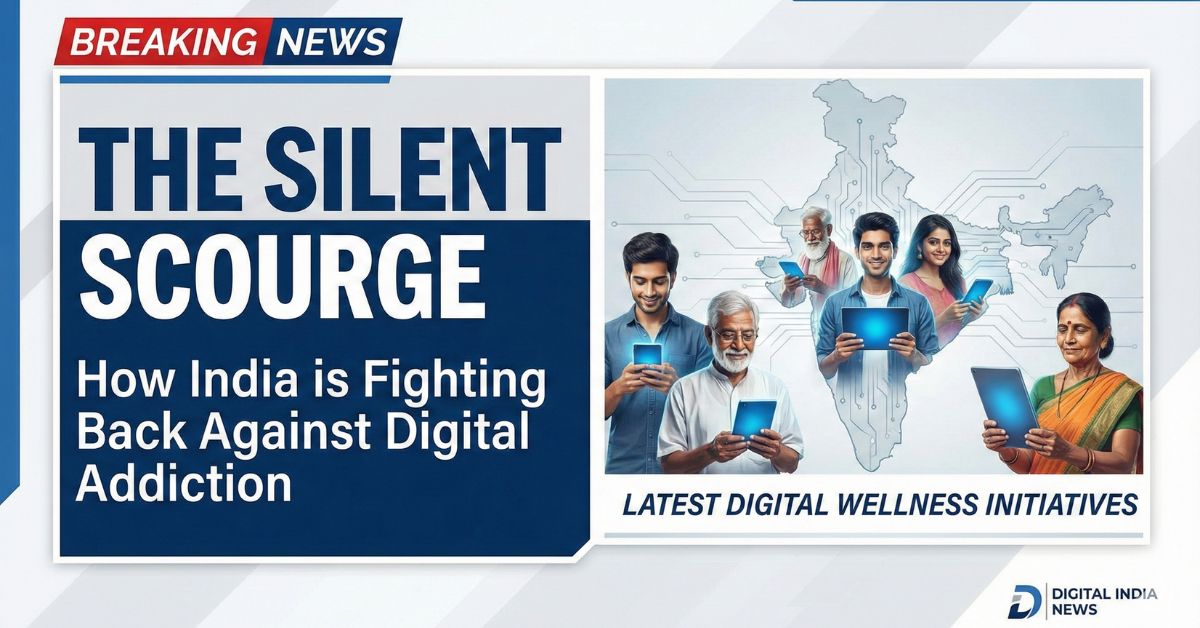
New Delhi: You might think you are choosing to watch that next reel or buy that extra item online, but a powerful “hidden” force is likely making that decision for you. In a major wake-up call, the Economic Survey 2025-26, tabled in Parliament just days ago, has officially flagged “Digital Addiction” and algorithmic manipulation as a critical threat to India’s productivity and mental health.
For the first time, the government has explicitly acknowledged that the “hidden control” of technology—through addictive algorithms and dark patterns—is no longer just a personal habit but a national economic risk.
What is the “Hidden Control”?
The “hidden control” refers to the invisible technologies and design choices used by big tech companies to keep users hooked. According to the Economic Survey and recent cyber-safety reports, this control happens in two main ways:
- Algorithmic Loops: Social media apps use AI to show you exactly what will keep you scrolling. This creates a “dopamine loop” that makes it hard to put the phone down, effectively controlling your time without you realizing it.
- Dark Patterns: These are tricky website designs that force you to do things you didn’t intend to, like buying insurance with a flight ticket or finding it impossible to unsubscribe from a service.
The “Silent Scourge”: Shocking Data
The Chief Economic Adviser (CEA) described this trend as a “silent scourge” that is eating away at India’s demographic dividend (its young, working population). The data presented in Parliament and recent industry reports is alarming:
- 1.1 Trillion Hours: In 2024 alone, Indians collectively spent nearly 1.1 lakh crore hours staring at smartphones.
- Youth at Risk: The survey highlights that the 15–24 age group is the most vulnerable to algorithms designed to exploit psychological weaknesses.
- Mental Health Crisis: There is a direct link between this hidden control and rising cases of anxiety, depression, and sleep disorders among Indian students and professionals.
Government Crackdown: Laws to Break the Control
India is not sitting idle. The government has launched a multi-pronged attack to give control back to the users.
1. The DPDP Act Implementation Following the notification of the Digital Personal Data Protection (DPDP) Rules in November 2025, companies are now in a mandatory compliance window. By mid-2027, all companies must:
- Stop tracking children’s behavioral data for targeted ads.
- Allow users to easily delete their data (“Right to Erasure”).
- Implement strict age-verification mechanisms.
2. War on “Dark Patterns” The Central Consumer Protection Authority (CCPA) has already issued strict guidelines banning 13 specific types of “dark patterns.” This means e-commerce sites can no longer:
- Create “False Urgency” (e.g., “Only 2 minutes left!” timers that are fake).
- Add items to your cart without consent (“Basket Sneaking”).
- Make it difficult to cancel subscriptions (“Subscription Traps”).
Why It Matters for You
This shift is crucial because it changes the internet from a “wild west” to a regulated space. Until now, tech giants could freely manipulate user behavior to maximize profits. With the new focus from the Economic Survey 2025-26, we can expect stricter laws similar to those in Australia or the EU, potentially including age limits for social media or mandatory “digital breaks” in apps.
What Happens Next?
- Stricter Rules: The government may introduce age-based restrictions for social media access, similar to recent moves by state governments like Goa and Andhra Pradesh.
- Digital Wellness Centers: The survey suggests setting up “offline youth hubs” and expanding mental health helplines like Tele-MANAS to help those suffering from screen addiction.
- Corporate Responsibility: Tech companies will face heavy fines if they continue to use deceptive designs to trap users.
Read More : How to Speed Up Android Phone with Low RAM
Frequently Asked Questions (FAQs)
Q1: What is “hidden control” in technology?
It refers to the use of algorithms and design tricks (like dark patterns) by apps and websites to manipulate your behavior, making you spend more time or money than you planned.
Q2: What did the Economic Survey 2025-26 say about this?
The survey called digital addiction a “silent scourge” and warned that excessive screen time is harming the mental health and productivity of India’s youth.
Q3: Is there a law against these practices in India?
Yes. The CCPA has banned “dark patterns,” and the DPDP Act (Phase 1 implementation) creates strict rules on how companies can use your data, especially for children.
Q4: What are “Dark Patterns”?
These are unfair design tricks used by websites, like hiding the “unsubscribe” button or secretly adding extra charges to your cart before payment.
Q5: How can I protect myself?
Be aware of fake countdown timers on shopping sites, use app timers to limit scrolling, and report deceptive websites to the National Consumer Helpline.