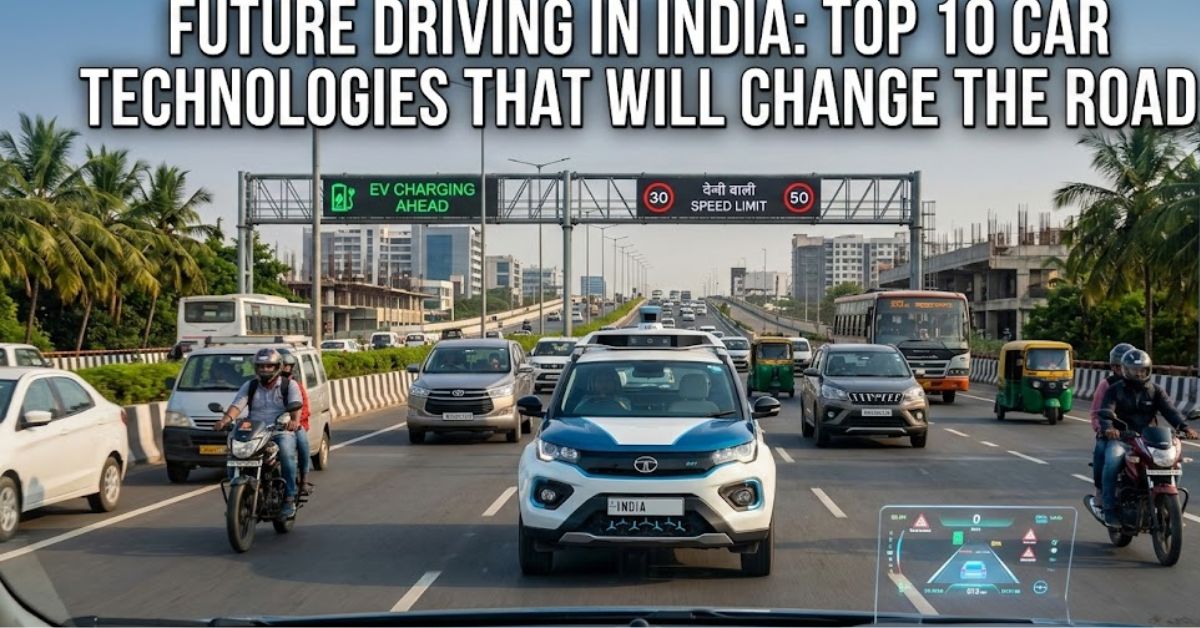
The world of cars is changing fast. New technologies are not just making vehicles safer and more comfortable — they are reshaping the entire driving experience. From cars that help themselves steer to systems that reduce emissions and traffic stress, future technologies promise a dramatic shift in how we move. This article explores the top 10 car technologies likely to redefine driving forever and explains why they matter to India’s drivers and auto industry.
What Are These Game-Changing Car Technologies?
1. Autonomous Driving (Self-Driving Cars)
Autonomous vehicles use sensors, radar, cameras and artificial intelligence to drive with little or no human input. Companies around the world are testing versions that range from simple driver assistance to full self-driving. In India, self-driving research is growing, supported by startups and academic collaborations to navigate the country’s complex traffic conditions.
2. Advanced Driver Assistance Systems (ADAS)
Even before fully autonomous cars arrive, ADAS is already making driving safer. These systems help with lane keeping, automatic braking, adaptive cruise control, and lane centering — keeping cars in the center of the lane to reduce steering effort. Modern ADAS can also detect driver fatigue or distraction and issue alerts.
3. Electric Vehicles (EVs) and Next-Gen Batteries
Electric vehicles replace petrol and diesel engines with electric motors powered by batteries. India’s EV market is rapidly growing, with sales rising and major investments in manufacturing and charging infrastructure. Future battery technologies like solid-state batteries could offer longer range and faster charging than today’s lithium-ion packs.
4. Augmented Reality (AR) Dashboards
Augmented reality dashboards project useful information — like speed, directions, or hazards — onto the windshield so drivers don’t have to look down. This reduces distraction and helps drivers make safer decisions on the road.
5. Vehicle Connectivity and V2X Communication
Connected cars share data with other vehicles and infrastructure through vehicle-to-everything (V2X) communication. This real-time exchange improves route planning, traffic flow, and safety alerts. India’s automotive ecosystem, including events like Qualcomm’s Auto Day, is beginning to highlight how connected technologies can boost road safety.
6. Artificial Intelligence in Cars
AI is becoming central to multiple car systems, from personalizing driving experiences to controlling steering and power management. In driverless prototypes like India’s WIRIN, AI helps the vehicle interpret surroundings and make real-time decisions.
7. Ultra-Fast Charging and Battery Innovations
Future EV charging could take minutes instead of hours. Companies are developing technologies that dramatically shorten charge times while improving battery life. Early examples include systems that aim to charge EVs in under 10 minutes.
8. Software-Defined Vehicles
Cars are becoming computers on wheels. Software-defined vehicles receive updates and new features over the air, much like smartphones. This allows automakers to improve performance, safety systems, or entertainment features long after a car leaves the factory.
9. Smarter Safety Systems
Beyond basic collision warnings, new safety technologies include predictive systems that can sense hazards before they happen and intervene automatically. Sensors, AI vision systems, and advanced braking are components of this future.
10. Sustainable Materials and Green Design
Manufacturers are exploring new materials that are lighter, stronger, and more eco-friendly. These innovations help reduce vehicle weight, improve efficiency, and lower carbon footprints, contributing to a cleaner environment.
Why These Technologies Matter
Car technologies are no longer just about speed and luxury — they are about safety, sustainability, and smart mobility. Autonomous and electric vehicles could reduce accidents caused by human error and cut pollution. Connected and AI-driven systems promise smoother traffic and smarter infrastructure. For India, with its rising vehicle use and urban traffic challenges, these innovations could improve road safety and environmental health.
Impact in India
India’s auto industry is embracing this change. The domestic market is seeing increased interest in EVs, supported by sales growth and investments in local production. The autonomous vehicle sector is also expanding, valued at billions of dollars with a fast-growing outlook. Homegrown prototypes like WIRIN show India’s increasing capability to innovate in this space.
Read More : Best Budget Cars in India
What Comes Next?
In the next decade, we can expect broader adoption of these technologies. Some, like advanced safety systems and connected features, are already available in newer cars. Others, like full autonomy and ultra-fast charging, may take longer as regulations, infrastructure, and consumer acceptance evolve. However, each technology is pushing the industry closer to a future where driving is safer, cleaner, and more intuitive.
FAQs
Q: When will fully driverless cars be common on Indian roads?
Fully autonomous vehicles are still in testing phases. Broad availability will depend on regulation, infrastructure, and safety approval.
Q: Are electric cars cheaper to run in India?
EVs often cost less per kilometer than petrol or diesel cars, but upfront prices and charging access are key considerations.
Q: Can current cars get these new technologies?
Some technologies like ADAS and connectivity features are already available on new models. Others, like full self-driving, will arrive later.