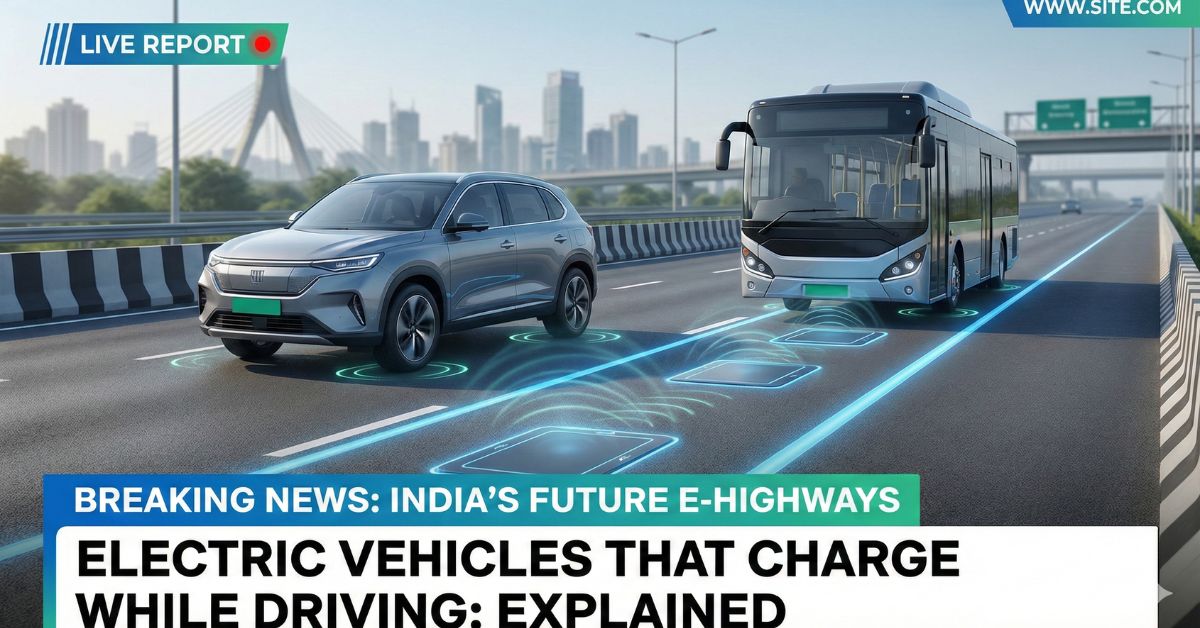
Imagine driving your electric car from Delhi to Jaipur without ever stopping to plug it in. No waiting at charging stations, no “range anxiety,” and no fear of the battery dying in the middle of the highway. This sounds like science fiction, but it is fast becoming a reality.
India is stepping into the future of mobility with Dynamic Wireless Power Transfer (DWPT) technology. Simply put, this technology allows electric vehicles (EVs) to charge while they are moving on the road. The Ministry of Road Transport and Highways, led by Nitin Gadkari, along with private tech partners, is actively exploring and testing these “electrified roads” to revolutionize travel in India.
What is “Charge-While-Driving” Technology?
Most of us are used to plugging in our phones or cars to charge them. But this new technology works differently. It is similar to the wireless charging pads used for smartphones, but on a much larger scale.
Engineers embed special copper coils and charging plates under the road surface (asphalt or concrete). When an EV equipped with a compatible receiver drives over these coils, electricity is transferred wirelessly from the road to the car’s battery. This process is called magnetic induction.
There is also a second type of technology being tested, primarily for heavy trucks and buses, which uses overhead cables (like electric trains). However, for personal cars, the wireless under-road method is the main focus.
The Indian Context: Delhi-Jaipur E-Highway
The biggest buzz in India right now surrounds the National Highways for Electric Vehicles (NHEV) pilot projects. The government has identified key corridors to test these futuristic upgrades. The Delhi-Jaipur Highway (NH-48) and the Yamuna Expressway (Delhi-Agra) are among the prime candidates for these trials.
Union Minister Nitin Gadkari has frequently spoken about his vision for an “Electric Highway” between Delhi and Mumbai. The goal is to allow heavy electric trucks and buses to run continuously on electricity, significantly cutting down logistics costs and pollution.
If these pilots succeed, India could see a dedicated lane on major expressways reserved solely for EVs that charge as they drive.
Why Does This Matter for You?
This technology solves the two biggest problems stopping people from buying electric cars: Range Anxiety and Cost.
Unlimited Range: If the road charges your car, you don’t need a massive battery to travel long distances. You can drive for hundreds of kilometers without stopping.
Cheaper Cars: The battery is the most expensive part of an EV. If cars can charge on the go, manufacturers can install smaller batteries. This could drop the price of an electric car significantly, potentially making them as affordable as petrol or diesel cars.
Time-Saving: In a fast-paced country like India, nobody wants to wait 45 minutes at a charging station. This tech keeps you moving.
Challenges Ahead
While the idea is exciting, bringing it to Indian roads is not easy.
High Cost: Digging up highways to install copper coils and sensors is incredibly expensive.
Read More : What is ABS in Car?
Maintenance: Indian roads often face waterlogging and potholes. The technology must be waterproof and durable enough to survive the monsoon.
Vehicle Compatibility: Current EVs (like the Tata Nexon or MG ZS) are not built with these wireless receivers yet. Future cars will need to be manufactured with this specific tech, or older cars will need expensive upgrades.
What Happens Next?
We are currently in the “pilot phase.” You won’t see these roads everywhere tomorrow. However, the government is serious about reducing India’s oil import bill. Over the next few years, expect to see trial runs on sections of the Delhi-Mumbai Expressway. If successful, this technology will likely roll out on major industrial corridors first, focusing on trucks and buses, before becoming common for private car owners.
FAQ
Is it safe to drive on an electrified road?
Yes, it is safe. The wireless charging pads are buried under the road. They only activate when a compatible vehicle drives over them. You cannot get an electric shock by walking or driving a normal car on it.
Can my current electric car charge on these roads?
Not directly. Your car needs a special receiver plate installed at the bottom to pick up the electricity. Future EV models may come with this feature built-in.
Will this increase the cost of using the highway?
Pilot projects and trials are already in discussion stages for highways like Delhi-Jaipur. However, full-scale public use is likely a few years away, possibly around 2027-2030.
Does it work in the rain?
Yes, the technology is designed to be waterproof and safe for all weather conditions, including the Indian monsoon.