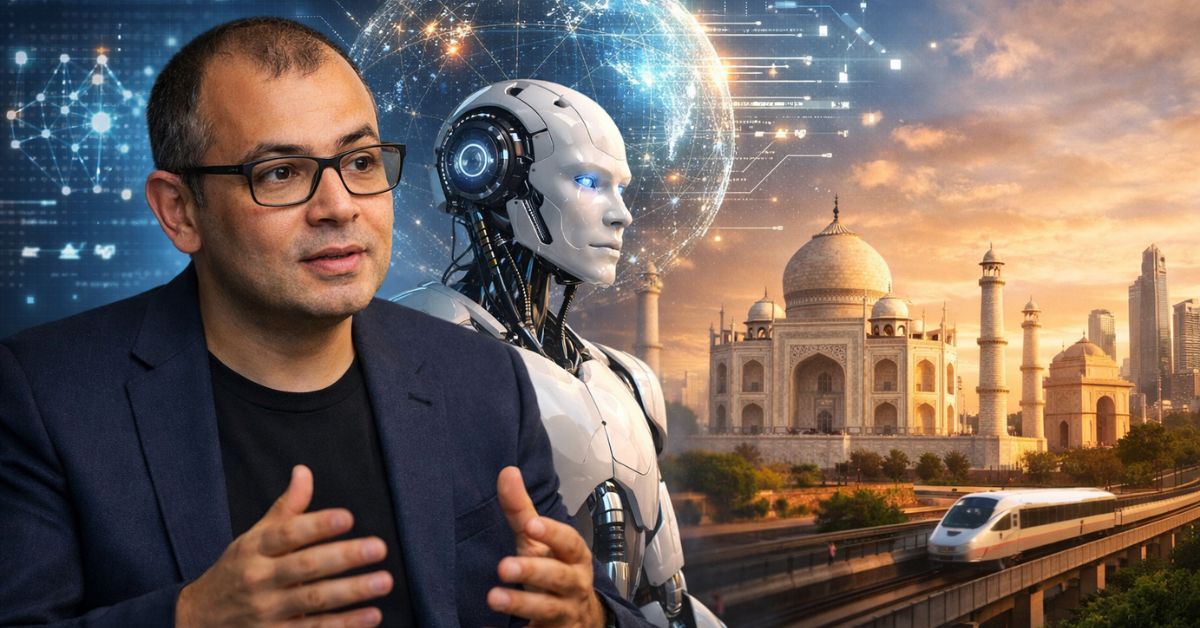
Google DeepMind CEO Demis Hassabis recently shared major updates about the future of Artificial Intelligence. Speaking at the India AI Impact Summit 2026 in New Delhi, he made bold predictions about when we will achieve human-level AI. He also warned about the current limits of AI and a possible hardware shortage that could slow down the industry. Here is everything you need to know about his latest announcements and what they mean for the world and India.
What Happened: Demis Hassabis at the India AI Impact Summit 2026
In February 2026, global tech leaders, researchers, and policymakers gathered in New Delhi for the India AI Impact Summit. Demis Hassabis, the head of Google DeepMind and a Nobel Prize winner, delivered a highly anticipated keynote speech. He discussed the rapid growth of artificial intelligence, the timeline for human-level machine intelligence, and how these new technologies will change science, medicine, and human history. He even compared the upcoming AI revolution to the discovery of fire or electricity.
Key Details: AGI is on the Horizon
The biggest Demis Hassabis update in 2026 is his bold prediction about Artificial General Intelligence (AGI). AGI refers to a future AI system that is as smart or smarter than human beings across a wide range of cognitive tasks. Hassabis stated that the world is currently at a “threshold moment.” He believes that AGI could become a reality within the next five to eight years.
He explained that this AI revolution will have ten times the impact of the Industrial Revolution, but it will happen ten times faster. According to his vision, future AI systems will act as the ultimate tools to solve complex global problems, accelerate scientific discovery, and help cure diseases.
Background and Context: The “Jagged Intelligence” Problem
Even though AI is growing fast, Hassabis pointed out that today’s AI models are far from perfect. He called current AI systems “jagged intelligences.” This means they are extremely good at some difficult tasks but surprisingly bad at simple ones. For example, an AI might solve top-level math olympiad problems but fail at basic elementary math if the question is asked differently.
He highlighted three main missing pieces in current AI. First, they lack continual learning. Today’s AI models are trained and then frozen, meaning they cannot easily learn from new experiences in real-time once released. Second, they struggle with long-term planning over months or years. Finally, they lack overall consistency. Hassabis noted that these technical problems must be fixed before true AGI is possible.
Why It Matters: The Coming Hardware Choke Point
Another important update for 2026 is his serious warning about an AI bottleneck. As tech giants like Google build massive models like Gemini 3.1 Pro, they need huge amounts of computing power and advanced memory chips.
Hassabis warned that the tech industry might soon face a “choke point” due to a severe shortage of these memory chips. Because the world relies on just a few big suppliers for these hardware components, the lack of chips could slow down future AI research, experimentation, and product releases.
Impact in India: A Future AI Powerhouse
Hassabis had high praise for India during his 2026 visit. He strongly stated that India is set to become a global “powerhouse” in artificial intelligence. He was highly impressed by the talent, startup energy, and digital infrastructure in the country after visiting academic institutions like the Indian Institute of Science.
Google DeepMind already has a large research office in Bengaluru, where teams are working on crucial AI projects like multilingual capabilities and efficient models. Hassabis also highlighted DeepMind’s ongoing partnership with Reliance Jio to bring advanced Gemini AI models to millions of Indian users. This means India will play a central role in both creating and using the next generation of AI tools.
What Happens Next and Official Updates
Moving forward, Google DeepMind plans to keep improving its foundation models while focusing heavily on AI for science, material discovery, and healthcare. Hassabis stressed that as AI gets more powerful, the world must work together. He called for urgent international dialogue to create safe guidelines and guardrails for AI. No single company or country can manage the societal impact of AGI alone. Official updates from the New Delhi summit confirm that world leaders are now actively discussing these global safety standards to ensure AI benefits all of humanity.
Read More : JioStar 2026 Update
Frequently Asked Questions (FAQs)
When does Demis Hassabis think AGI will arrive?
During his February 2026 speech, Demis Hassabis predicted that Artificial General Intelligence (AGI) could be achieved within the next five to eight years.
What did the Google DeepMind CEO say about India?
He called India a future global powerhouse for AI. He praised the country’s bright students, startup energy, and tech talent, noting that DeepMind is expanding its research partnerships in India, including collaborations with Reliance Jio.
What is the “jagged intelligence” problem?
Hassabis uses this term to describe how current AI can be very smart at complex tasks but fail at simple, basic tasks. Today’s AI lacks consistency and cannot learn continuously after being launched.
Why might AI development slow down soon?
Hassabis warned of a hardware “choke point.” There is a massive global shortage of the memory chips required to train and run large AI models, which could delay future research and progress.