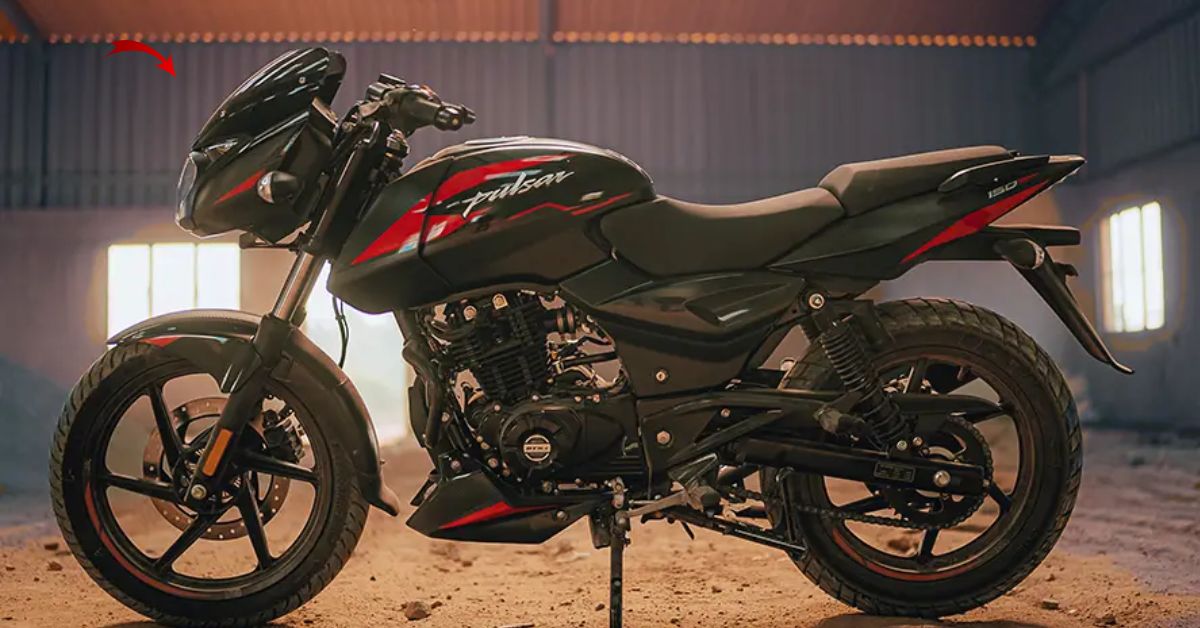
In the Indian motorcycling hall of fame, the Bajaj Pulsar 150 holds a permanent seat. While many thought the newer “N” and “P” series would spell the end for the classic Pulsar, Bajaj has doubled down on the “OG.” The 2025 Bajaj Pulsar 150 is officially here, and it’s more than just a sticker job this time.
With an ex-showroom starting price of ₹1,08,772, the 2025 update brings much-needed modern tech like LED lighting and a fully digital console to a silhouette that hasn’t changed much in two decades. It’s a move clearly aimed at the heart of Tier-2 and Tier-3 India, where “Pulsar” isn’t just a bike; it’s an emotion.
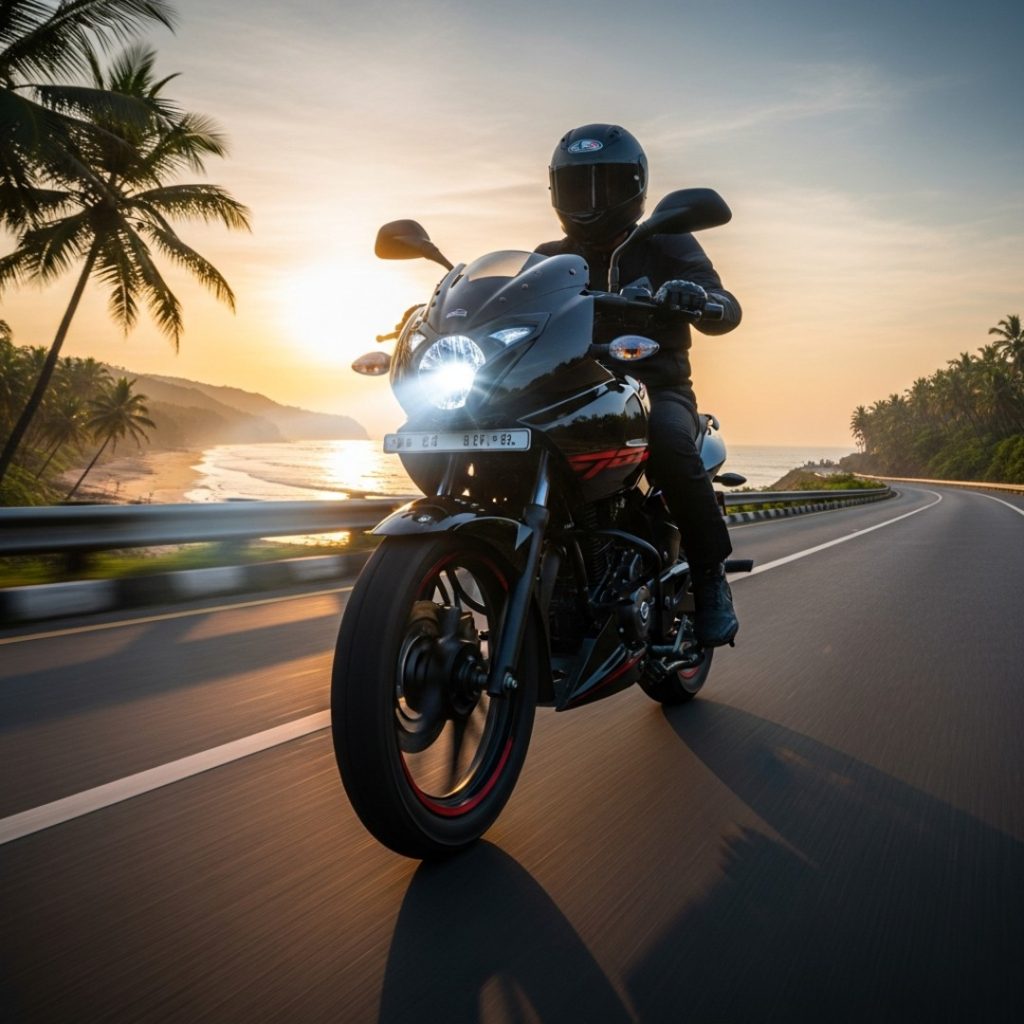
QUICK SPECS TABLE: Key Highlights
| Feature | Specification |
| Engine | 149.5cc, Single-cylinder, Air-cooled, DTS-i |
| Power | 14 PS @ 8,500 rpm |
| Torque | 13.4 Nm @ 6,500 rpm |
| Transmission | 5-Speed Manual |
| Ground Clearance | 165 mm |
| Fuel Tank Capacity | 15 Litres |
| Kerb Weight | 148 kg (Single Disc) / 150 kg (Twin Disc) |
EXTERIOR DESIGN & ROAD PRESENCE
The 2025 Pulsar 150 retains that legendary “Wolf-Eyed” stance, but with a major twist.
- LED Revolution: For the first time, the classic Pulsar gets a full-LED headlamp setup and LED turn indicators. It completely refreshes the front look while keeping the muscular fuel tank we all love.
- New Skins: Bajaj has introduced updated graphics, including a striking green-and-copper scheme similar to the Pulsar 220F.
- Stance: Whether you choose the Single Disc (single seat) or Twin Disc (split seat), the bike still commands respect. It has that “big bike” feel that slim commuters like the Honda SP160 lack.
INTERIOR (CONSOLE), COMFORT & FEATURES
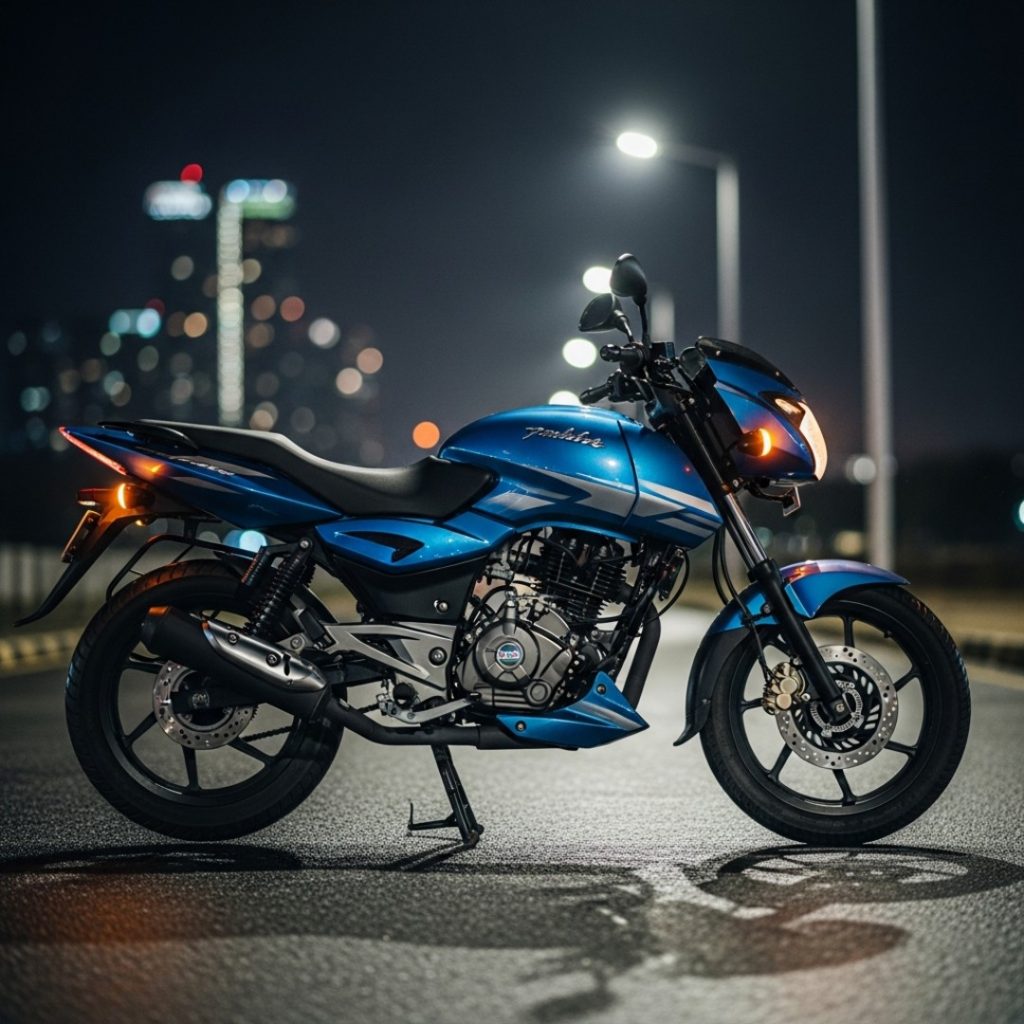
While bikes don’t have “interiors,” the rider’s cockpit has seen the biggest upgrade in a decade.
- Fully Digital Console: Out goes the old semi-digital needle! The new Pulsar 150 features a negative LCD display that is crisp even under direct sunlight.
- Bluetooth Connectivity: The console now supports the Bajaj Ride Connect app, giving you call and SMS alerts on the go.
- Ergonomics: The riding posture is the perfect middle ground. It’s upright enough for a 50 km daily commute but forward-leaning enough to feel sporty. The seat cushioning is noticeably soft—your back will thank you after a long day in traffic.
- Missing Bits: It still lacks a gear position indicator on some lower variants and misses out on turn-by-turn navigation, which the TVS Raider offers.
ENGINE PERFORMANCE & DRIVING DYNAMICS
The heart of the beast remains the trusted 149.5cc DTS-i motor.
- City Drive: The low-end grunt is fantastic. You can pull away from 20 kmph in 3rd gear without the engine knocking. The clutch is light, making it very easy to filter through crawling traffic.
- Highway Drive: It’s happy cruising at 75-85 kmph. Beyond 90 kmph, you’ll start feeling vibrations through the footpegs and handlebars. It’s not a track machine, but it’s a solid highway miler.
- Suspension: This is where the Pulsar shines. The Twin Nitrox shock absorbers at the rear are tuned for Indian “moon craters.” The suspension absorbs potholes easily, keeping the rider isolated from the worst of the road.
SAFETY: The Single-Channel Guardian
Safety on the Pulsar 150 is straightforward but effective.
- ABS: It comes with Single-Channel ABS as standard. The 260 mm front disc offers a sharp bite, though the rear drum (on the base model) feels a bit wooden.
- Build Quality: It’s a Bajaj. It’s built like a tank. While some plastic panels might rattle after a few years, the metal chassis is as robust as they come.
Read more : Tracker 400 Scrambler 400 X
REAL WORLD MILEAGE: The Truth
Indian buyers care about mileage, and the Pulsar 150 has always been a “balanced” performer.
| Condition | ARAI Claimed | Real World Figure |
| City Traffic | 47.5 – 50 kmpl | 42 – 45 kmpl |
| Highway (steady 70kmph) | 50+ kmpl | 48 – 52 kmpl |
If you ride with a light wrist, a full 15-litre tank can easily give you a range of 700+ km, which is incredible for a bike this size.
THE COMPETITION: Pulsar 150 vs. Rivals
The 150-160cc segment is a war zone in India.
| Feature | Pulsar 150 (2025) | TVS Apache RTR 160 | Honda Unicorn |
| Power | 14 PS | 15.8 PS | 12.9 PS |
| Key Tech | Digital + Bluetooth | Riding Modes | Pure Analog |
| Ride Quality | Very Plush | Firm/Sporty | Soft/Commuter |
| Price (Ex-S) | ₹1.09 Lakh | ₹1.11 Lakh | ₹1.12 Lakh |
The Winner: If you want tech and speed, go for the Apache. If you want absolute reliability and zero frills, the Unicorn is king. But if you want a Value For Money (VFM) all-rounder that looks great and feels tough, the Pulsar 150 is the winner.
FINAL VERDICT
Buy it if:
- You want the classic Pulsar look with modern LED features.
- You need a bike that can survive bad rural roads comfortably.
- You want low maintenance costs and easy availability of parts.
Skip it if:
- You want a high-revving, sporty engine (The Apache or Pulsar N160 are better).
- You want a vibration-free experience at 100 kmph.
- You are looking for Dual-Channel ABS.
FAQs (People Also Ask)
Q: What is the on-road price of the new Pulsar 150 in Delhi?
The on-road price typically ranges between ₹1.26 Lakh and ₹1.35 Lakh depending on the variant (Single vs Twin Disc).
Q: Is there a CNG option for the Pulsar 150?
No, Bajaj currently only offers the Freedom 125 with a CNG kit. There are no official plans for a Pulsar 150 CNG yet.
Q: What is the waiting period for the 2025 model?
Usually, it’s quite low, ranging from 7 to 15 days depending on the color and city.