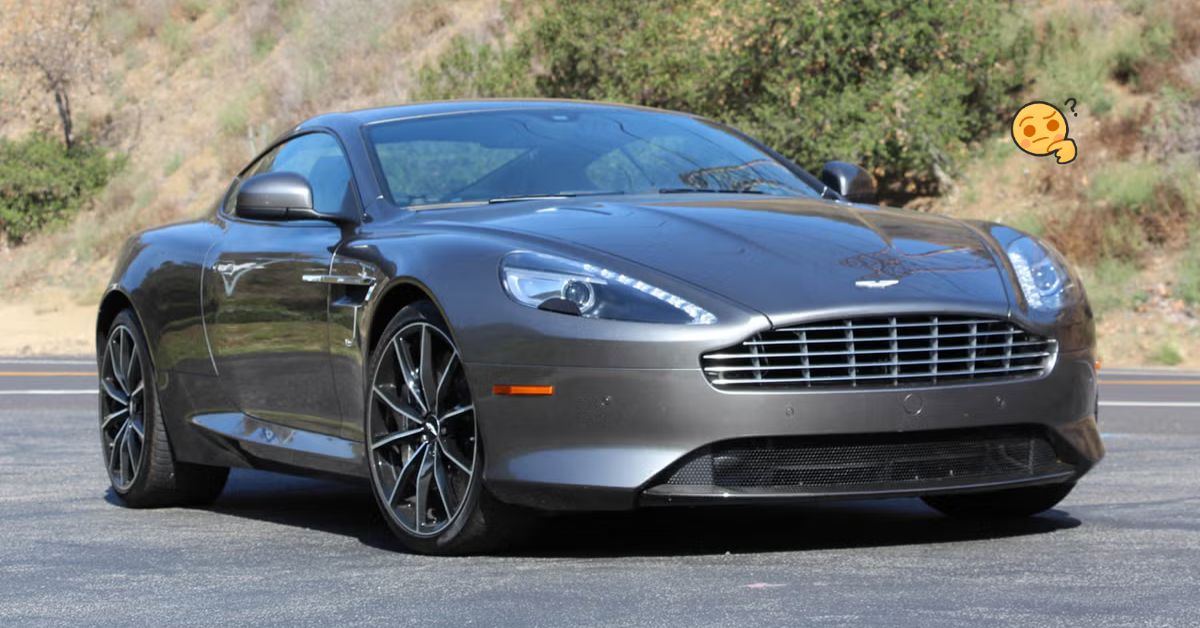
Let’s be honest. You don’t buy an Aston Martin DB9 because it makes logical sense. If you wanted logic, you’d buy a Porsche 911 or a Lexus. You buy a DB9 because you have eyes. Even today, over two decades after its debut, it remains one of the most beautiful objects ever made by human hands.
But here is the real truth: In 2026, the DB9 sits in a dangerous “temptation zone.” You can pick one up in the used market for the price of a new Toyota Fortuner or a BMW 3 Series. It sounds like the deal of the century—a V12 James Bond car for the price of a family SUV. Don’t waste your money thinking this is a “cheap” car. The purchase price is just the entry ticket; the maintenance is the ride. Is it worth the headache? Let’s find out.
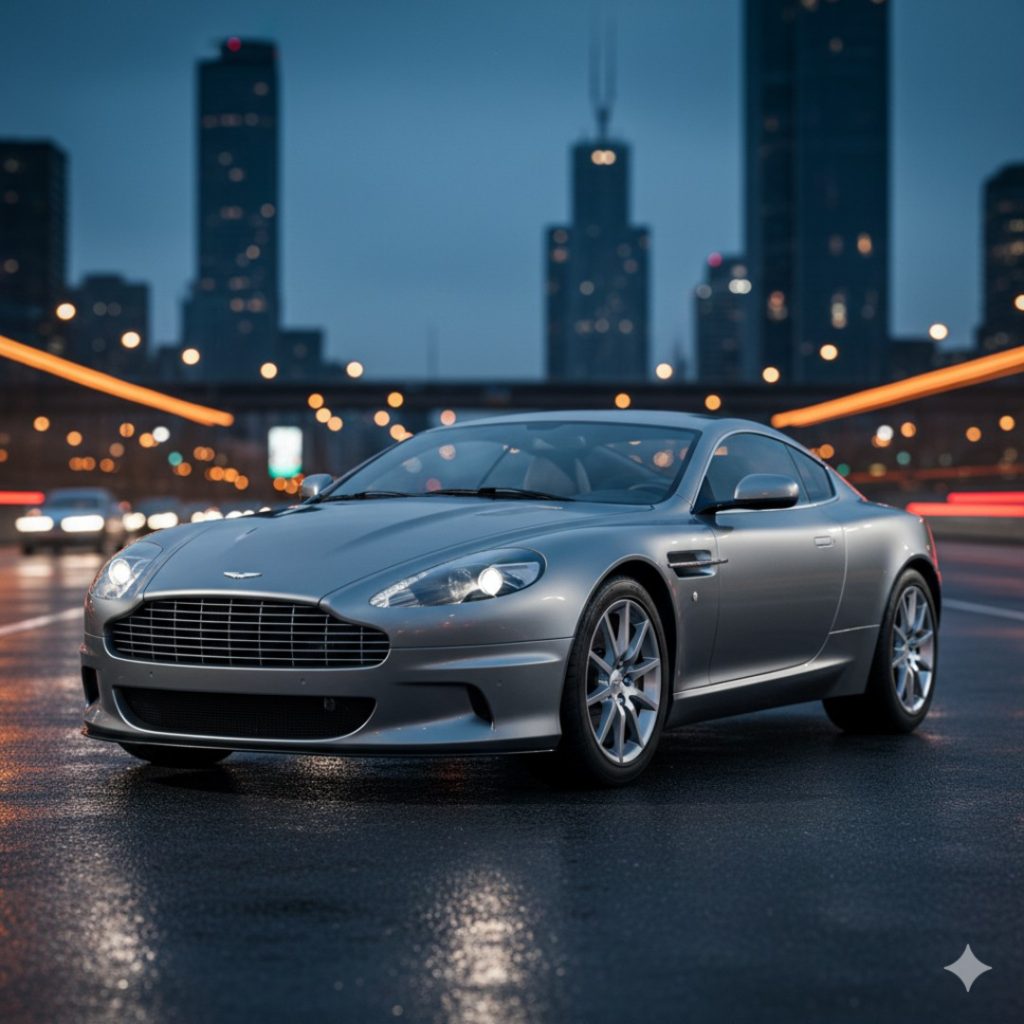
1. QUICK SPECS TABLE
| Feature | Specification |
| Engine | 6.0L Naturally Aspirated V12 |
| Power | 470 bhp – 510 bhp (Model Year Dependent) |
| Torque | 600 Nm – 620 Nm |
| Transmission | 6-Speed ‘Touchtronic 2’ Automatic (ZF) |
| 0-100 km/h | 4.6 Seconds |
| Top Speed | 295 km/h |
| Weight | ~1,785 kg |
| Drivetrain | Rear Wheel Drive (RWD) |
| Price (Used Market) | ₹1.90 Cr – ₹3.45 Cr (Approx.) |
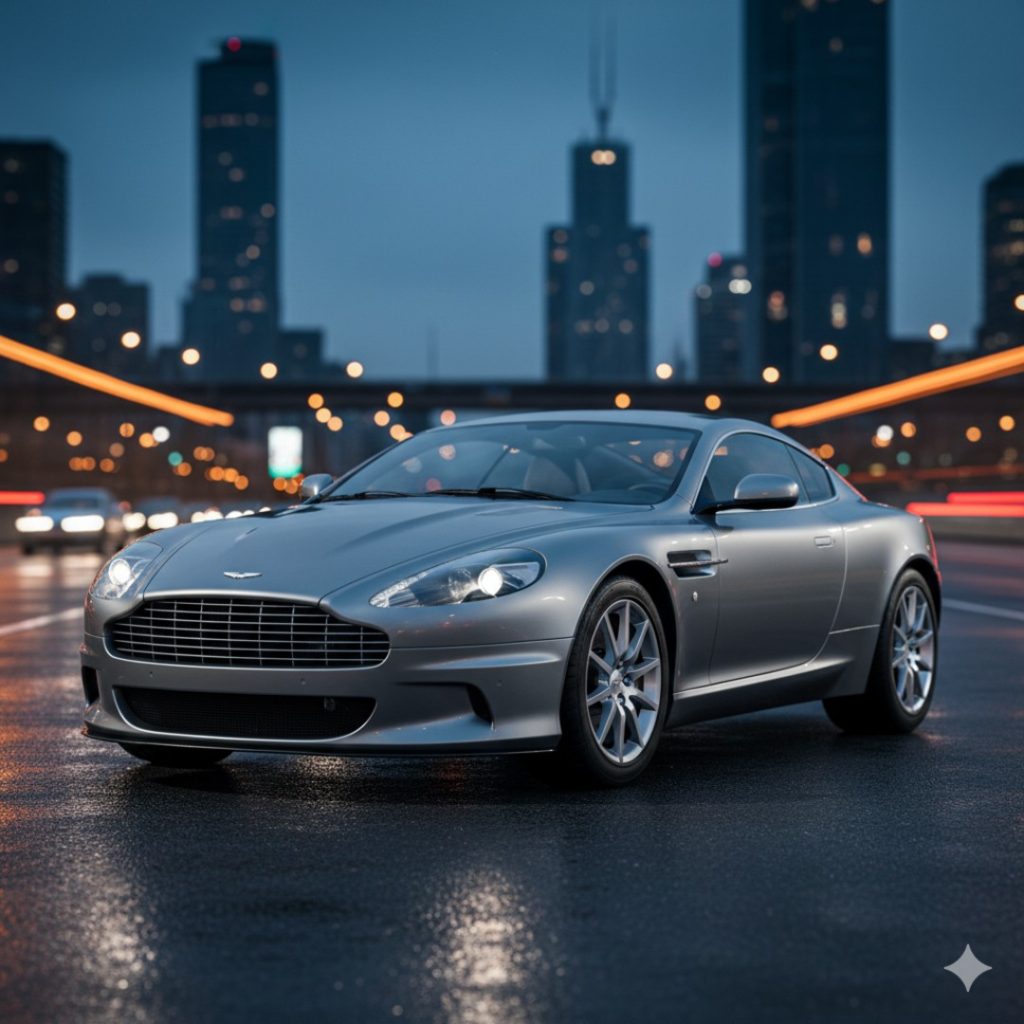
2. DESIGN & BUILD (Deep Dive)
The Aston Martin DB9 uses the “VH” (Vertical Horizontal) aluminum architecture. This was revolutionary when it launched. It’s bonded with aerospace-grade adhesive, not just welded.
- The Golden Ratio: The designers famously used the “Golden Ratio” (1:1.618) to proportion the bodywork. That’s why it looks “right” from every angle.
- The Swan Doors: The doors don’t just open out; they swing slightly up (12 degrees) to avoid scraping high curbs. It’s a theatrical touch that never gets old.
- Build Quality: The exterior paint finish is hand-sprayed and takes 50 man-hours. It looks like liquid metal. However, the window seals on older models can dry out, leading to wind noise.
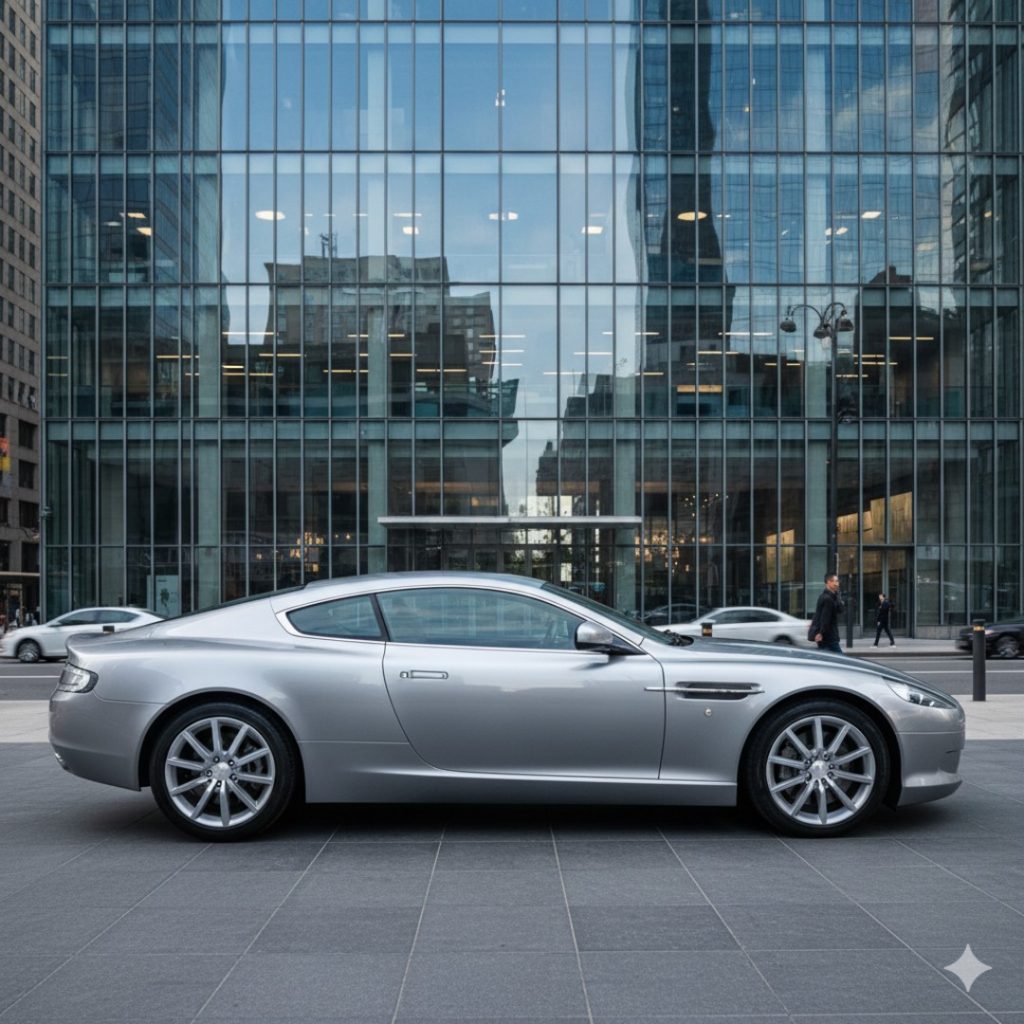
3. INTERIOR & FEATURES
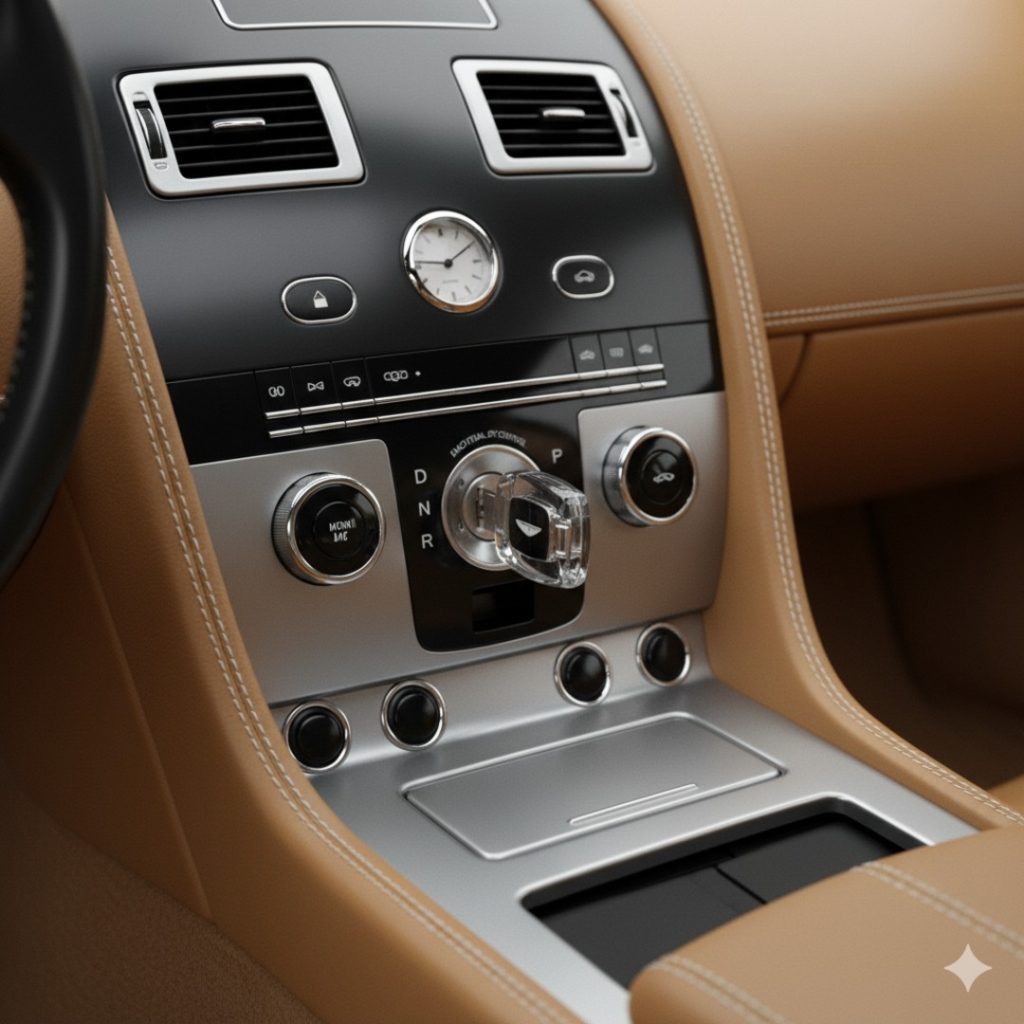
Step inside, and the smell hits you first. It’s the smell of expensive Bridge of Weir leather.
- The “Crystal Key”: Starting in 2008, Aston introduced the “Emotion Control Unit” (ECU). It’s a heavy glass key that you push into the dashboard to start the engine. It glows red. It’s pure drama. (Warning: If you drop it, a replacement costs nearly ₹2 Lakhs).
- The Speedometer: The needle swings counter-clockwise. Why? Because it looks cool.
- The Tech (The Bad News): The navigation system is borrowed from Volvo and was outdated in 2010. In 2026, it is practically unusable. You will be using your phone for maps. The Bluetooth is finicky, and the interface is sluggish.
4. PERFORMANCE & DRIVING EXPERIENCE
The Aston Martin DB9 is a Grand Tourer (GT), not a track weapon.
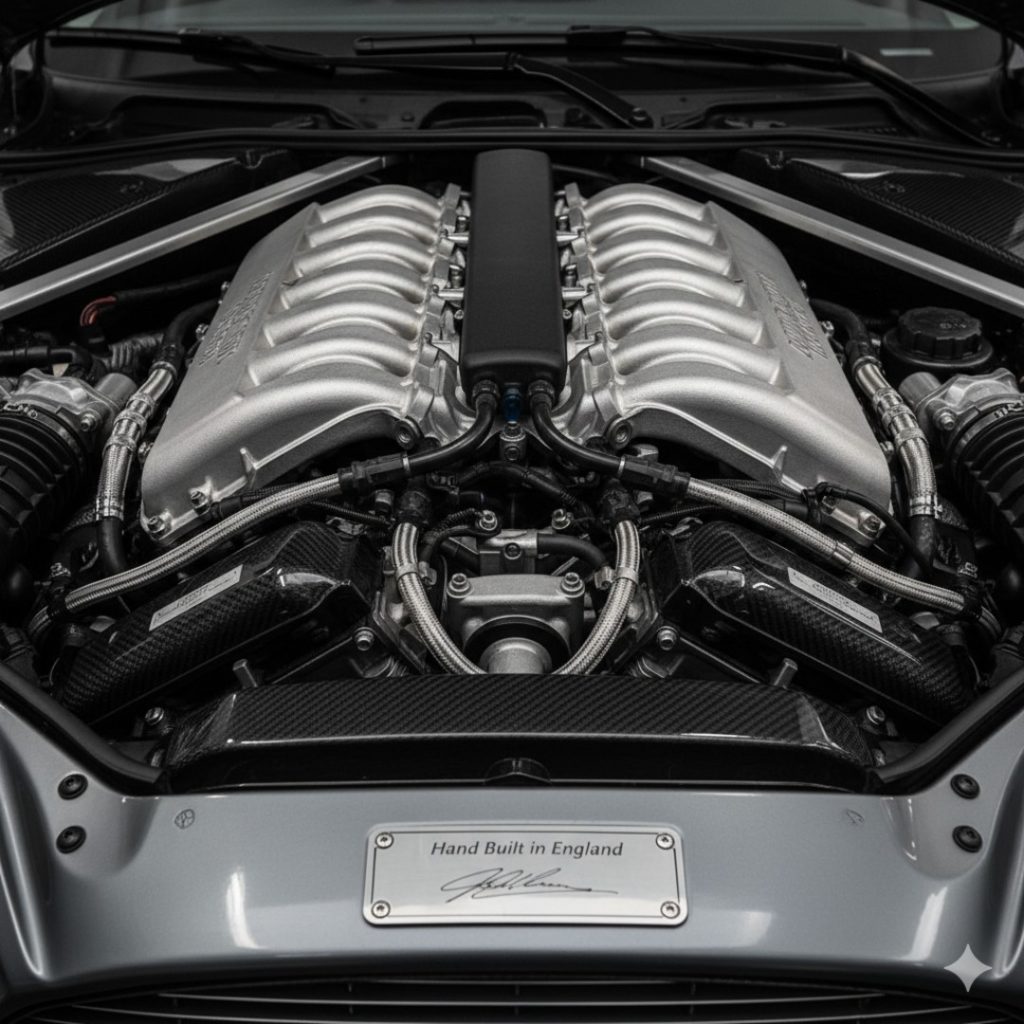
- The V12 Engine: This is the centerpiece. It doesn’t have the instant punch of modern turbo engines. Instead, it builds power like a crescendo. Below 3,000 RPM, it’s polite. Above 4,000 RPM, it howls like a banshee. It is one of the best-sounding engines in history.
- Handling: The steering is hydraulic, meaning it talks to your hands. You feel every pebble. However, the suspension is stiff. In Indian cities with potholes, you will wince. It’s heavy, and you feel the weight in tight corners.
- Transmission: The 6-speed ZF auto is smooth but slow by modern standards. Don’t expect the lightning shifts of a Porsche PDK.
5. ENGINE & RELIABILITY (Niche Specific)
The AM11 V12 is actually quite robust if cared for, but “if” is the keyword.
- The “Tick” of Death: Early models (pre-2008) can suffer from a “ticking” noise which indicates cylinder liner issues. This is a catastrophic engine failure. Always get a cold-start video before buying.
- Coil Packs: The V12 eats ignition coils. Replacing them is a nightmare because you have to take the intake manifold off. A simple misfire can cost ₹1.5 Lakhs to fix at a dealership.
- Ground Clearance: The front splitter is very low. In India, speed breakers are your enemy. You will scrape it eventually.
6. FUEL ECONOMY (The Pain Point)
If you have to ask, you can’t afford it. But for the sake of science:
- City: Expect 3 – 4 kmpl. In bumper-to-bumper traffic, you can literally watch the fuel gauge drop.
- Highway: You might see 7 – 8 kmpl if you cruise gently.
- Tank Range: It has an 80-liter tank, but with this mileage, you’ll be visiting petrol pumps frequently.
7. THE COMPETITION: BATTLE OF THE USED ICONS
The Winner:
- For Comfort & Status: Bentley Continental GT. It’s faster and more luxurious, but less engaging to drive.
- For Sound & Drama: Maserati GranTurismo. The V8 sounds better than the V12, but the interior feels cheaper.
- The Sweet Spot: The Aston Martin DB9 wins on pure style and timelessness. It is the most beautiful of the three and will likely hold its value best as a classic.
Read More : Hyundai Venue Review
8. FINAL VERDICT
Buy it if:
- You want the most beautiful car for under ₹3 Crore.
- You prioritize engine sound and analog steering feel over digital tech.
- You have a secondary budget (at least ₹5 Lakhs/year) set aside just for maintenance.
Skip it if:
- You need a daily driver for Indian traffic (it overheats, it scrapes, it drinks fuel).
- You care about infotainment (Apple CarPlay? Forget it).
- You are financially stretched by the purchase price alone.
Rating: 4.2/5 Stars (5 stars for the heart, 3 stars for the wallet)
9. FAQs (People Also Ask)
Q1: Is the Aston Martin DB9 reliable in India?
The engine and gearbox are mechanically tough, but the electronics and sensors struggle with India’s heat and humidity. AC failures and suspension rattles are common.
Q2: How much does a service cost?
A basic annual service at a specialist will cost between ₹80,000 to ₹1.5 Lakhs. Major services (spark plugs, coils, fluids) can easily cross ₹3-4 Lakhs.
Q3: Can I install Apple CarPlay in a DB9?
Yes, there are aftermarket kits available (like Aston Installations) that retrofit CarPlay into the factory screen. This is a highly recommended upgrade.
Q4: Which year model should I buy?
Aim for a post-2013 model (DB9 GT or Facelift). They have the updated 510 bhp engine, better suspension, and fewer reliability gremlins than the early 2004-2008 cars.
Q5: Is it faster than a modern BMW M4?
No. A modern BMW M4 or Mercedes C63 will smoke a DB9 in a straight line and on a track. You buy a DB9 for the experience, not the lap time.