If you own an electric vehicle (EV) in India or plan to buy one, you might wonder: “Will my car give the same mileage in January as it does in June?” The simple answer is no. Just like humans feel sluggish in extreme cold or heat, the battery inside your EV also reacts to the weather.
In India, where temperatures can range from near-freezing in the North to scorching 45°C+ heat in the plains, these changes can affect your driving range, charging speed, and long-term battery health.
This guide explains exactly what happens to EV cars in winter versus summer, why it matters for Indian drivers, and how you can get the best performance in every season.
How Weather Changes Your EV’s Performance
1. The Winter Effect: Why Range Drops in the Cold
In parts of North India (like Delhi, Punjab, and Himachal), winters can get quite chilly. When the temperature drops, two main things happen to your electric car:
- Chemical Slowdown: The Lithium-ion battery inside your car relies on chemical reactions to store and release energy. Cold weather slows down these reactions. Think of it like trying to run through water—it takes more effort. This means the battery cannot deliver power as efficiently as it does in mild weather.
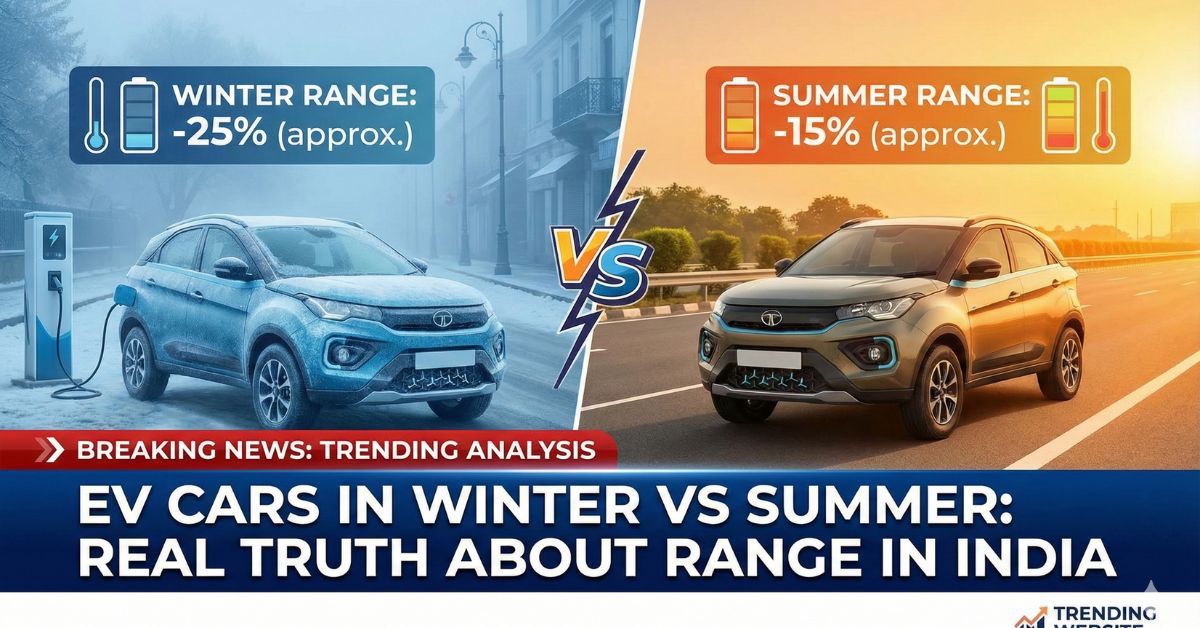
- Cabin Heating Drains Power: Unlike petrol or diesel cars, which use waste heat from the engine to warm the cabin, an EV has to use electricity from its own battery to run the heater. This “resistive heating” is energy-hungry and can reduce your range by 10% to 20% in colder months.
Real-World Impact in India:
In mild winters (like in Mumbai or Bengaluru), the drop is negligible. However, in North India, a car with a claimed range of 300 km might only give you around 250-260 km on a cold morning if you are blasting the heater.
2. The Summer Effect: The Silent Battery Killer
Summer is the dominant season in India. While range anxiety is often discussed regarding winter, extreme heat poses a different threat:
- AC Usage: Running the Air Conditioner (AC) constantly does consume battery, but modern EVs are quite efficient at cooling. You might lose roughly 10-15% range on a very hot day, which is often less than the loss seen in freezing winters.
- Battery Health Risk: The bigger problem in summer is battery degradation. Batteries hate extreme heat (above 40°C). If you fast-charge your EV under direct sunlight in peak afternoon, the battery management system (BMS) has to work overtime to cool the cells. Over time, frequent exposure to high heat can permanently reduce the battery’s total capacity.
Comparison: Winter vs. Summer Driving in India
| Feature | Winter (Cold North) | Summer (Peak Heat) |
| Range Drop | Moderate to High (due to heater use) | Low to Moderate (due to AC use) |
| Charging Speed | Slows down (cold batteries charge slower) | Can throttle (slow down) to prevent overheating |
| Main Risk | Reduced daily mileage | Long-term battery health damage |
| Best Practice | Warm up the car while charging | Park in the shade |
5 Simple Tips for Indian EV Owners
To get the best range and life out of your Tata Nexon EV, MG Comet, or Tiago EV, follow these simple habits:
- Pre-Condition Your Car: Many modern EVs have an app feature that lets you start the AC or heater while the car is still plugged into the charger. This draws power from the grid, not your battery, saving you range for the actual drive.
- Check Tire Pressure: In winter, air contracts, causing tire pressure to drop. Soft tires increase friction and eat up more battery. Keep them inflated to the recommended level.
- Park Smartly: In summer, always try to park in the shade. Direct sunlight can cook the battery. In winter, parking in a closed garage keeps the battery slightly warmer, helping it start efficiently.
- Drive Smoothly: Sudden acceleration wastes more energy in extreme weather. Use “Eco Mode” and regenerative braking to recover energy when you slow down.
- Avoid Fast Charging in Peak Heat: If possible, slow charge (AC charge) your car overnight. If you must use a fast charger (DC) in summer, try to do it early in the morning or late evening when the ambient temperature is lower.
The Verdict: Which Season is Better?
For immediate range, mild weather (20°C to 25°C) is the “Goldilocks zone” where EVs perform best.
Read More : Stop Lugging Your Engine
In the Indian context, Summer is generally better for range because AC consumes less power than heaters, and our winters aren’t as harsh as Europe’s. However, Summer is worse for battery health if you aren’t careful. Winter will show a temporary drop in mileage, but it causes less permanent stress to the battery cells.
Frequently Asked Questions (FAQs)
Q1: Does the range of an EV drop permanently in winter?
No, the range drop in winter is temporary. Once the weather warms up, your car’s range will return to normal.
Q2: Should I charge my EV to 100% in summer?
It is generally recommended to charge only up to 80% for daily use to protect battery health, especially in high heat. Charge to 100% only when you are planning a long trip.
Q3: Is it safe to charge an electric car in the rain?
Yes, absolutely. EV chargers and charging ports are waterproof and designed to be safe during the monsoon.
Q4: Which Indian cities see the most EV range drop?
Cities in North India like Delhi, Chandigarh, and Shimla see a noticeable range drop in winter due to low temperatures. Cities like Chennai and Mumbai see consistent performance year-round but face heat challenges.
Q5: Does using the heated seats save battery?
Yes! If your EV has heated seats, use them instead of the cabin heater. They use much less electricity and keep you warm directly.