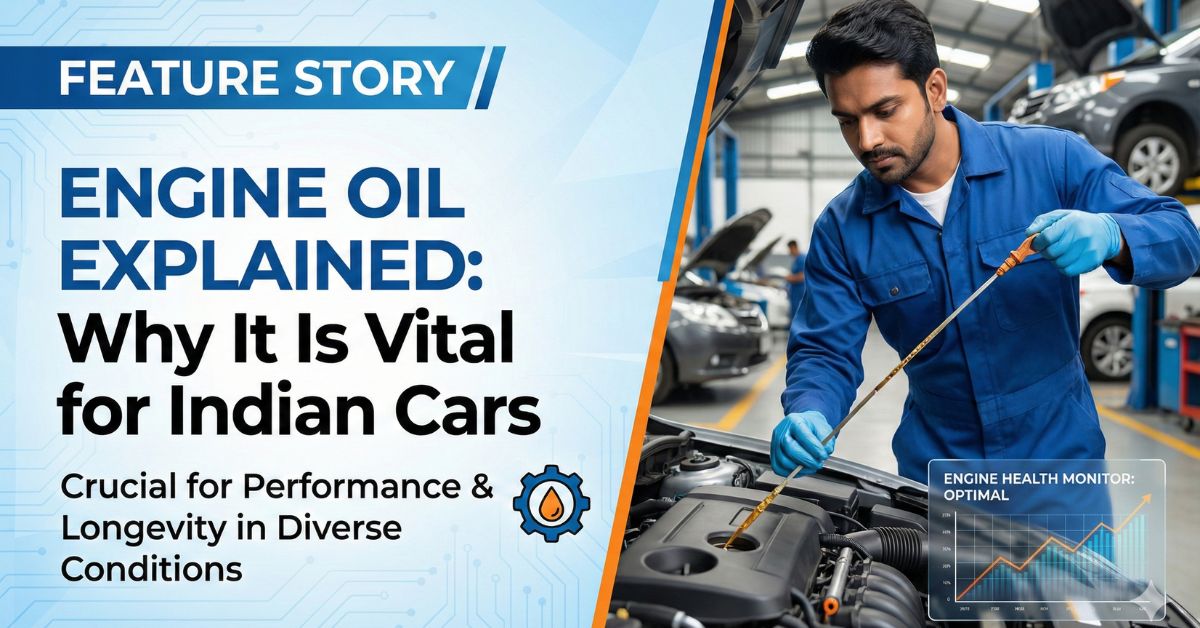
Imagine running a marathon without water or trying to slide down a dry slide. That friction and heat are exactly what your car engine faces every time you turn the key. If the engine is the heart of your vehicle, then engine oil is undoubtedly its blood.
For Indian drivers, who often face heavy traffic, dusty roads, and extreme summer heat, understanding how engine oil works is not just technical knowledge—it is a money-saver. Good engine oil ensures your car runs smoothly, gives better mileage, and avoids expensive repairs.
Here is a simple, expert guide on the function of engine oil and why you cannot afford to ignore it.
What is the Main Function of Engine Oil?
At its core, engine oil is a lubricant.
A car engine has hundreds of fast-moving metal parts (like pistons and valves) that rub against each other at high speeds. Without oil, this metal-on-metal contact would create massive friction, causing the engine to overheat and seize up (stop working) within minutes.
Engine oil creates a thin, slippery film between these moving parts so they can glide over each other without direct contact. However, lubrication is just one of its many jobs.
5 Critical Roles Engine Oil Plays in Your Car
While stopping friction is the main goal, modern engine oils do much more to keep your vehicle healthy.
1. Cooling the Engine Parts
You might think the radiator (coolant) handles all the cooling, but that is only partially true. The radiator cools the upper engine block, but it cannot reach the deep internal parts like the crankshaft or pistons. Engine oil flows around these hot areas, absorbs the heat, and transfers it away, preventing the engine from melting down.
2. Cleaning the Engine
Combustion (burning fuel) is a dirty process. It leaves behind carbon deposits and sludge. If left alone, this “gunk” can clog your engine. Good engine oil contains special detergents that pick up this dust and carbon, carrying it to the oil filter where it gets trapped. This keeps the inside of your engine shiny and clean.
3. Sealing the Gaps
No engine is built perfectly tight; there are microscopic gaps between the piston rings and the cylinder walls. Engine oil fills these tiny gaps, creating a tight seal. This ensures maximum compression during combustion, which gives your car the power and pickup you expect.
4. Preventing Corrosion (Rust)
Fuel combustion produces acid as a byproduct, which can eat away at metal parts. Modern engine oils have additives that neutralize these acids and coat the metal surfaces to stop moisture from causing rust.
5. Reducing Noise
A well-oiled engine is a quiet engine. The oil cushions the impact between moving parts, dampening the clattering sounds. If your car starts sounding louder than usual, it is often a sign of low or old oil.
Why Engine Oil is Crucial for Indian Roads
Driving in India is very different from driving in Europe or the US. Here is why your engine oil works harder here:
- Stop-and-Go Traffic: In cities like Bengaluru, Mumbai, or Delhi, you spend a lot of time idling in traffic jams. This puts immense stress on the engine because it runs hot without the cooling airflow of high-speed driving. High-quality oil protects the engine during these high-heat idle periods.
- Dust and Pollution: Indian roads can be dusty. Even with an air filter, microscopic dust enters the engine. The oil must aggressively clean these particles to prevent internal scratches.
- Extreme Heat: In summer, temperatures can cross 45°C. Thin, cheap oil can break down and turn watery, losing its ability to protect. You need oil that remains stable even in peak Indian summers.
Mineral vs. Synthetic Oil: What Should You Choose?
This is a common question at service centers.
- Mineral Oil: This is the natural, refined crude oil. It is cheaper and works fine for older cars or budget commuters with small engines. However, it needs to be changed more frequently (every 3,000–5,000 km).
- Synthetic Oil: This is chemically engineered in a lab. It is more expensive but offers superior protection against high heat and lasts much longer (10,000+ km).
- Semi-Synthetic: A mix of both. It offers a balance of performance and price, making it a popular choice for many modern Indian hatchbacks and sedans.
Expert Tip: If you drive a modern car or have a heavy usage pattern (long daily commutes), Synthetic oil is worth the extra cost for the long-term health of your engine.
Read More : Why Do My Brakes Feel Loose?
Signs Your Engine Oil Needs Changing
You do not always need a mechanic to tell you when to change the oil. Watch for these signs:
- Dark, Dirty Oil: Pull out the dipstick. If the oil looks black and thick like tar, change it immediately. Fresh oil is amber (honey-colored).
- Engine Knocking: A ticking or knocking sound suggests the parts are not getting enough lubrication.
- Check Engine Light: Some modern cars have an oil change reminder light. Do not ignore it.
- Exhaust Smoke: If you see blue or grey smoke coming from the tailpipe, it could mean oil is leaking into the engine and burning.
Frequently Asked Questions (FAQs)
Q: How often should I change my engine oil in India?
A: generally, for mineral oil, change it every 3,000 to 5,000 km. For synthetic oil, you can go up to 10,000 km or once a year, whichever comes first. Always check your car’s user manual for the exact number.
Q: Can I mix old oil with new oil?
A: No, never do this. Adding fresh oil to old, dirty oil ruins the new oil immediately. You must drain the old oil completely before refilling.
Q: What happens if I use the wrong engine oil?
A: Using the wrong grade (viscosity) can reduce mileage and cause engine overheating. Always use the grade mentioned in your manual (e.g., 5W-30 or 10W-40).
Q: Does engine oil expire?
A: Yes. Even if you do not drive much, oil degrades over time due to oxidation. You should change the oil at least once a year, even if your car has been parked.
Q: Is synthetic oil good for old cars?
A: Not always. Some very old engines with worn-out seals might actually leak if you switch to thin synthetic oil. Stick to what the manufacturer recommended for that specific model year.