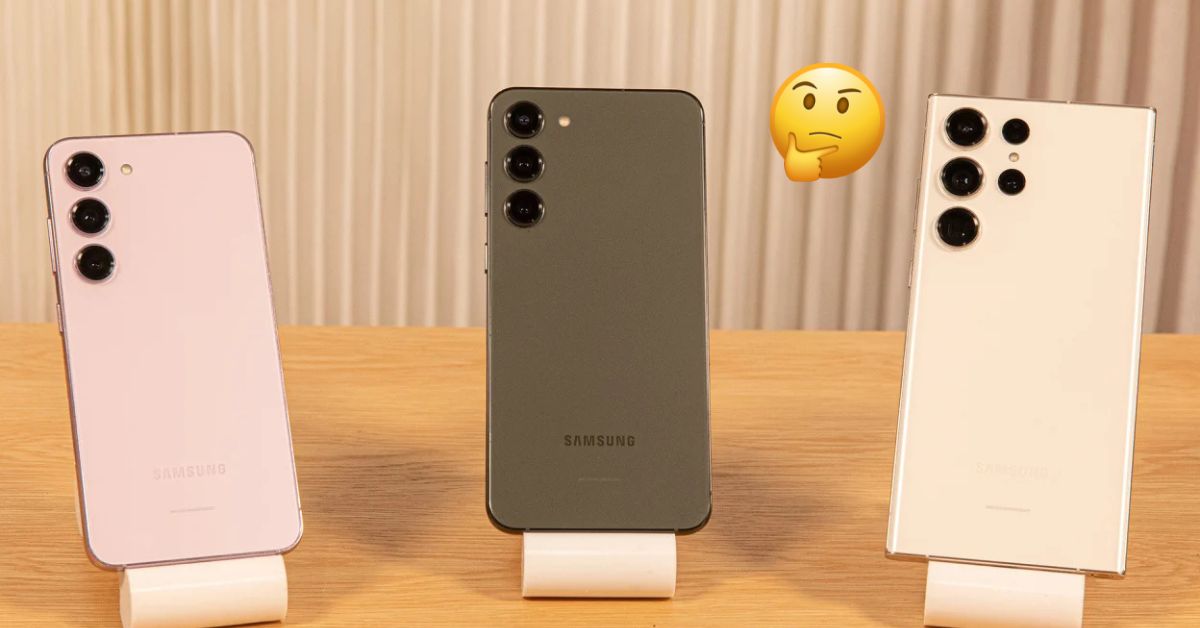
The Samsung Galaxy S23 Review in late 2025 is an analysis of enduring value and specialized engineering, confirming its status as the definitive compact flagship of its generation and a benchmark for sophisticated design. While the market has moved on to the S24 and S25 series, the standard Galaxy S23 remains a highly attractive purchase, uniquely combining premium materials, a world-class camera system, and a custom-tuned processor in a compact, pocketable form factor that few modern rivals dare to emulate. The phone’s enduring appeal rests heavily on the unique “Snapdragon 8 Gen 2 for Galaxy” specialization and a build quality that guarantees years of reliable use. This comprehensive, in-depth analysis dissects its custom processor, rigorously tests its camera and gaming stability, evaluates the brilliance of its display, and confirms its highly competitive pricing in the dynamic Indian market.
Complete Specifications and Performance: The Custom Silicon Advantage
The foundational excellence of the Samsung Galaxy S23 Review subject is the exclusive, customized chipset at its core: the Qualcomm Snapdragon 8 Gen 2 for Galaxy. This was a pivotal moment in Samsung’s hardware strategy, marking a shift to a single, globally optimized processor. The “for Galaxy” tag denotes a specialized, souped-up version of the standard Snapdragon 8 Gen 2, featuring a prime Cortex-X3 CPU core overclocked to $3.36\text{ GHz}$ (up from the standard $3.2\text{ GHz}$) and an Adreno GPU overclocked to $719\text{ MHz}$ (up from $680\text{ MHz}$).
This overclocked silicon delivers a demonstrable advantage in peak performance and overall system responsiveness, ensuring the Galaxy S23 performs flawlessly across all applications, from intense multitasking within Samsung’s DeX environment to managing complex photo edits in the Expert RAW app. The chipset is paired with a generous $8\text{ GB}$ of RAM and, crucially, the faster UFS $4.0$ storage format in the $256\text{ GB}$ and $512\text{ GB}$ variants, which provides double the sequential read speeds of the older UFS $3.1$ used in the base $128\text{ GB}$ model, significantly speeding up app installation and large file transfers. This combination of faster clock speeds and faster memory guarantees that the S23’s performance remains relevant and responsive even against its much newer rivals.
AMOLED Display Quality: Compact Brilliance and Peak Brightness
The display of the Samsung Galaxy S23 Review subject is a key differentiator, offering an exceptional visual experience in a manageable size. The phone features a vibrant $6.1\text{-inch}$ Dynamic AMOLED 2X display with a high pixel density (around $425\text{ ppi}$), ensuring images are incredibly crisp. The panel utilizes LTPO technology for its adaptive $48\text{ Hz}$ to $120\text{ Hz}$ refresh rate, allowing the screen to seamlessly ramp up smoothness when scrolling and reduce the frequency when viewing static content, which is a key specialization for preserving battery life.
The quality of the panel itself is world-class, receiving a certification from VDE Germany for $100$ percent Mobile Color Volume in the DCI-P3 color range, ensuring colors remain saturated and accurate regardless of brightness levels. Its most remarkable feature is its peak brightness of up to $1,750\text{ nits}$. This extreme brightness level, combined with the Vision Booster technology, dynamically adjusts the display’s contrast and color mapping in direct sunlight, ensuring content remains highly visible even under the harsh Indian sun. The entire assembly is protected by the durable Corning Gorilla Glass Victus 2, offering superior scratch and shatter resistance compared to previous generations, contributing to the device’s enduring, high-quality feel.
Read More : Infinix Note 40 Pro
Camera Test: Versatility, Zoom, and Cinematic Video
The camera system of the Samsung Galaxy S23 Review subject is defined by its versatile, no-compromise triple-lens setup, offering professional-grade imaging tools in a compact body.
The rear system features:
- 50MP Wide Sensor: The primary camera captures excellent detail and dynamically uses pixel binning to produce bright, sharp $12\text{ MP}$ images in low light. It includes Optical Image Stabilization (OIS) for steady shooting.
- 12MP Ultra-wide Sensor: Provides a broad $120$-degree field of view, ideal for architectural shots and landscapes, with strong edge correction.
- 10MP Telephoto Sensor: This is a crucial specialization, offering $3\times$ Optical Zoom. This genuine optical magnification allows users to capture detailed, lossless portrait shots and distant objects without relying solely on digital cropping, a feature that distinguishes it from many non-flagship devices.
The video capabilities were revolutionary at launch and remain highly capable, supporting $8\text{K}$ video recording at $30\text{ fps}$ and super-smooth $4\text{K}$ video at $60\text{ fps}$ across all three rear lenses. Furthermore, the Nightography features, powered by the Snapdragon’s Cognitive ISP (Image Signal Processor) and the large main sensor, excel at capturing vivid, clear images and videos in extremely low-light conditions, minimizing noise and enhancing detail better than most competitors. The front-facing $12\text{ MP}$ camera, featuring faster autofocus, ensures superior selfie quality and video calls.
Gaming Performance and Battery Life: Endurance in a Compact Shell
The gaming performance of the Samsung Galaxy S23 Review subject is excellent, though the user must manage the inherent thermal limits of its compact form factor. The overclocked Snapdragon 8 Gen 2 for Galaxy handles demanding titles like Genshin Impact and Call of Duty Mobile with exceptional frame rates, easily sustaining $60\text{ FPS}$ on high settings for extended periods. Real-world tests show that while the base S23’s small size means its thermal dissipation is less aggressive than the larger S23 Ultra, its performance stability is still very strong compared to its compact predecessors, maintaining over $85\%$ of its peak performance over long sessions.
Battery life sees a necessary and welcome improvement over the S22. The S23 features a larger $3,900\text{ mAh}$ battery (a $200\text{ mAh}$ jump) paired with the efficiency of the Snapdragon 8 Gen 2 for Galaxy, resulting in a substantially longer daily run time. The phone easily provides a full day of moderate use, with screen-on-time consistently beating older models. Charging remains a modest $25\text{ W}$ wired fast charging, allowing the compact battery to reach $100\%$ in just over an hour. It also supports $15\text{ W}$ fast wireless charging and reverse wireless charging, providing convenience and versatility for charging other devices.
Latest India Price and Conclusion
The Samsung Galaxy S23 Review confirms its enduring benefits: a premium, durable build featuring Armor Aluminum and an IP68 rating for dust and water resistance, a fantastic compact size that is easy to handle and pocket, and a powerhouse camera and processor combination. Its status as a previous-generation flagship, now two years old, makes its price point incredibly attractive, offering immense value.
The latest price positioning confirms its high value-for-money proposition in late 2025. The Samsung Galaxy S23 (8GB RAM, 128GB/256GB storage) is available in India with an effective price starting from approximately $\text{₹}43,999$ to $\text{₹}49,999$, depending on the storage variant and ongoing retail promotions. This current pricing places the S23 not only against premium mid-range phones but also against entry-level flagships, providing superior design, camera zoom capabilities, and a processor that still dominates in performance. The Samsung Galaxy S23 Review concludes that it remains the finest option for buyers prioritizing a genuine, uncompromising flagship experience in a rare, compact form factor.
The Samsung Galaxy S23 Review in late 2025 is an analysis of enduring value and specialized engineering, confirming its status as the definitive compact flagship of its generation and a benchmark for sophisticated design. While the market has moved on to the S24 and S25 series, the standard Galaxy S23 remains a highly attractive purchase, uniquely combining premium materials, a world-class camera system, and a custom-tuned processor in a compact, pocketable form factor that few modern rivals dare to emulate. The phone’s enduring appeal rests heavily on the unique “Snapdragon 8 Gen 2 for Galaxy” specialization and a long-term software commitment that now includes the integration of key Galaxy AI features. This comprehensive, in-depth analysis dissects its custom processor, rigorously tests its camera and gaming stability, evaluates the brilliance of its display, and confirms its highly competitive pricing in the dynamic Indian market.
Complete Specifications and Performance: The Custom Silicon Advantage and AI Integration
The foundational excellence of the Samsung Galaxy S23 Review subject is the exclusive, customized chipset at its core: the Qualcomm Snapdragon 8 Gen 2 for Galaxy. This was a pivotal moment in Samsung’s hardware strategy, where a custom version of the processor was developed specifically for the S23 series. The “for Galaxy” specialization denotes a version featuring a prime Cortex-X3 CPU core overclocked to $3.36\text{ GHz}$ (up from the standard $3.2\text{ GHz}$) and an Adreno GPU overclocked to $719\text{ MHz}$ (up from $680\text{ MHz}$). This overclocked silicon delivers a demonstrable advantage in peak performance and overall system responsiveness, ensuring the Galaxy S23 performs flawlessly across all applications.
The chipset is paired with a generous $8\text{ GB}$ of LPDDR5X RAM and, crucially, the faster UFS $4.0$ storage format in the $256\text{ GB}$ and $512\text{ GB}$ variants, which provides superior sequential read speeds compared to the older UFS $3.1$ used in the base $128\text{ GB}$ model. This combination of faster clock speeds and faster memory guarantees that the S23’s performance remains highly relevant and responsive even against its much newer rivals. Furthermore, Samsung has delivered on its commitment to long-term support by rolling out key Galaxy AI features to the S23 series. This massive software specialization includes tools like Circle to Search, Live Translate (for real-time phone calls), Generative Photo Editing (for repositioning and removing objects), and Note Assist (for auto-formatting and summarizing notes), providing a huge productivity boost and significantly extending the device’s functional lifespan.
AMOLED Display Quality and Compact Design
The display of the Samsung Galaxy S23 Review subject is a key differentiator, offering an exceptional visual experience in a supremely manageable size. The phone features a vibrant $6.1\text{-inch}$ Dynamic AMOLED 2X display with a high pixel density of approximately $425\text{ ppi}$. The panel utilizes LTPO technology for its adaptive $48\text{ Hz}$ to $120\text{ Hz}$ refresh rate, allowing the screen to seamlessly ramp up smoothness when scrolling and reduce the frequency when viewing static content, which is a key specialization for preserving battery life.
The quality of the panel is world-class, receiving VDE Germany certification for $100$ percent Mobile Color Volume in the DCI-P3 color range. Its most remarkable feature is its peak brightness of up to $1,750\text{ nits}$. This extreme brightness level, combined with the Vision Booster technology, dynamically adjusts the display’s contrast and color mapping in direct sunlight, ensuring content remains highly visible even under the harsh Indian sun. The entire assembly is protected by the durable Corning Gorilla Glass Victus 2 on both the front and back, surrounded by an Armor Aluminum frame, making it exceptionally durable and resistant to scratches and shatters, contributing to the device’s enduring, high-quality, and compact feel, weighing in at a mere $168\text{ grams}$.
Camera Test: Versatility, Optical Zoom, and Nightography
The camera system of the Samsung Galaxy S23 Review subject is defined by its versatile, no-compromise triple-lens setup, offering professional-grade imaging tools in a compact body.
The rear system features:
- 50MP Wide Sensor: The primary camera captures excellent detail and uses OIS (Optical Image Stabilization) for steady shooting.
- 12MP Ultra-wide Sensor: Provides a broad $120$-degree field of view, ideal for architectural shots and landscapes.
- 10MP Telephoto Sensor: This is a crucial specialization, offering $3\times$ Optical Zoom. This genuine optical magnification allows users to capture detailed, lossless portrait shots and distant objects without relying solely on digital cropping, a feature that distinguishes it from many non-flagship devices.
The video capabilities were revolutionary at launch and remain highly capable, supporting $8\text{K}$ video recording at $30\text{ fps}$ and super-smooth $4\text{K}$ video at $60\text{ fps}$ across all three rear lenses. Furthermore, the Nightography features, powered by the Snapdragon’s Cognitive ISP (Image Signal Processor) and the large main sensor, excel at capturing vivid, clear images and videos in extremely low-light conditions, minimizing noise and enhancing detail better than most competitors. The inclusion of Galaxy AI features like Generative Photo Editing and Edit Suggestions further extends the photographic capability, allowing users to move or erase objects in a photo and automatically apply professional-level edits years after the hardware’s release.
Gaming Performance and Battery Life: Sustained Power in a Compact Shell
The gaming performance of the Samsung Galaxy S23 Review subject is excellent due to its specialized Snapdragon processor. The overclocked Snapdragon 8 Gen 2 for Galaxy handles demanding titles like Genshin Impact and Call of Duty Mobile with exceptional frame rates, easily sustaining $60\text{ FPS}$ on high settings for extended periods. The improved cooling system over its predecessor ensures performance stability, maintaining high frame rates over long gaming sessions and providing a superior gaming experience relative to its small form factor.
The year 2026 for Samsung is defined by a strategic evolution of its flagship and mid-range lineups, focusing heavily on AI integration, superior hardware components, and a refined aesthetic aimed at unifying its premium device family. This comprehensive overview dissects the next generation of the high-end Galaxy S series and the highly competitive Galaxy A series, highlighting the specific technological specializations that will maintain Samsung’s dominance across all major price segments in India.
The Apex of Flagship: The Anticipated Samsung Galaxy S26 Ultra
The launch of the Samsung Galaxy S26 Ultra, expected in early 2026, is the most significant event for the premium market, designed to set the absolute benchmark for mobile technology. The project, often referred to as “Miracle” internally, focuses less on radical redesign and more on the meticulous refinement of its core specialized features.
Performance and Display Supremacy
The S26 Ultra is anticipated to be powered by the Qualcomm Snapdragon 8 Elite Gen 5 for Galaxy chipset globally, a pivotal decision by Samsung to ensure performance consistency worldwide. This custom-tuned processor, potentially featuring a $4.6\text{ GHz}$ prime core, will deliver unmatched speed and efficiency, crucial for managing the expanded Galaxy AI suite set to debut with One UI 8.5 based on Android 16. The display is also seeing a subtle but significant upgrade: a slightly larger $6.9\text{-inch}$ Dynamic AMOLED 2X panel with an enhanced resolution and a fluid $144\text{ Hz}$ refresh rate, ensuring an ultra-smooth visual experience. This panel is rumored to feature a 10-bit color depth for displaying over one billion colors, providing superior color fidelity over previous 8-bit displays.
Camera and Battery Enhancements
The camera system retains its hardware complexity but focuses on improved light capture. While the core megapixel counts remain familiar—a $200\text{ MP}$ primary sensor and multiple telephoto lenses—the key upgrade is the widened aperture of the main camera, moving to $f/1.4$. This physical change allows the sensor to capture significantly more light, directly translating to superior low-light photography, cleaner night shots, and better video quality without relying entirely on software processing. The battery capacity is expected to remain a robust $5,000\text{ mAh}$, but the charging speed finally sees a much-needed increase to $60\text{ W}$ wired fast charging, allowing the device to charge from $0$ to $80\%$ in around $30\text{ minutes}$, addressing a long-standing consumer pain point. This combination of processing power, photographic capability, and structural refinement, including slightly rounder corners for improved ergonomics, positions the S26 Ultra as the ultimate, uncompromising mobile device, carrying an expected price tag starting around $\text{₹}1,59,990$.
The Mid-Range Powerhouse: Galaxy A-Series ($A56$ and $A76$)
The Samsung Galaxy A-series (A56, A76, A86) in 2026 is defined by the democratization of features previously exclusive to the S-series, maintaining high quality and excellent service support at price points ranging from $\text{₹}30,000$ to $\text{₹}50,000$.
Performance and Premium Build Quality
The Galaxy A56 5G is poised to be the volume driver, utilizing the custom-tuned Samsung Exynos 1580 SoC. While not reaching the peak speeds of the Snapdragon flagships, the Exynos 1580 is optimized for reliable, daily performance and features an efficient architecture. The A56 is set to feature a large $6.7\text{-inch}$ Super AMOLED display with a $120\text{ Hz}$ refresh rate and is protected by Gorilla Glass Victus+, a premium material that enhances durability. The phone carries an IP67 rating for dust and water resistance and features a substantial $5,000\text{ mAh}$ battery with $45\text{ W}$ fast charging, ensuring exceptional endurance and resilience against the elements.
Camera and AI Feature Parity
The primary specialization of the 2026 A-series is its near-flagship camera hardware and AI software parity. The Galaxy A56 features a high-resolution $50\text{ MP}$ primary camera with Optical Image Stabilization (OIS), a feature crucial for reducing blur and improving low-light performance. This core hardware is integrated with key elements of the Awesome Intelligence AI Mobile suite, including Circle to Search with Google, Object Eraser for flawless photo editing, and Edit Suggestions, bringing the most desirable software innovations to the mid-range buyer. The Galaxy A76, positioned slightly higher, is expected to offer a more powerful processor (potentially a Snapdragon 7+ Gen 3 or equivalent) and a higher-resolution camera setup, possibly including a $108\text{ MP}$ main sensor and superior charging speed, catering to the performance-conscious mid-range user. The prices for these models are expected to start around $\text{₹}38,999$ for the A56 and $\text{₹}42,990$ for the A76, offering strong value for feature-rich, durable devices.
The Experimental Frontier: Foldables and Ultra-Premium Niches
Samsung continues to define the experimental and ultra-premium segments with its specialized foldable line, maintaining its technological lead.
The Galaxy Z TriFold and Fold/Flip 8
The Galaxy Z TriFold represents the pinnacle of form-factor specialization, featuring dual hinges that allow the device to fold twice, transforming a standard smartphone profile into a massive $10\text{-inch}$ tablet display. This device, powered by the Snapdragon 8 Elite for Galaxy and featuring $16\text{ GB}$ of RAM, is a technological marvel that carries a highly exclusive, ultra-premium price tag (estimated at over $\text{₹}2,50,000$). For the mainstream foldable market, the Galaxy Z Fold 8 and Galaxy Z Flip 8 will continue the crucial trend of refinement, focusing on thinner, lighter chassis, significantly reduced crease visibility through advanced hinge mechanisms, and improved water resistance. The Fold 8, in particular, will continue to leverage its large inner display for unparalleled multitasking with advanced S Pen support, cementing its status as the ultimate mobile productivity device. The Galaxy Z Flip 8 FE is also rumored, aiming to introduce a more accessible, lower-priced foldable option to attract a broader audience to the clamshell form factor.