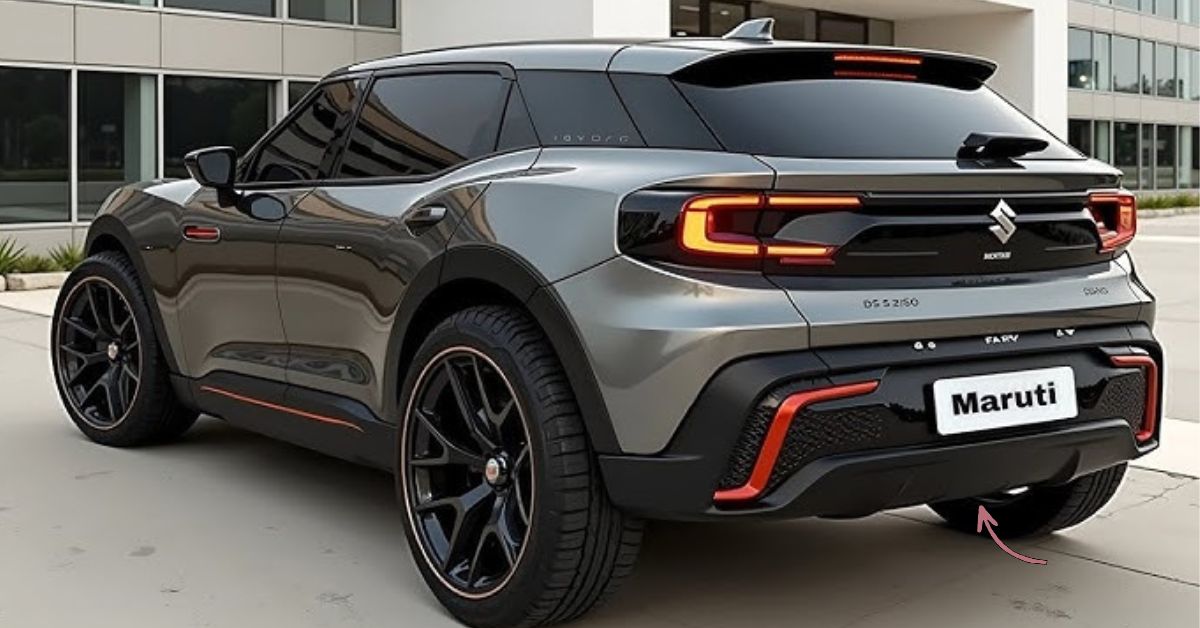
Maruti Suzuki, the largest carmaker in India, is entering 2026 with a bold roadmap centered on massive industrial expansion and a shift toward greener technologies. The company recently made headlines by formalizing a massive ₹35,000 crore investment in Gujarat. This move is part of a larger plan to increase its total production capacity to 4 million units per year by the end of the decade. As the Indian automotive market becomes more competitive, Maruti is pivoting from its traditional focus on petrol engines to a “multi-track” strategy involving electric vehicles (EVs), hybrids, and flex-fuel models.
Massive Expansion in Gujarat
The heart of Maruti Suzuki’s future growth lies in its new manufacturing facility at Khoraj, Gujarat. Spanning over 1,750 acres, this plant is expected to have an annual production capacity of 10 lakh (1 million) vehicles. Beyond just increasing car numbers, the project is a significant boost for the local economy, with the potential to create approximately 12,000 new jobs.
The Gujarat government has been a key partner in this journey, recently handing over the land allotment letter to the company’s leadership. This expansion is not just about domestic demand; it positions India as a global export hub. In 2025, Maruti Suzuki achieved its highest-ever annual production of over 22.55 lakh units, proving that the “Make in India” initiative is yielding tangible results for the auto giant.
The EV and Hybrid Revolution
For years, critics pointed out Maruti’s slow entry into the electric vehicle space. However, 2026 marks a turning point. The company is preparing to launch its first all-electric SUV, the e-Vitara, which is expected to hit Indian roads by the second quarter of 2026. This vehicle is built on a dedicated EV platform and promises a range of up to 500 km, targeting buyers who want reliability alongside modern technology.
In addition to pure electric cars, Maruti is doubling down on strong hybrid technology. Unlike mild hybrids, these “series hybrids” allow the car to run on electric power in city traffic, significantly boosting fuel efficiency. Rumors suggest that upcoming models like the Fronx Hybrid and the next-generation Baleno could achieve a mileage of over 35 kmpl, making them some of the most economical choices for Indian middle-class families.
Market Performance and Sales Growth
Despite new players entering the market, Maruti Suzuki remains the undisputed leader in India. The company reported a 22% rise in total sales in December 2025 compared to the previous year. This growth was driven by a strong demand for Utility Vehicles (SUVs) like the Brezza, Grand Vitara, and the newly launched Victoris.
While the “Mini” segment (Alto and S-Presso) continues to be a staple for first-time buyers, there is a clear shift toward larger, feature-rich cars. Maruti’s ability to dominate both the budget and premium segments through its Arena and Nexa outlets has allowed it to maintain a market share that rivals find difficult to challenge.
Why This Matters for Indian Buyers
For the average Indian consumer, Maruti’s expansion means more choices and better technology at competitive prices. The company’s focus on localizing production—especially for EV batteries and hybrid systems—is intended to keep costs down. Furthermore, a recent partnership with the Indian Oil Corporation (IOCL) to expand service networks at fuel stations ensures that even as cars become more tech-heavy, getting them serviced remains convenient across the country.
What Lies Ahead
The next few months will be crucial for the company’s stock and market strategy. Investors are closely watching the Q3 financial results scheduled for late January 2026. Additionally, the upcoming Bharat Mobility Global Expo is expected to be the stage where Maruti reveals more details about its future “green” lineup, including flex-fuel engines that can run on ethanol blends.
Read More : Hyundai Santro
Frequently Asked Questions (FAQs)
1. When will Maruti Suzuki launch its first electric car in India?
Maruti Suzuki’s first electric SUV, the e-Vitara (previously known as the eVX concept), is expected to be launched in India by the second quarter of 2026, following its European debut.
2. What is the new ₹35,000 crore investment for?
The investment is for a new manufacturing plant in Khoraj, Gujarat. It will help Maruti Suzuki reach a total production capacity of 40 lakh (4 million) cars per year by 2030.
3. Are Maruti hybrid cars better than CNG cars?
Hybrid cars offer a smoother driving experience and high fuel efficiency (often over 30-35 kmpl) without the need for frequent gas station queues or the loss of boot space typical of CNG vehicles. However, they are generally more expensive to buy initially.
4. Will the Maruti Baleno and Swift get new updates in 2026?
Yes, a next-generation Baleno and updated versions of existing models with hybrid powertrains are planned for late 2026 or early 2027 to meet stricter emission norms and consumer demand for better mileage.
5. How is Maruti Suzuki’s stock performing?
As of early 2026, the stock has shown steady long-term growth, though it faces occasional market pressure. Analysts generally maintain a positive outlook due to the company’s aggressive expansion and debt-free status.