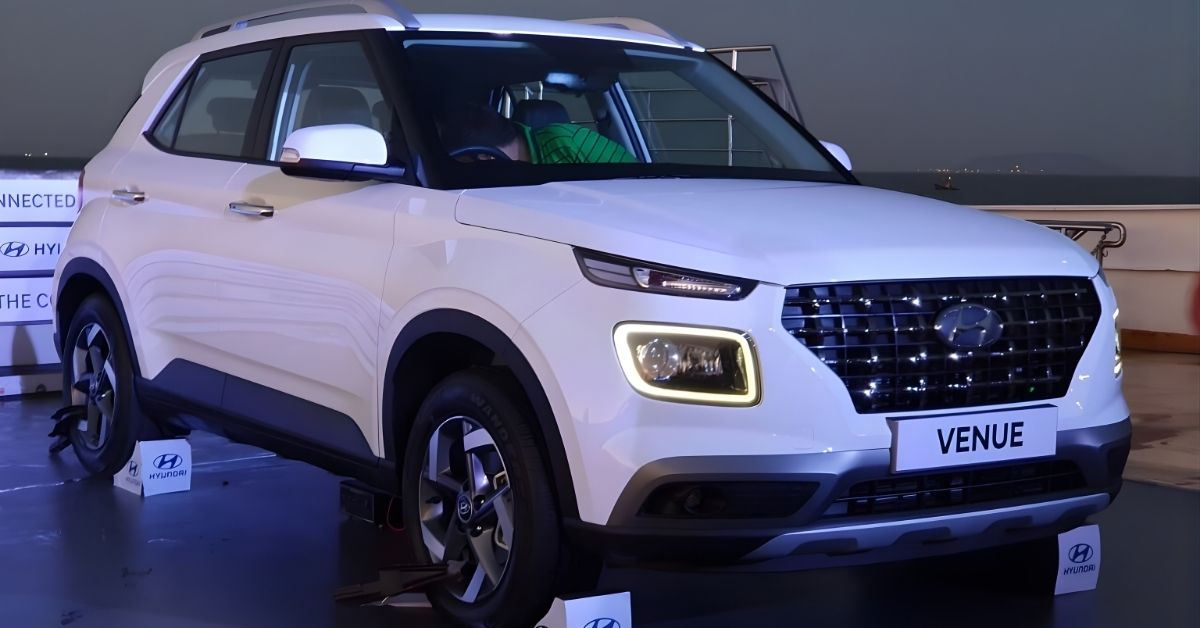
When Hyundai launched the Venue, it didn’t just enter the market; it practically created the trend of “Connected SUVs” in India. Fast forward to 2026, and the sub-4 meter SUV segment is a war zone. You have the safety tank Tata Nexon, the mileage king Maruti Brezza, and the tech-loaded sibling Kia Sonet.
So, where does the Hyundai Venue stand today?
With an ex-showroom price starting at ₹7.94 Lakh and going up to ₹13.48 Lakh, the Venue promises a premium experience without the premium price tag. But has the “Sensuous Sportiness” design aged well? And crucially, does the 1.0L Turbo engine actually deliver mileage, or just bills? I spent a week driving the Venue Turbo DCT and the Diesel Manual in Delhi traffic and on the Yamuna Expressway to give you the real picture.
2. Quick Specs Table: What Are We Driving?
Read more: Tata Nexon
| Feature | 1.2L Kappa Petrol | 1.0L Turbo GDi | 1.5L CRDi Diesel |
| Power | 83 PS @ 6000 rpm | 120 PS @ 6000 rpm | 116 PS @ 4000 rpm |
| Torque | 114 Nm | 172 Nm | 250 Nm |
| Transmission | 5-Speed MT | 6-iMT / 7-DCT | 6-Speed MT |
| Claimed Mileage | 17.5 kmpl | 18.3 kmpl | 22.7 kmpl |
| Boot Space | 350 Litres | 350 Litres | 350 Litres |
| Ground Clearance | 195 mm | 195 mm | 195 mm |
| Fuel Tank | 45 Litres | 45 Litres | 45 Litres |
Export to Sheets
3. Exterior Design & Road Presence
The Hyundai Venue has always leaned towards a “Baby Creta” look, and that works in its favor.
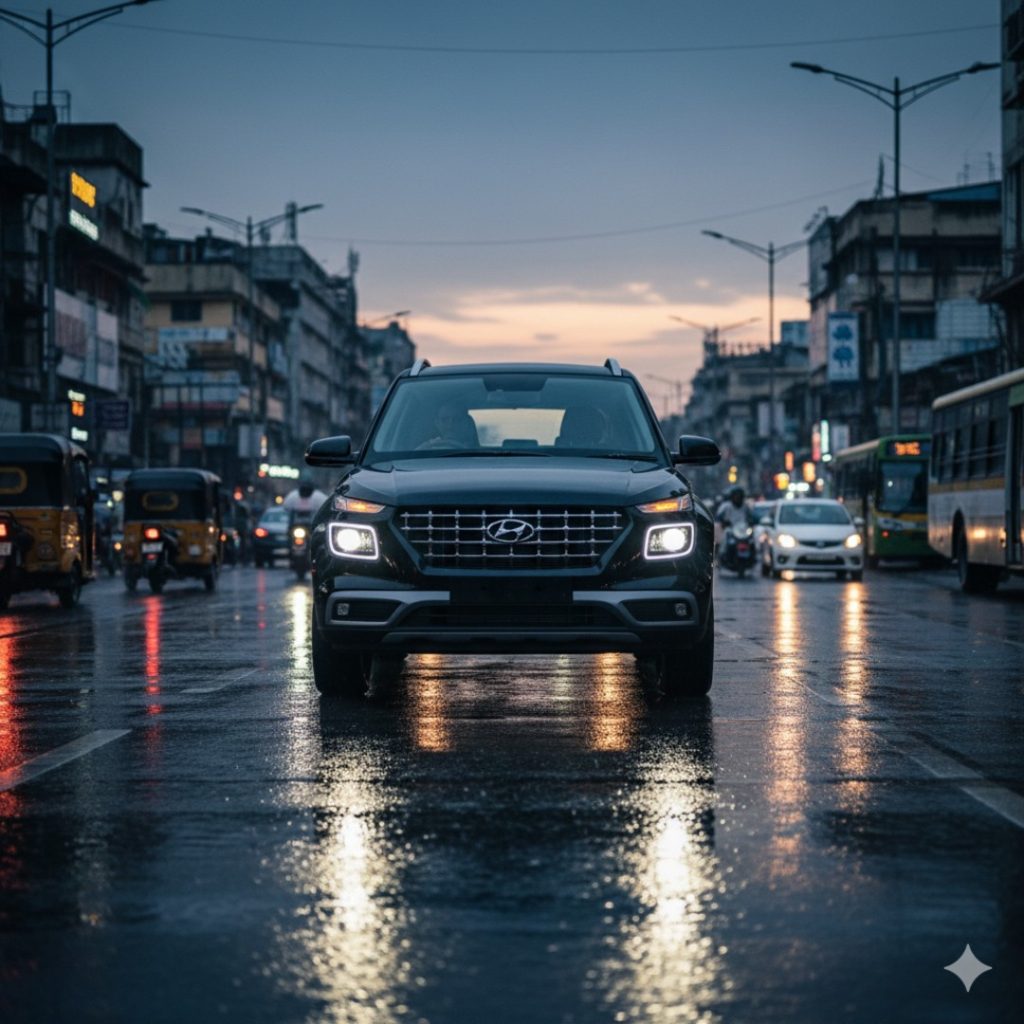
- The Front: The massive Dark Chrome Parametric Grille dominates the face. It looks expensive. The split headlamp setup (indicators on top, projector LEDs below) is standard now, but Hyundai executes it cleanly.
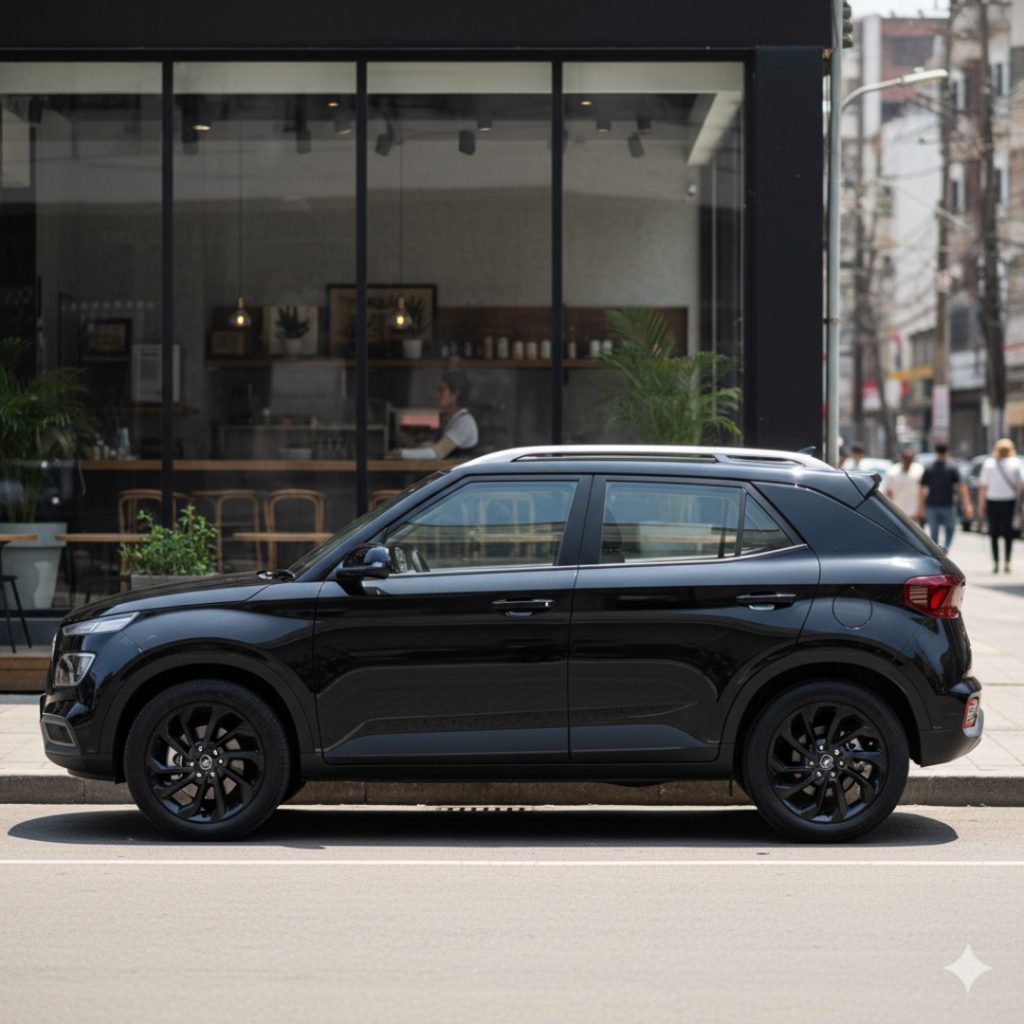
- The Profile: It has a boxy, traditional SUV stance. The 16-inch Diamond Cut Alloy wheels fill the arches well, though I wish the tires were slightly wider for better grip.
- The Rear: This is the best angle. The Connecting LED Taillamps that run across the boot lid look stunning at night. It gives the car a wide, premium look that the Brezza lacks.
Does it turn heads? In the standard colors? Maybe not. But the Knight Edition with brass inserts and blacked-out logos definitely grabs attention at traffic signals.
4. Interior, Comfort & Features
Step inside, and the first word that comes to mind is “Quality.”
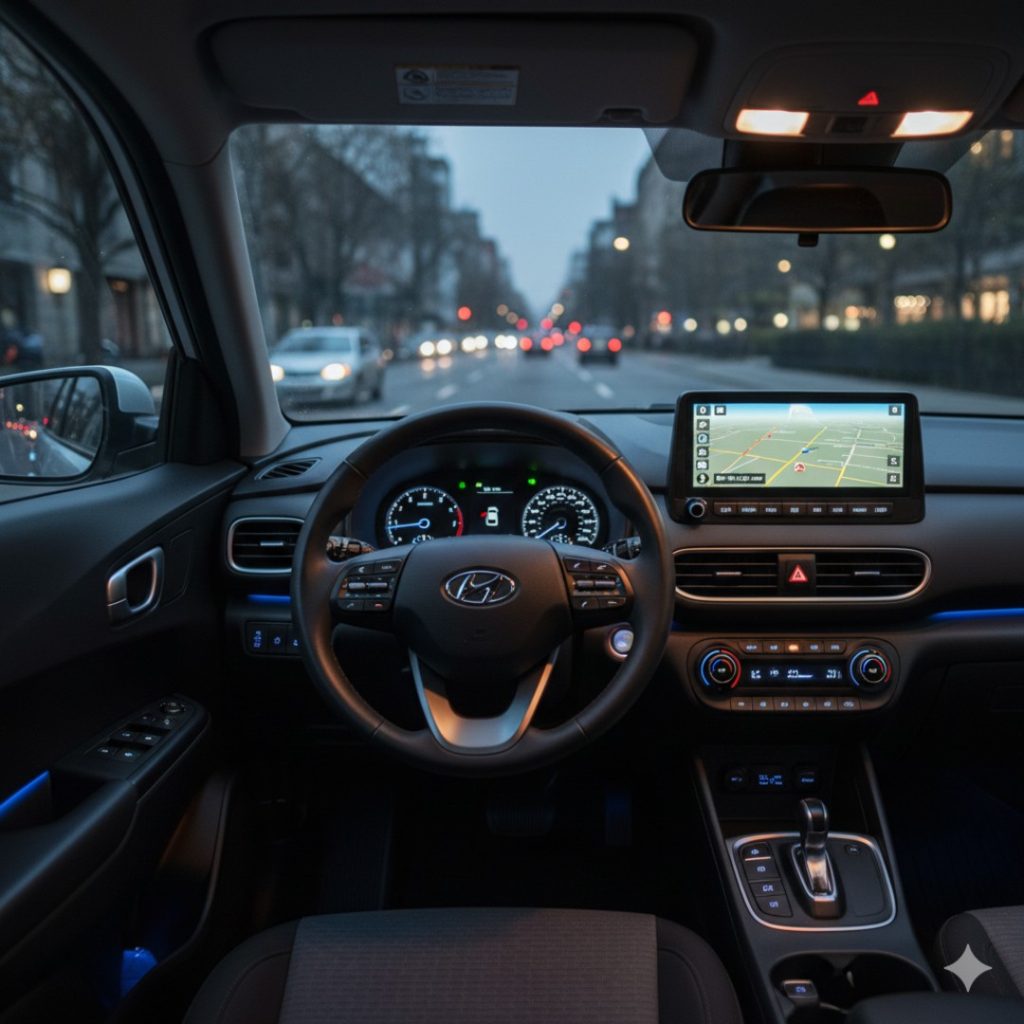
- Dashboard & Feel: Hyundai knows how to screw a car together. The fit and finish are segment-leading. The dual-tone “Greige” (Grey + Beige) and Black theme makes the cabin feel airy. The dashboard plastic is hard but has a nice texture that doesn’t feel cheap.
- The Tech Stack:
- Touchscreen: The 8-inch HD infotainment system is snappy. No lag, crisp colors. It supports wireless Android Auto and Apple CarPlay.
- Driver Display: The digitized instrument cluster changes colors based on drive modes (Eco, Normal, Sport). It looks cool, though purists might miss analog dials.
- Comfort & Space:
- Front Seats: The driver’s seat is 4-way electrically adjustable (a segment-first feature). The cushioning is firm, good for long drives.
- Rear Seats: This is where the Venue loses some points. While improved, the rear legroom is strictly “adequate.” If you are 6ft tall sitting behind a 6ft driver, your knees will brush the seat.
- Can 3 people sit at the back? No. It is best for 2 adults and a child. The shoulder room is tight compared to the Tata Nexon.
- Key Features: Electric Sunroof, Paddle Shifters (in DCT), Wireless Charger, Air Purifier, and Ambient Lighting.
5. Engine Performance & Driving Dynamics
I tested the two most popular engines: the 1.0L Turbo Petrol and the 1.5L Diesel.
The 1.0L Turbo GDi (The Enthusiast’s Pick)
This engine is a gem. Producing 120 PS, it feels eager.
- City Drive: There is a slight turbo lag below 1800 RPM. In stop-go traffic, the DCT gearbox can feel a bit jerky between 1st and 2nd gear.
- Highway: Once you cross 2000 RPM, it pulls cleanly. The Paddle Shifters are a joy to use for quick overtakes. It hits 100-120 kmph effortlessly and stays stable.
The 1.5L Diesel (The Mile Muncher)
Hyundai is one of the few brands still offering a diesel, and thank god for that. The 1.5L CRDi is the same engine used in the Creta (detuned slightly initially, now fully powered at 116 PS).
- Torque Wave: With 250 Nm of torque, you barely need to downshift. It pulls like a tractor (in a good way) from any gear.
- Refinement: It is shockingly silent. You won’t hear the diesel clatter inside the cabin unless you redline it.
Ride & Handling
- Suspension: The Venue is set up on the stiffer side. You will feel the sharp potholes and expansion joints in the city. However, this stiffness means the car doesn’t bounce around at high speeds like the old Scorpio used to.
- Steering: Typical Hyundai—super light in the city (parking is a breeze with one finger) but weighs up decently on highways.
6. Safety: ADAS enters the Chat
The Venue was the first in its segment to introduce ADAS (Advanced Driver Assistance Systems) Level 1.
- Standard Safety: 6 Airbags are now standard across all variants. Plus ABS, EBD, ESC (Electronic Stability Control), and Hill Assist Control.
- ADAS Features: Available in the top ‘SX(O)’ trim.
- Forward Collision Warning: Useful if you get distracted.
- Lane Keep Assist: It gently nudges the steering to keep you in the lane. Honest opinion? It’s annoying on narrow Indian roads, so you might end up turning it off in the city.
- High Beam Assist: Automatically dims headlights for oncoming traffic.
- Build Quality: While the doors have a decent “thud,” the Venue hasn’t been crash-tested by Global NCAP recently. Based on its platform, it is expected to be stable, but if 5-star safety is your only priority, the Tata Nexon or Mahindra XUV 3XO might give you more peace of mind.
7. Real World Mileage: The Truth
ARAI numbers are done in a lab. Here is what I got driving in real Indian conditions with AC on.
| Engine / Gearbox | ARAI Claimed | Real City Mileage | Real Highway Mileage |
| 1.2L Petrol MT | 17.5 kmpl | 12 – 13.5 kmpl | 15 – 16.5 kmpl |
| 1.0L Turbo DCT | 18.3 kmpl | 9.5 – 11 kmpl | 15 – 17 kmpl |
| 1.5L Diesel MT | 22.7 kmpl | 15 – 17 kmpl | 20 – 23 kmpl |
Export to Sheets
Note: The Turbo engine is sensitive to driving style. Drive it hard, and you will see single-digit mileage (8-9 kmpl). Drive gently, and it rewards you. The Diesel is the undisputed king of efficiency here.
8. The Competition: Venue vs Nexon vs Brezza vs Sonet
We have auto-selected the fiercest rivals. Let’s see who wins.
| Feature | Hyundai Venue | Tata Nexon | Maruti Brezza | Kia Sonet |
| Engine USP | Refined Diesel & Turbo | 5-Star Safety | Factory CNG & Hybrid | Tech & Features |
| Rear Space | Average | Best in Class | Good | Average |
| Ride Quality | Stiff/Sporty | Balanced | Comfort Oriented | Stiff/Sporty |
| Fuel Choice | Petrol, Turbo, Diesel | Petrol, Diesel, EV, CNG | Petrol, CNG | Petrol, Turbo, Diesel |
| Verdict | The All-Rounder | Safety First Choice | City Efficiency Choice | Feature Loaded Choice |
Export to Sheets
- Comparison Verdict: The Tata Nexon feels more substantial and spacious. The Maruti Brezza is better if your running is purely city-based and you want low maintenance. However, the Hyundai Venue offers the best balance of premium interiors, refined engines, and ease of driving.
9. Final Verdict: Should You Buy the Hyundai Venue?
The Hyundai Venue is not the biggest car in its segment, nor is it the cheapest. But it is arguably the most polished product. It doesn’t have the rough edges of the Nexon or the plastic feel of the Brezza.
Buy the Hyundai Venue if:
- You want Diesel: It is one of the last remaining polished diesel SUVs under ₹15 Lakhs.
- You prioritize Fit & Finish: The interior quality and switchgear feel superior to Tata and Mahindra.
- You want a tech-loaded City Car: The light steering, DCT gearbox, and compact size make it perfect for urban chaos.
Skip the Hyundai Venue if:
- You need space for 5 adults: The rear seat width is tight for three healthy adults.
- You want a plush ride: The suspension is stiff; you will feel the bad roads.
- You drive aggressively in the city: The Turbo petrol variant will give you very low mileage (8-9 kmpl) in heavy traffic.
Journalist Score: 8/10
10. FAQs (People Also Ask)
Q: What is the on-road price of the Hyundai Venue top model?
The top-spec Venue SX(O) Turbo DCT Dual Tone costs approximately ₹15.50 Lakh to ₹16.00 Lakh (On-Road, Delhi), depending on insurance and taxes.
Q: Does the Hyundai Venue have a Sunroof?
Yes, the Electric Sunroof is available from the SX variant onwards.
Q: Is the Venue CNG available?
No, Hyundai does not offer a factory-fitted CNG kit with the Venue yet. If you need CNG, look at the Hyundai Exter or Maruti Brezza.
Q: Which engine is better: 1.2L Petrol or 1.0L Turbo?
If you are a relaxed driver and mostly drive in the city on a budget, pick the 1.2L Petrol. If you want performance and highway stability, strictly go for the 1.0L Turbo.
Q: Is the maintenance of Hyundai Venue high?
Hyundai service is generally reasonable. Expect a scheduled service cost of roughly ₹4,000 – ₹6,000 per year for petrol and slightly higher for diesel.