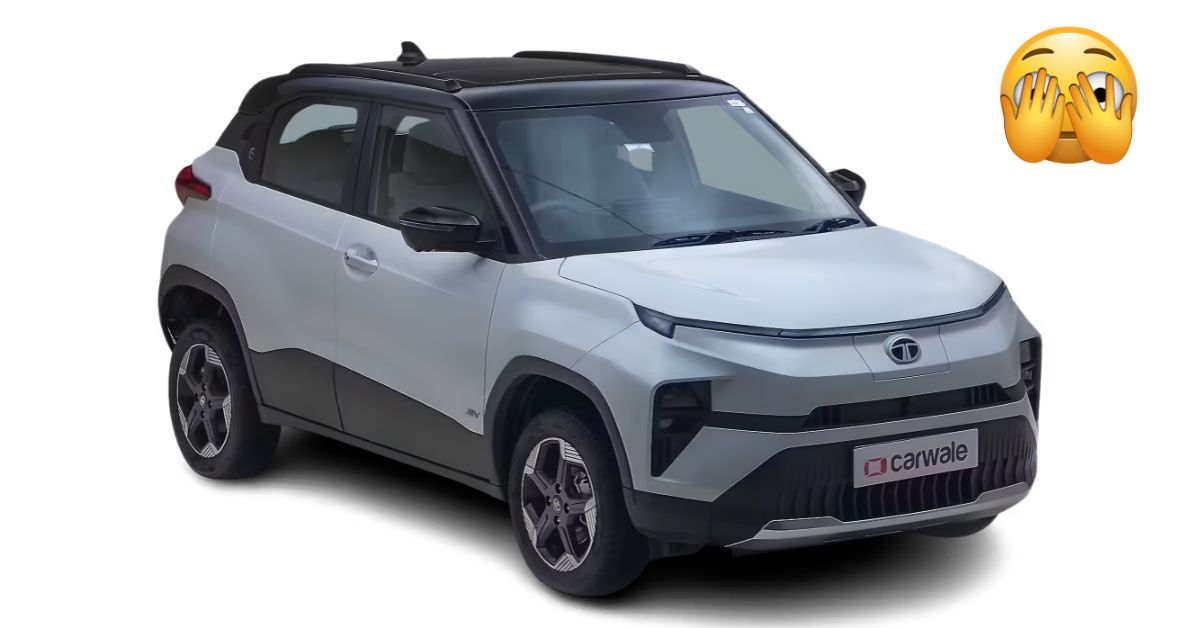
The Tata Punch EV Review is an examination of one of the most strategically significant vehicles in the current Indian automotive market. Launched on the back of Tata Motors’ established leadership in the domestic electric vehicle (EV) segment, the Punch EV successfully translated the immense popularity of its petrol-powered sibling into a zero-emission format, offering a unique blend of compact SUV ruggedness, class-leading safety, and exceptional electric efficiency. The Punch EV is not merely an electrified version of an existing car; it is the first product to be built on Tata’s highly advanced, dedicated acti.ev architecture, a purpose-built EV platform designed to maximize battery packaging, improve structural rigidity, and seamlessly integrate next-generation features. For the urban commuter and the first-time EV buyer in 2026, the Tata Punch EV Review subject presents a compelling, future-proof solution, offering a perfect balance between accessible pricing, aspirational features, and practical utility that defines the benchmark for entry-level electric SUVs.
Dual Power Strategy: Electric Range, Battery Architecture, and Performance
The performance and utility of the Tata Punch EV Review subject are fundamentally defined by its intelligent, dual-battery pack strategy, which allows the vehicle to cater effectively to two distinct segments of buyers: the city-only commuter seeking maximum efficiency and the long-distance highway runner demanding extended range. This inherent flexibility is a core specialization of the new acti.ev platform.
Battery and Range Differentiation
The Punch EV is offered with two highly optimized, liquid-cooled, IP67-rated battery options, ensuring maximum protection against dust and water ingress, which is crucial for durability and longevity in varied Indian conditions. The Standard Range (SR) utilizes a $25\text{ kWh}$ battery pack, providing a highly respectable ARAI-certified range of $315\text{ km}$. This range comfortably covers several days of average city driving on a single charge for the typical urban user. For buyers prioritizing longer journeys, the Long Range (LR) features a larger $35\text{ kWh}$ battery pack, providing a class-leading ARAI-certified range of $421\text{ km}$. While real-world range depends heavily on driving style and AC usage, owners of the LR variant routinely report a practical, usable range of $300\text{ km}$ to $350\text{ km}$ in mixed driving conditions—a figure that reliably supports even ambitious inter-city trips.
Motor Performance and Driving Dynamics
The dual-battery strategy is directly linked to motor power, ensuring that the Long Range variants deliver a significant boost in performance necessary for confident highway overtaking. The Standard Range motor is powered by a permanent magnet synchronous motor (PMSM) generating $80.46\text{ bhp}$ ($60\text{ kW}$) and $114\text{ Nm}$ of torque. This is a quick, zippy configuration ideal for city traffic. The motor in the LR variants, however, is substantially more powerful, generating $120.69\text{ bhp}$ ($90\text{ kW}$) and a strong $190\text{ Nm}$ of torque. This higher output significantly improves the vehicle’s dynamics, allowing the Tata Punch EV Review subject to accelerate from $0\text{ to } 100\text{ km/h}$ in just $9.5\text{ seconds}$. This makes it one of the quickest micro-SUVs on the market, providing the quick, effortless speed gain and high torque necessary for safe high-speed travel and making it a genuinely fun, “punchy” car to drive.
The driving experience is further refined by Multi-Mode Regenerative Braking, which is conveniently controlled via tactile paddle shifters mounted behind the steering wheel. This specialized feature allows the driver to select from four distinct levels of energy recapture intensity, optimizing efficiency and allowing for a near single-pedal driving experience in heavy traffic, enhancing both range and driver comfort by reducing reliance on the brake pedal. The vehicle also offers two core drive modes, City and Sport, allowing the driver to instantly prioritize efficiency or maximum acceleration.
Charging Infrastructure, Safety, and Future Readiness
The Tata Punch EV Review subject addresses the critical infrastructure concerns of EV buyers with a versatile and comprehensive charging strategy, built on the global CCS-II standard, and reinforces confidence with world-class safety features.
Charging Flexibility and Warranty
The Punch EV’s versatility in charging is a key benefit. All variants are compatible with $50\text{ kW}$ DC fast chargers, allowing the battery to be replenished from $10\%$ to $80\%$ in a rapid $56\text{ minutes}$, making quick top-ups during long journeys fully practical. For home use, Tata provides a $3.3\text{ kW}$ AC wall box charger as standard. Critically, the Long Range variants offer an essential optional upgrade: a $7.2\text{ kW}$ AC Fast Charger. This unit drastically reduces home charging time, filling the $35\text{ kWh}$ LR battery from $10\%$ to $100\%$ in approximately $5\text{ hours}$, turning overnight charging into a reliable solution for full-range readiness every morning. This comprehensive charging flexibility, coupled with Tata Motors’ assurance of an $8$-year or $1,60,000\text{ km}$ warranty on the battery pack and electric motor, secures the vehicle’s long-term operational confidence and minimizes potential battery anxiety.
Structural Safety and Active Features
The Tata Punch EV Review subject achieves a level of safety integration that sets an elevated benchmark for the compact EV segment. The vehicle is one of the first to be officially recognized under the rigorous Bharat NCAP (BNCAP) assessment, receiving a flawless 5-Star Safety Rating for both Adult Occupant Protection (AOP) and Child Occupant Protection (COP), a testament to the inherent structural strength of the dedicated acti.ev platform and the inclusion of six airbags as standard. The comprehensive safety facilities include Six Airbags across all variants, Electronic Stability Program (ESP), and Tyre Pressure Monitoring System (TPMS).
Furthermore, the advanced variants incorporate features that significantly enhance active safety and convenience. These include the Electric Parking Brake (EPB) paired with an Auto Hold function, which simplifies driving on slopes and in dense traffic, and the highly valuable $360\text{-Degree Surround View Camera and Blind Spot View Monitor. The Blind Spot View Monitor, in particular, projects a crucial view of the side-rear onto the digital instrument cluster when the turn indicator is active, enhancing situational awareness and preventing common lane-change mishaps.
Specialized Cabin Features and The Investment Verdict
The cabin of the Punch EV is packed with specialized facilities previously reserved for higher-segment vehicles, demonstrating Tata’s commitment to premium features at an accessible price point. The driver is greeted by a sleek, modern cockpit featuring a large $10.25\text{-inch}$ touchscreen infotainment system and a corresponding $10.25\text{-inch}$ fully digital driver’s display. The tactile experience is refined by the presence of a touch-based climate control panel and the premium jewelled rotary control knob used for gear selection, adding a unique aesthetic touch. Most critically for the Indian climate, the top variants feature Ventilated Front Seats, a highly valued segment-first specialization that provides immense comfort during the hottest months.
Read More : Suzuki GSX-R1000R
The ultimate strength of the Tata Punch EV Review subject is its affordability and market positioning. The Tata Punch EV is priced aggressively, starting at an ex-showroom price of $\text{₹}9.99\text{ Lakh}$ for the base Smart $25\text{ kWh}$ variant and extending up to $\text{₹}14.44\text{ Lakh}$ for the fully loaded Empowered Plus S $35\text{ kWh}$ LR variant with the $7.2\text{ kW}$ AC fast charger. The final On-Road Price in India for the most popular LR variants typically falls between $\text{₹}13\text{ Lakh}$ and $\text{₹}15.21\text{ Lakh}$ in major cities. This strategic price point, combined with its 5-Star BNCAP safety and superior electric range, confirms the Tata Punch EV Review subject as the smartest, most reliable choice for a future-ready, high-value compact SUV.
The automotive industry is currently navigating its most profound transformation in over a century, moving beyond simple iterations of engine technology to establish a new paradigm defined by digitalization, sustainable energy, and computational intelligence. The specialization of vehicles emerging from $2026$ onwards is not merely about incremental improvements in horsepower or aesthetic refinement; it is a fundamental shift toward the Software-Defined Vehicle (SDV), where the car’s primary function is to serve as an evolving, intelligent, and interconnected node within a massive mobility ecosystem. This analytical overview defines the specialized features and capabilities that will dictate value, safety, and desire in the vehicles of the future, offering key examples for understanding the direction of the market.
The Specialization of Intelligence: SDVs and Evolving Digital Architecture
The core specialty of the future car is its reliance on Artificial Intelligence (AI) and its status as a mobile computing device, capable of continuous evolution. This specialization is powered by the Software-Defined Vehicle (SDV) architecture, which replaces complex, decentralized electronic control units (ECUs) with centralized, high-speed computing platforms. This centralized architecture enables the most critical specialized function: Over-The-Air (OTA) Updates. For example, a Tata Punch EV can receive OTA updates that refine the battery management system for increased range or enhance the responsiveness of its electric motor years after purchase, ensuring the vehicle remains technologically current and protecting its long-term asset value.
This intelligence extends to hyper-personalization within the cabin. Future cars utilize biometric sensors and advanced AI copilots to instantly recognize the driver, automatically configuring seating positions, steering sensitivity, and entertainment preferences. For instance, in a future BMW XM, the AI will instantly recognize the driver’s profile and activate the specialized M-specific steering feel and throttle response before the driver even touches the ignition button. This specialized use of AI is also accelerating the manufacturing process, where AI-powered Smart Factories use digital twins and vision AI to optimize production lines, ensuring consistent quality and accelerating the pace at which innovation reaches the consumer.
The Specialization of Energy: Solid-State Batteries and V2X Utility
The most critical mechanical specialization of the future automotive fleet is the shift in its power source, driven by the race to commercialize Solid-State Batteries (SSBs). Projected to enter early commercial production in the $2026$ timeframe, SSBs represent a monumental leap over current lithium-ion technology. Their specialization lies in their higher energy density, allowing vehicles to store significantly more energy in less volume and weight, which directly translates into driving ranges that could comfortably exceed $800\text{ km}$ on a single charge for high-end models like the upcoming Lexus LX EV.
Beyond performance, the future car specializes in Energy Ecosystem Integration through Vehicle-to-Everything (V2X) technology. This connectivity allows cars to communicate not only with each other for traffic and collision warnings but also with the electrical grid. For example, a future EV like the Tata Punch EV or a specialized machine like the Honda N-Box Camper with V2L (Vehicle-to-Load) capability will be able to power external camping equipment or even send stored energy back to the owner’s home during a power outage, fundamentally changing the vehicle’s utility from a simple consumer of power into a vital energy asset.
The Specialization of Experience: Autonomous Driving and Luxury Reimagined
The pinnacle of future specialization is the vehicle’s capacity for Autonomous Driving (AD) and the subsequent transformation of the luxury experience. While mass market adoption will focus on advanced Level 2 ADAS, the ultra-luxury and high-performance segments are moving toward Level 3 and Level 4 autonomy, allowing the driver to legally disengage under specific, controlled conditions. This sophisticated capability is demonstrated in the Aston Martin DBX 707, which uses specialized sensor fusion to manage its active anti-roll control and adaptive cruise control at high speeds, providing unparalleled stability and driver assistance.
This liberated time is spent in a cabin specialized for holistic wellness and digital immersion. Luxury is being redefined as Conscious Luxury, prioritizing sustainable materials and bespoke wellness features. For instance, the M Lounge rear cabin of the BMW XM specializes in immersive comfort, utilizing unique fiber-optic headliners and specialized seating that transform the cabin into a private, climate-controlled digital sanctuary. This continuous focus on personalized, digitally-aided control ensures that every vehicle provides a unique, optimized, and highly intelligent specialized experience tailored precisely to the buyer’s demands, confirming that the vehicle’s specialty in the future is its ability to adapt and serve as a fully integrated digital ecosystem.