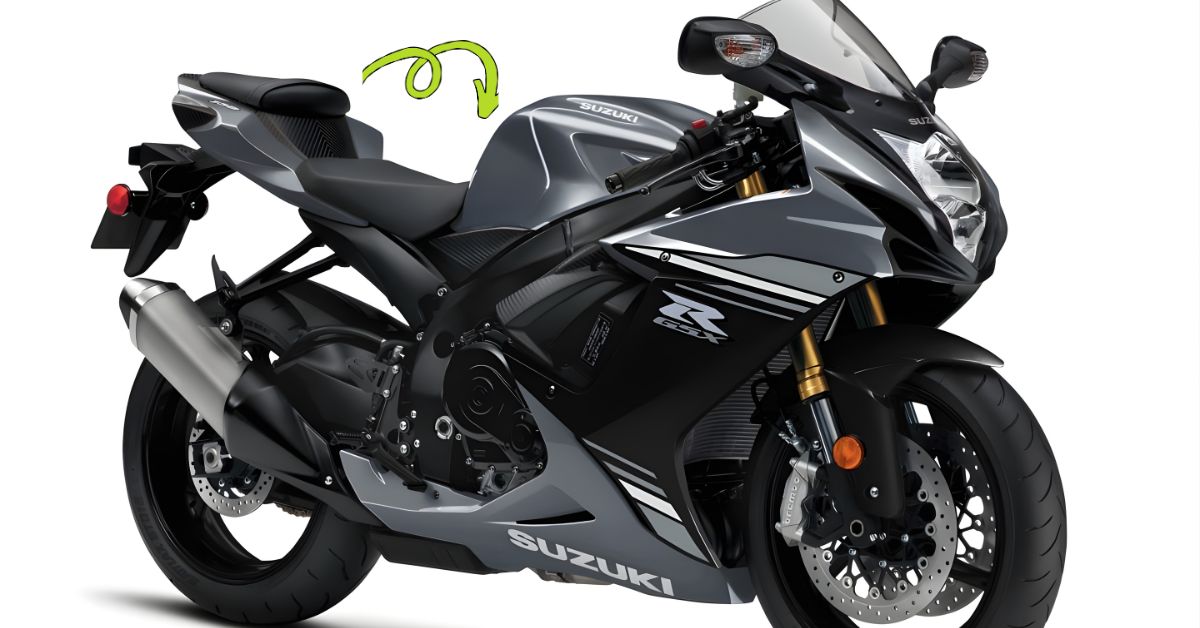
The Suzuki GSX-R1000R Review is an assessment of one of the most enduring and strategically engineered superbikes ever produced, a machine that carries the legendary “Gixxer” nameplate—a symbol of performance and track dominance that spans over three decades. This flagship machine is not merely a superbike; it is the ultimate expression of Suzuki’s design philosophy, built on the simple yet profound motto: “Run, Turn, Stop.” The 2025/2026 iteration, eagerly awaited in India, represents the apex of this engineering, blending staggering $200\text{ horsepower}$ performance with a highly sophisticated electronic safety net and a unique mechanical advantage that delivers power where riders need it most. For the performance enthusiast in India, the GSX-R1000R offers a unique combination of razor-sharp handling, proven Japanese reliability, and a competitive price, making it a powerful contender against both European exotics and domestic Japanese rivals. This comprehensive analysis delves into the technical heart of its unique VVT engine, explains the specialized technology that ensures control, details its benefits, and estimates the final financial commitment required for ownership in India.
The Engine of Usability: Performance and the SR-VVT Advantage
The defining specialization of the Suzuki GSX-R1000R Review subject lies in its $999.8\text{cc}$ Inline-Four engine and the proprietary Suzuki Racing Variable Valve Timing (SR-VVT) System integrated into the intake camshaft. Traditional high-performance engines face an inherent engineering challenge: valve timing optimized for maximum peak horsepower at the high-end often sacrifices crucial torque and smooth power delivery in the lower and mid-range RPMs, making the bike challenging and often frustrating to ride on public roads. Suzuki’s brilliant solution, derived directly from its MotoGP racing efforts, is the SR-VVT system, which defines the engine’s Broad Power System capability.
This SR-VVT system is unique because, unlike the complex electronic or hydraulic VVT systems used by some rivals, it is purely mechanical and centrifugally operated, making it simpler, lighter, and inherently more reliable—a hallmark of Suzuki engineering. The system utilizes twelve precision-engineered steel balls and helical, slanted grooves within the intake camshaft sprocket. At low and mid-range RPMs, the steel balls remain centered, providing valve timing optimized for robust torque and smooth, tractable street performance. However, as the engine speed rapidly increases past a critical threshold (typically around $10,000\text{ rpm}$), centrifugal force acts on the steel balls, pushing them outward against the grooves. This mechanical action automatically retards the intake cam timing, significantly increasing the lift and duration of the intake valves. This seamless transition unlocks the engine’s highest potential for massive peak power and top speed without the aid of heavy, complex electronic actuators, delivering a crucial technological edge.
The result of this mechanical ingenuity is the engine’s most critical specialization: a “Broad Power System” that delivers strong, linear power throughout the entire RPM band. The engine produces a massive $202\text{ PS}$ (approximately $200\text{ bhp}$) at $13,200\text{ rpm}$ and $117.6\text{ Nm}$ of torque. This VVT advantage ensures that the Suzuki GSX-R1000R Review subject is equally at home on the track and the road, providing blistering $3.0\text{-second } 0\text{ to } 100\text{ km/h}$ acceleration and an electronically limited top speed of $299\text{ km/h}$. The engine also benefits from finger follower valve train technology, which reduces moving mass and friction, allowing the engine to achieve a high $14,500\text{ RPM}$ redline with supreme reliability and mechanical finesse, ensuring the power is always delivered smoothly and efficiently.
Digital Control and Rider Confidence: The Advanced Electronics Package
In the modern superbike arena, the ability to control and safely manage power is paramount, and the Suzuki GSX-R1000R Review subject is equipped with a comprehensive suite of advanced electronics designed to maximize the rider’s confidence. This entire system relies on a sensitive Inertial Measurement Unit (IMU), a highly sophisticated gyroscope that constantly monitors the bike’s motion across six axes, providing the electronic control unit (ECU) with continuous, vital data on lean angle, pitch, and acceleration.
This data feeds into the highly effective rider aids, which together form the Suzuki Intelligent Ride System (SIRS):
- Motion Track Anti-Lock Brake System (ABS): This is far more advanced than basic ABS. The Motion Track system uses the IMU data to calculate the optimal braking force even when the bike is heavily leaned over in a corner, preventing the tires from locking up and the bike from losing stability or standing up during aggressive corner entry—a crucial safety feature for both road and track riding.
- S-DMS (Suzuki Drive Mode Selector): This feature allows the rider to choose instantly between three distinct power delivery maps (Mode A, B, and C) to match the current riding environment. Mode A provides the sharpest, most immediate throttle response for maximum attack; Mode B offers a slightly softened, linear response for general sport riding; and Mode C provides the most restraint, best suited for wet roads or heavy traffic, demonstrating the bike’s usability in diverse conditions.
- Advanced Traction Control System (STCS): This system monitors wheel spin and IMU data across ten selectable levels to modulate power output, preventing the rear wheel from spinning excessively. It allows the experienced track rider to dial in minimal intervention for controlled slides, while novice riders can rely on full electronic assistance for maximum safety.
- Bi-directional Quick Shifter: This high-performance feature comes standard on the R model, allowing for clutchless gear changes both up and down. The electronics momentarily interrupt the ignition when upshifting or precisely blip the throttle on downshifts, minimizing chassis disruption and maximizing speed, a vital tool for track use.
- Launch Control System (S-LCS): Designed specifically for race starts, this system assists the rider by automatically limiting engine RPM and managing power delivery to achieve the fastest possible, most controlled launch from a standstill, ensuring maximum acceleration without excessive wheel spin or aggressive front-wheel lift.
Chassis Mastery: Showa Suspension and Handling Precision
The handling superiority of the Suzuki GSX-R1000R Review subject is guaranteed by its racing-proven chassis hardware. The bike is built around a lightweight and rigid aluminium twin-spar frame, meticulously engineered to be compact and contribute to a manageable kerb weight of $202\text{ kg}$.
The R model is specialized by its use of premium Showa Balance Free Front (BFF) forks and a Showa Balance Free Rear Cushion (BFRC lite) monoshock. These are advanced, race-derived suspension components that separate the fluid compression and rebound chambers, eliminating pressure fluctuations and providing more precise, consistent damping and superior feel throughout the entire suspension stroke. This enhances both comfort on the road by absorbing bumps effectively and provides ultra-precise feedback on the track, allowing the rider to feel exactly what the tires are doing. Braking performance is equally critical, utilizing high-specification Brembo Monobloc radial calipers on large $320\text{ mm}$ discs, providing immense, repeatable, fade-free stopping power that works seamlessly with the Motion Track ABS system. This combination of highly technical, top-shelf suspension and braking components ensures the Suzuki GSX-R1000R Review subject offers handling that is not only agile and razor-sharp but also highly composed and predictable, building immense confidence in the rider’s ability to push the machine to its limits.
Read More: Aston Martin DBX 707
Ownership Economics: Mileage, Top Speed, and Price in India
The cost of owning the Suzuki GSX-R1000R Review subject, while substantial, is highly competitive within the liter-bike class, offering superior value for the technology provided. In terms of mileage, the bike’s high-performance nature means fuel consumption is high; while the ARAI mileage is around $15\text{ kmpl}$, real-world consumption often settles between $10\text{ kmpl}$ and $15\text{ kmpl}$ in mixed riding. This is a necessary trade-off for its $202\text{ hp}$ output. Regarding Top Speed, the bike is electronically limited to the gentlemen’s agreement speed of $299\text{ km/h}$ ($186\text{ mph}$), though its raw power suggests a higher mechanical ceiling.
The price positioning of the Suzuki GSX-R1000R remains highly strategic. The current market expectation places the ex-showroom price for the GSX-R1000R around $\text{₹}19.80\text{ Lakh}$ to $\text{₹}20.0\text{ Lakh}$ for the 2025/2026 expected launch. This pricing is highly strategic, placing it almost identically to its primary rival, the Kawasaki ZX-10R, and significantly undercutting its European competitors, the BMW S 1000 RR and the Ducati Panigale V4. The final On-Road Price in India, inclusive of RTO registration, insurance, and local taxes, is projected to be in the region of $\text{₹}22.0\text{ Lakh}$ to $\text{₹}24.5\text{ Lakh}$ for the fully-equipped R variant across major metropolitan areas. This makes the Suzuki GSX-R1000R Review subject an attractive choice for those seeking a highly capable, race-derived superbike that offers top-tier hardware and unique engine technology, backed by the legendary reliability and relatively low long-term maintenance costs associated with Japanese engineering.
The Suzuki GSX-R1000R Review for the 2026 model year is an analysis of a superbike that has successfully navigated the most challenging engineering hurdle of the decade: balancing track-ready performance with stringent global emission regulations. Marking the 40th anniversary of the iconic GSX-R series, the 2026 machine is not a radical departure, but a significant, meticulous refinement, adhering to Suzuki’s enduring philosophy of “Run, Turn, Stop.” This latest iteration, eagerly anticipated in India, features crucial internal engine modifications for Euro 5 compliance, a more refined electronic safety net with new slope and torque management systems, and subtle but effective aerodynamic enhancements.1 The GSX-R1000R continues to specialize in delivering a potent, reliable, and highly usable package, making it an excellent proposition for the elite rider seeking track-focused engineering and proven Japanese dependability at a highly competitive price point. This extensive analysis delves into the technical heart of its unique VVT engine, details the advanced electronic control systems, explains the specialized chassis technology, and estimates the final financial commitment required for ownership in India.
The Engine of Usability: Performance and the Core of SR-VVT
The enduring legacy of the Suzuki GSX-R1000R Review subject is built upon its powerful $999.8\text{cc}$ Inline-Four engine, which, despite the necessity for emission compliance, remains a potent force. For the 2026 model, Suzuki’s engineers have performed a deep internal overhaul to meet Euro 5 norms without fundamentally sacrificing the engine’s characteristic power delivery.2 Key modifications include a revised cylinder head design, larger exhaust valves, and a major increase in the compression ratio, climbing from 3$13.2:1$ to a higher 4$13.8:1$.5 These changes, combined with lighter forged aluminium pistons and a stronger crankshaft with wider journals (an update primarily designed to enhance race-level durability), ensure the engine maintains its high-RPM surge while cleaning up emissions significantly. While the peak claimed power for the European model is now officially around 6$192\text{ bhp}$ (a minor reduction due to emissions), the focus has been on preserving the crucial mid-range punch and enhancing throttle response through an improved ride-by-wire system.7
The core specialization that makes this engine unique remains the Suzuki Racing Variable Valve Timing (SR-VVT) System.8 This innovative system, derived directly from Suzuki’s MotoGP bike, is entirely mechanical and centrifugally operated, avoiding the complexity and weight of hydraulic or electronic actuators.9 SR-VVT uses steel balls and grooved paths to dynamically retard the intake cam timing only at high RPMs.10 This mechanical shift provides the engine with a “Broad Power System” capability—offering excellent torque and clean emissions at low speeds for usability, and seamlessly unlocking maximum power potential at the top end for track performance.11 For 2026, the intake and exhaust ports have been modified, and the fuel injection system has been updated with eight-hole top-feed injectors and a stronger fuel pump to improve atomization and combustion efficiency, ensuring the unique VVT advantage is paired with modern emission control.12
Digital Control: SIRS and the New Electronic Safety Net
The 2026 model brings the most significant upgrades to the electronics, defined by a lighter, more responsive Bosch Inertial Measurement Unit (IMU) and a thoroughly updated Suzuki Intelligent Ride System (SIRS).13 The IMU continues to monitor the bike’s motion across six axes, providing the foundation for the crucial safety and performance aids, but with added layers of stability control.
The major electronic specialties introduced for 2026 include:
- Roll Torque Control: This advanced new feature uses the IMU and wheel speed sensors to detect the vehicle’s posture and bank angle, specifically managing rear-wheel power and torque based on the bike’s exact lean angle when accelerating out of a corner.14 This system minimizes unwanted rear-wheel slip and chassis oscillations, optimizing grip and ensuring the fastest, most stable possible drive out of bends—a direct benefit for serious track riders seeking faster lap times.15
- Slope Dependent Control: This safety specialty adjusts the functionality of the Motion Track Brake System (Cornering ABS) specifically when the bike is braking on inclines or declines.16 By analyzing the bike’s pitch, it prevents the rear wheel from lifting excessively during aggressive downhill braking and ensures stable, controlled stopping power, enhancing safety during spirited road use in mountainous terrain.
- Refined Launch Control and Quickshifter: The existing Launch Control system has been updated with a refined control scheme for more consistent race starts. Furthermore, the bi-directional Quick Shifter has been improved, offering smoother, faster clutchless upshifts and downshifts that are essential for minimizing chassis disruption and maximizing momentum.17
These additions complement the core SIRS features, including the Motion Track ABS, 10-level Traction Control, and multiple riding modes (S-DMS), solidifying the Suzuki GSX-R1000R Review subject’s position as a machine that provides powerful assistance and confidence at the absolute limit of performance.
Chassis and Hardware: Track-Proven Reliability and Aerodynamics
The chassis and hardware of the Suzuki GSX-R1000R Review subject continue the theme of proven racing reliability. The bike retains its acclaimed aluminium twin-spar frame, renowned for its harmonious balance of stiffness for cornering precision and controlled flex for absorbing track imperfections.18
The R model’s hardware package remains world-class:
Suspension: The sophisticated, fully adjustable Showa Balance Free Front (BFF) forks and Showa Balance Free Rear Cushion (BFRC lite) monoshock are carried over.19 This premium suspension offers exceptional, consistent damping performance, providing superior feedback and allowing the suspension to be precisely tuned for specific track conditions or rider preferences.
Braking: Braking is powerful and reliable, featuring Brembo monobloc radial calipers on large 20$320\text{ mm}$ discs at the front, which are lightweight and highly effective, working seamlessly with the updated Motion Track ABS system.21
Lithium-Ion Battery: A critical weight-saving measure for 2026 is the adoption of a lightweight lithium-ion battery (manufactured by ELIIY Power in Japan).22 This significantly reduces the bike’s kerb weight and improves overall power delivery stability, offsetting the slight weight gain from the new emissions equipment.
Aerodynamics: A major visual update is the addition of optional carbon winglets (or standard in some markets) on the front cowling.23 These small, functional wings are optimized to generate controlled downforce, suppressing front-wheel lift during hard acceleration out of corners and enhancing stability at high speeds, directly linking the street model to its highly successful track counterpart.
Ownership Economics: Mileage, Price in India, and The Value Proposition
The ownership economics of the Suzuki GSX-R1000R Review subject are highly compelling due to its value proposition. While its $200\text{ hp}$ output means fuel consumption is high—real-world mileage typically ranges between $10\text{ kmpl}$ and $15\text{ kmpl}$—the cost of ownership is generally lower than European rivals due to Japanese mechanical reliability and parts pricing.
The 2026 model, marking the 40th anniversary and featuring significant technical upgrades, is expected to be priced competitively. Current estimates place the ex-showroom price for the Suzuki GSX-R1000R around 24$\text{₹}21.0\text{ Lakh}$ to 25$\text{₹}22.5\text{ Lakh}$.26 This price point strategically undercuts the premium-spec BMW S 1000 RR and Ducati Panigale V4 S. The final On-Road Price in India, inclusive of RTO, insurance, and taxes, is projected to be in the region of $\text{₹}26.0\text{ Lakh}$ to $\text{₹}28.0\text{ Lakh}$ for the fully-equipped R variant. This makes the Suzuki GSX-R1000R Review subject an attractive choice for those seeking a highly capable, race-derived superbike that offers unique VVT engine technology, top-tier Showa suspension, and advanced electronic stability systems, all backed by the legendary reliability of the GSX-R name.