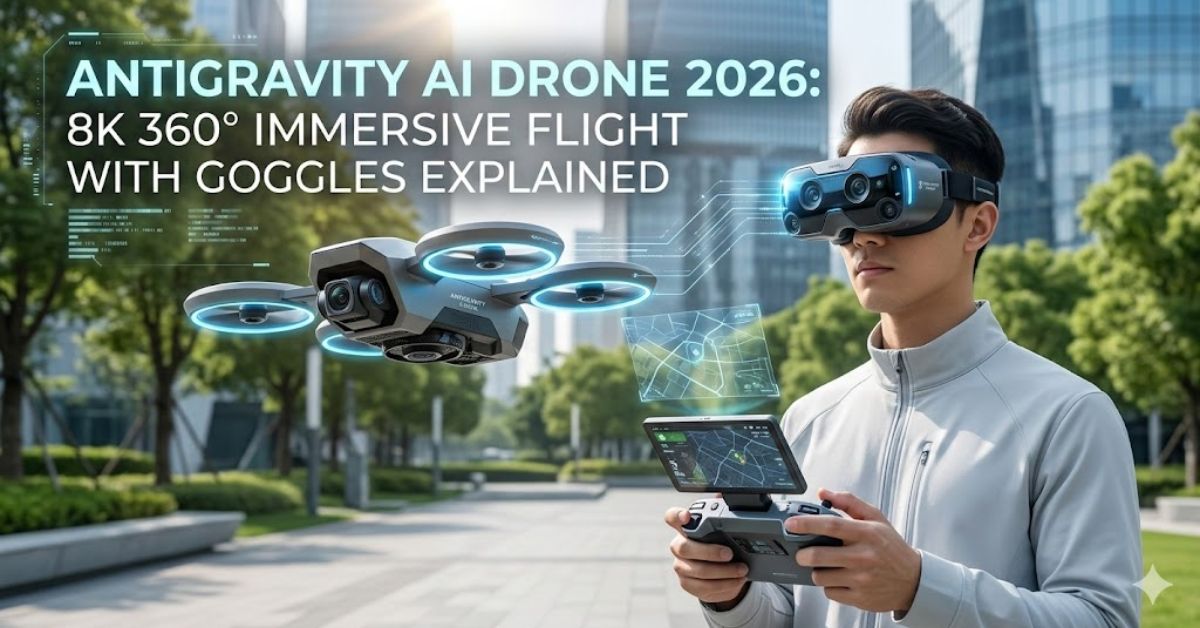
A major shift is coming to drone technology in 2026 with the introduction of the Antigravity A1, an AI-ready, 8K 360-degree camera drone that works with immersive goggles for an entirely new flying and filming experience. This is not just a typical drone launch — the Antigravity system promises to change how creators, travellers, and cinematographers capture the skies. In this article, we explain what it is, why it matters, how it works, and what it could mean for users in India and around the world.
What Is the Antigravity A1 Drone?
The Antigravity A1 is a new kind of camera drone produced by Antigravity, a company incubated by Insta360. It stands out because it features a built-in 8K 360-degree camera system — something unseen in mainstream consumer drones until now. Instead of needing multiple flights or camera tilts to capture different angles, the A1 records everything around it in full spherical view.
The package comes with:
- The A1 drone itself, weighing about 249 g (light enough to avoid strict drone rules in many countries).
- A pair of Vision goggles for first-person immersive viewing.
- A motion controller that lets pilots fly intuitively by pointing.
This combination creates an experience that feels closer to virtual reality than traditional drone flying.
How It Works: Full Immersion and Control
Traditional drones use a forward-facing camera and require manual framing, but the Antigravity system captures all directions at once. You don a headset and see in every direction as the drone flies. The head movement tracks your view, and the motion controller guides flight.
The 360-degree capture means you can reframe footage later — choose the angle you want after the flight is over. That’s a major change from current drones that force you to decide framing during flight.
The goggles have high-resolution micro-OLED displays with adjustable lenses, and the system supports advanced flight safety like obstacle avoidance and automatic return-to-home.
Why This Matters
This technology could reshape aerial content creation. For filmmakers, travel vloggers, and even hobbyists, the ability to shoot 360-degree video and then choose shots later saves time and effort. It makes professional-looking aerial footage easier to capture without complex manual controls.
Experts in drone and camera tech have highlighted this as a significant innovation that could influence future drone design beyond traditional rectangular view cameras.
Price and Release Timeline
The Antigravity A1 is already available in some markets, with the basic bundle priced around $1,599 (about ₹1,32,000 at current exchange rates) including the goggles and controller. Higher bundles with extra batteries cost more.
The company plans continued availability through 2026 and may introduce additional accessories and control options later in the year. In fact, a conventional remote control option is expected by mid-2026, expanding how users can fly the A1 beyond the motion-controller format.
Impact in India
In India, drone use continues to grow for photography, filmmaking, and even agriculture and surveying. However, regulations from the Directorate General of Civil Aviation (DGCA) require that drones follow specific rules, especially around camera and flight permissions. While the A1’s sub-250 g weight means it may not need heavy licensing in many areas, pilots must still follow local regulations and no-fly zones.
Indian content creators who already use drones could benefit from Antigravity’s immersive filming system. Full 360° capture means more creative freedom without the need for multiple flights. However, the high price may make this technology a premium choice for professionals rather than casual hobbyists.
What Happens Next?
Antigravity and related tech channels are expected to refine this new category. Competitors like DJI are reportedly exploring similar 360-camera drone tech, so we might see more innovation in this space later in 2026.
For Indian users, staying updated on DGCA drone regulations and Antigravity’s release details will be important. As the technology becomes more known, local sellers and importers may offer ways to access this system more easily.
FAQs
Q: Does the Antigravity drone need a licence in India?
A: Because it weighs around 249 g, it may fall under lighter drone rules, but you still must follow DGCA guidelines and respect no-fly zones.
Q: Can you see video in real time with the goggles?
A: Yes. The Vision goggles stream the drone’s camera view live, giving an immersive first-person experience.
Q: Does it record video in 8K?
A: Yes. The built-in 360 camera system captures up to 8K spherical video, allowing you to reframe shots after landing.