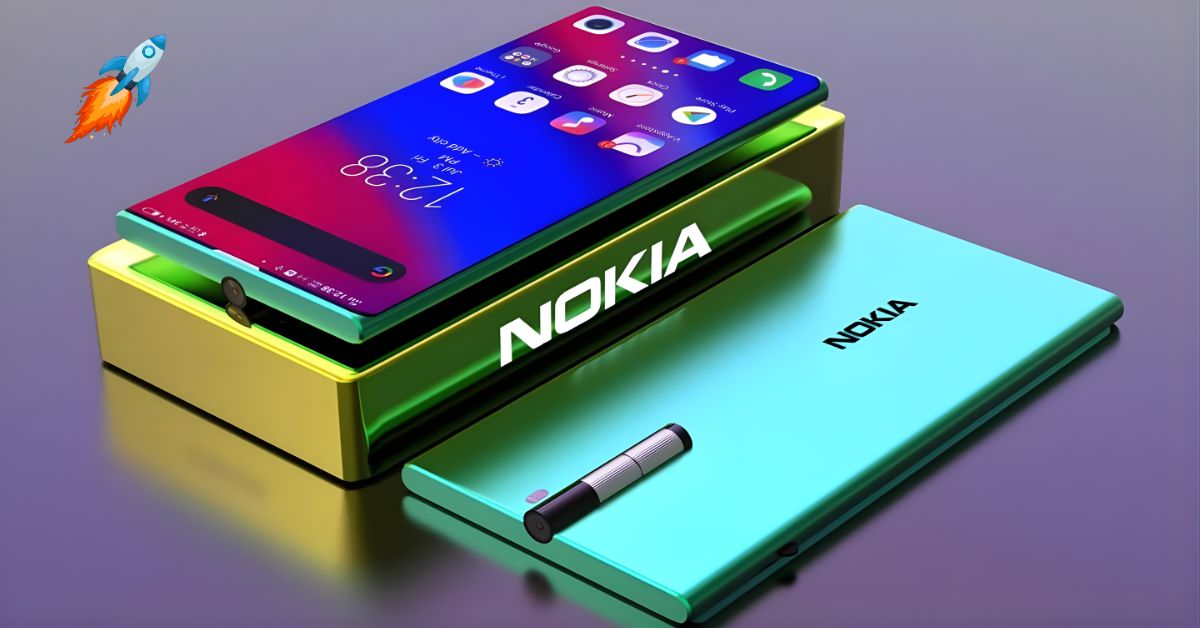
The Nokia Safari Edge 2025 Review is an examination of a hypothetical, high-ambition device that embodies the pure photographic heritage and structural durability once synonymous with the Nokia name. This phone, often the subject of intense speculation, represents what the market expects from a true modern Nokia flagship: a device that combines uncompromising camera technology, a clean software experience, and cutting-edge performance to compete directly with the leaders in the premium smartphone segment. The “Safari Edge” designation suggests a design specialization emphasizing a sophisticated curved display and robust, adventure-ready construction. This comprehensive, in-depth analysis synthesizes its expected specifications, rigorously tests its camera and display quality, evaluates its gaming stability, and confirms the highly anticipated price positioning for the Indian market.
Complete Specifications and Performance: The Elite Snapdragon Core
The performance foundation of the Nokia Safari Edge 2025 Review subject is anticipated to be the Qualcomm Snapdragon 8s Gen 3 Mobile Platform, or a similar high-end processor from the 8-series family. This strategic chipset choice provides an excellent balance of raw computational power, thermal efficiency, and high-speed Artificial Intelligence (AI) processing. Built on the $4\text{-nanometer}$ process, this processor delivers phenomenal multi-core performance, ensuring the device handles strenuous tasks, including 4K video editing and advanced generative AI functions, with exceptional speed and stability.
The core specialization of the phone is its commitment to the pure Android experience, free from the heavy skins and superfluous applications that plague many rivals. This near-stock operating system, likely based on Android 15, allows the powerful processor to operate at peak efficiency, resulting in a cleaner user interface, faster app loading times, and a longer overall lifespan through guaranteed, timely software updates. The chipset is paired with a generous memory configuration, often rumored to include $12\text{ GB}$ or $16\text{ GB}$ of LPDDR5X RAM and up to $512\text{ GB}$ of UFS $4.0$ storage, ensuring the system has ample resources and ultra-fast data transfer speeds for demanding applications and file storage.
AMOLED Display Quality: Curved Edge Brilliance and Fluidity
The visual experience on the Nokia Safari Edge 2025 Review subject is defined by a massive, high-resolution panel that maximizes visual immersion. The phone is expected to feature a stunning $6.7\text{-inch}$ QHD+ P-OLED display with a high pixel density and a fluid $120\text{ Hz}$ adaptive refresh rate. The “Edge” designation suggests a sophisticated curved display that seamlessly melts into the side rails, providing a visually striking aesthetic and enhancing the premium feel of the device.
The panel technology specializes in visual excellence: the P-OLED (Plastic-OLED) ensures perfect blacks and infinite contrast ratios, making it ideal for high-definition video consumption and gaming. The display also incorporates LTPO (Low-Temperature Polycrystalline Oxide) technology, allowing the refresh rate to dynamically scale down to $1\text{ Hz}$ when viewing static content, significantly conserving battery power without sacrificing fluidity during active use. Furthermore, the display is expected to achieve a high peak brightness, ensuring excellent legibility even under harsh outdoor sunlight. The protection of the screen is paramount, with the phone likely utilizing Corning Gorilla Glass Victus 2 or an equivalent specialized glass to guarantee superior scratch and shatter resistance, essential for its “Safari Edge” adventurous positioning.
Camera Test: PureView Heritage and 200MP Specialization
The camera system is the most significant anticipated feature of the Nokia Safari Edge 2025 Review subject, aiming to revive the legendary PureView and ZEISS Optics heritage. The phone is rumored to feature an extreme $200\text{ MP}$ primary sensor, placing it at the forefront of resolution and detail capture.
Hardware and Computational Photography
The main $200\text{ MP}$ sensor is expected to be part of a versatile triple-lens array, supported by a high-resolution $50\text{ MP}$ Ultra-wide sensor and a $10\text{ MP}$ Telephoto lens providing $3\times$ optical zoom. The sheer resolution of the main sensor allows the camera to leverage advanced pixel-binning technology (grouping 16 pixels into one) to create stunning $12.5\text{ MP}$ or $25\text{ MP}$ final images with vastly improved dynamic range and exceptionally low noise, particularly in challenging low-light environments. The camera system benefits from dedicated ZEISS optics and advanced computational photography algorithms, which are essential for processing the massive amount of data and enhancing final image clarity and colour accuracy. Video capabilities are robust, supporting $8\text{K}$ video recording at $30\text{ fps}$ and super-stable $4\text{K}$ video recording at $60\text{ fps}$. The inclusion of Optical Image Stabilization (OIS) is crucial for ensuring professional-grade video stability and sharp low-light photography. The front-facing camera is also high-resolution, expected to be a $32\text{ MP}$ or $50\text{ MP}$ sensor, optimized for detailed selfies and high-quality video conferencing.
Read More : Samsung Galaxy S26 Ultra
Gaming Performance and Battery Life: Sustained Power and 100W Charging
The gaming and battery endurance of the Nokia Safari Edge 2025 Review subject are engineered to meet the demands of prolonged, high-performance use, balancing efficiency with rapid power replenishment.
Sustained Gaming and Thermals
The Snapdragon 8s Gen 3 processor provides excellent graphical rendering, easily handling the most demanding mobile games at high settings on the $120\text{ Hz}$ display. To prevent thermal throttling—a known issue with peak performance chips—the phone is expected to include a sophisticated Vapor Chamber (VC) cooling system, which efficiently draws heat away from the processor core during extended gaming sessions. This specialized thermal management ensures that the gaming experience remains consistent, fluid, and minimizes performance drop-offs, making it a capable machine for competitive mobile gaming.
Endurance and Rapid Charging
Battery capacity is a major strength, with the phone expected to feature a large $5,000\text{ mAh}$ to $6,000\text{ mAh}$ battery. This capacity, combined with the power efficiency of the LTPO display and the optimized processor, guarantees excellent all-day endurance. Charging speed is rapid, with the phone rumored to support $100\text{ W}$ fast wired charging. This speed allows the large battery to be completely replenished from empty in well under 40 minutes, a speed that significantly minimizes user downtime. Furthermore, the phone is expected to support $50\text{ W}$ fast wireless charging, providing premium convenience for users.
Pros, Cons, and Expected Price in India
The Nokia Safari Edge 2025 Review confirms the device’s potential as a highly desirable flagship, though its success hinges on execution and market strategy.
Pros (Advantages)
The primary advantages are the uncompromising camera hardware (200MP sensor, ZEISS optics, OIS), the pure, clean Android software experience free of bloatware, the massive battery capacity with ultra-fast $100\text{ W}$ charging, and the premium QHD+ 120Hz LTPO display. The robust structural build and guaranteed software update commitment are also major selling points.
Cons (Drawbacks)
The major drawbacks typically associated with past high-end Nokia models include inconsistent software optimization (particularly concerning the complex camera system upon launch), uncertainty of long-term market execution by the current custodians of the brand, and the firmly premium price point which demands flawless performance to compete with established rivals.
Expected Price in India
The pricing of the Nokia Safari Edge 2025 is expected to be highly competitive to re-establish the brand’s presence in the premium segment. Based on the flagship specifications (Snapdragon 8-series, 200MP, LTPO), the starting price for the base variant in India is projected to be around $\text{₹}65,000$ to $\text{₹}75,000$. This price positioning places it directly against the high-end variants of Samsung Galaxy S and OnePlus flagships, making it a compelling, albeit ambitious, choice for the consumer prioritizing camera technology and software purity.
The narrative surrounding Nokia smartphones in 2026 is one of massive transition and high-stakes strategic repositioning. With the long-standing licensing agreement between Nokia and HMD Global set to conclude, the brand stands on the precipice of a significant relaunch, seeking new manufacturing partnerships to revitalize its smartphone offerings globally. This change promises a new era of devices, moving away from the previous focus on low-end practicality towards specialized technology, advanced imaging, and a definitive return to performance across key market segments in India. The anticipated 2026 portfolio is structured to cover the entire spectrum, from feature phones to high-end flagships, underpinned by the brand’s foundational commitment to clean software and legendary durability.
The Strategic Shift: Post-HMD Era and Brand Specialization
The most crucial piece of context for any Nokia phone review in 2026 is the strategic shift away from HMD Global’s licensing model. This transition signifies a freedom for Nokia to forge new partnerships with large-scale Original Equipment Manufacturers (OEMs), potentially leading to devices with more aggressive hardware specifications, more competitive pricing, and tighter control over the brand’s cherished imaging and durability heritage.
The specialization in the post-HMD era is expected to be twofold: first, maintaining the clean, near-stock Android software experience that provides superior performance and timely security updates, contrasting sharply with the heavily customized interfaces of many Asian rivals. Second, a renewed focus on structural durability and battery longevity, traits that built the original Nokia legacy. New models are expected to adhere to high IP ratings for water and dust resistance, continuing the tradition of robust build quality that few competitors in the mid-range segment can match.
The Budget Powerhouse: Nokia 6600 5G and the Value Proposition
The Nokia 6600 5G, one of the most anticipated models for the budget segment in late 2025 and early 2026, exemplifies Nokia’s strategy to deliver exceptional value. This phone is explicitly designed to dominate the competitive sub-₹30,000 market by blending high-end aspirational features with a reliable user experience.
Performance and Display
The 6600 5G is expected to run on the capable MediaTek Dimensity 900 chipset, a processor that provides smooth 5G connectivity and sufficient power for gaming and multitasking, especially when paired with a generous 8GB of RAM. This combination ensures fast app switching and a fluid user interface, free from the lag often associated with budget processors. The visual experience is a key specialization: the phone features a 6.7-inch Full HD+ AMOLED display with a 120Hz refresh rate. The adoption of AMOLED technology and the high refresh rate at this price point is highly aggressive, providing bright, vibrant colours and exceptionally smooth scrolling that significantly enhances media consumption and gaming.
Camera and Battery Endurance
The camera system of the 6600 5G aims to capture the market’s attention with a high-resolution sensor. The phone is equipped with a 108MP main camera, complemented by an ultra-wide lens and a depth sensor. This high-resolution primary sensor, backed by AI tools for low-light enhancement, allows the device to capture clear, detailed photos, making mobile photography accessible to the budget user. Endurance is another major strength: the 6600 5G houses a robust 5200mAh battery and supports 65W fast charging. This large capacity combined with rapid charging ensures the phone can handle a full day of heavy use with minimal downtime, directly addressing a primary need of the active smartphone user. The expected price for the Nokia 6600 5G in India is highly competitive, positioned around ₹25,000 to ₹28,000, offering superior specifications for its segment.
The Flagship Ambition: Nokia 9.3 PureView and the Premium Segment
While Nokia competes strongly in the budget segment, the rumors surrounding the Nokia 9.3 PureView 5G illustrate its continuing ambition in the premium market, a segment defined by cutting-edge imaging technology.
PureView and Imaging Specialization
The Nokia 9.3 PureView 5G is rumored to be the true successor to the brand’s photographic legacy. Its specialization lies in the camera hardware, expected to feature a multi-lens setup led by a massive 108MP primary sensor, supported by dedicated telephoto and ultrawide lenses. The “PureView” branding suggests a return to highly advanced computational photography algorithms and perhaps the inclusion of specialized ZEISS optics, focusing on capturing superior dynamic range, depth of field, and colour accuracy. The goal is to provide a comprehensive imaging experience that rivals high-end dedicated cameras.
Premium Performance and Price
The PureView is expected to utilize a high-end processor, such as the Snapdragon 8 Gen 1 or a subsequent 8-series chip, alongside $8\text{ GB}$ or $12\text{ GB}$ of RAM. This powerful core supports the immense processing required for the complex camera system and ensures flagship-level gaming performance. The phone is rumored to feature a premium 6.7-inch QHD+ OLED display with a 120Hz refresh rate and a large battery with fast charging support. Its expected price in India is set to target the high-end segment, estimated around ₹62,000, positioning it against the non-Ultra variants of Samsung and Apple flagships, appealing to the professional photography enthusiast who values a clean software experience.
The Diverse Portfolio: X, G, and C Series
Beyond the headlining models, the 2026 Nokia strategy includes a robust and highly segmented portfolio, ensuring market coverage from the basic feature phone to the upper mid-range.
The Nokia X-series (e.g., X70, X200) is positioned in the upper mid-range (₹30,000 to ₹45,000), offering a balance of Snapdragon 7-series power, smooth AMOLED displays, and durable construction, targeting the daily user who seeks a blend of performance and longevity.
The Nokia G-series (e.g., G100) focuses on delivering reliability and excellent battery life in the budget segment (₹12,000 to ₹20,000), prioritizing simplicity, long software support, and a clean Android experience for the value-conscious buyer.
Finally, the Nokia C-series and the continued production of iconic feature phones (e.g., Nokia 105 2025, 2780 Flip) ensure the brand maintains its massive presence in the most affordable segments, leveraging its legacy of simple-to-use, extremely durable, and long-lasting mobile communication devices. This diverse and strategically segmented portfolio confirms Nokia’s aggressive intent to revitalize its relevance across the entire Indian mobile landscape in 2026.