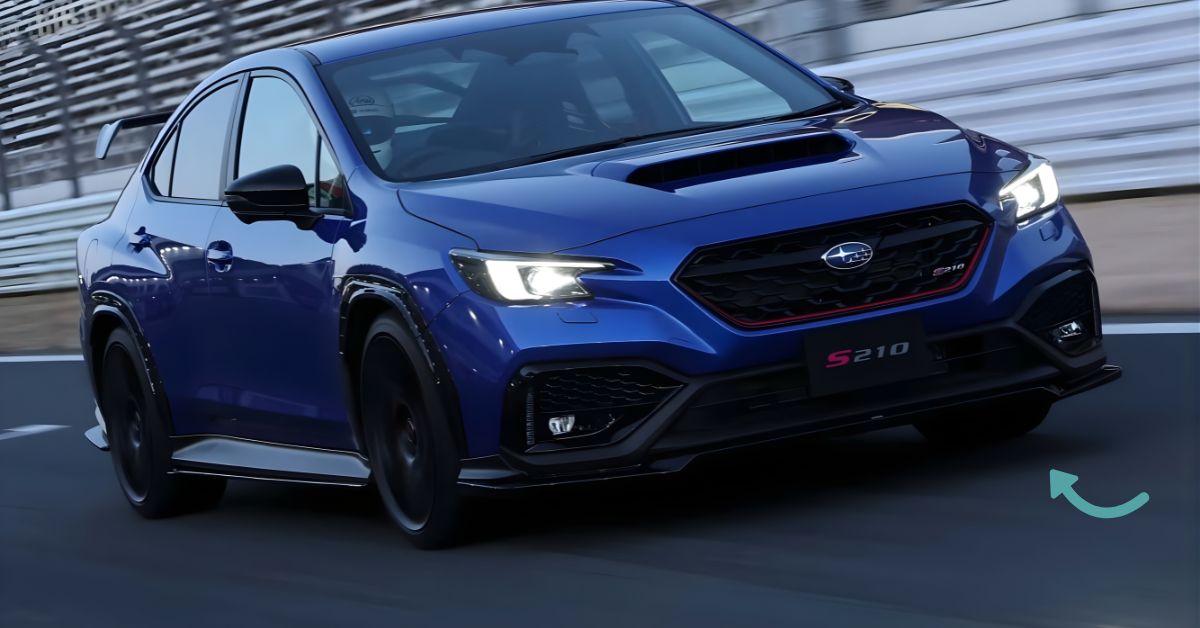
The Subaru WRX STI S209 2025 Review is an exercise in analyzing the apex of analogue performance in a digitally-driven automotive world. While the specific S209 model was a highly exclusive, track-focused limited edition of the previous generation, its designation—the “S-line” badge—represents Subaru Tecnica International’s (STI) ultimate engineering commitment. This hypothetical 2025 iteration, based on the current WRX chassis (VB), embodies what the purist desires: a machine designed not just for speed, but for absolute, driver-controlled mastery, blending rally-derived all-wheel-drive technology with high-flow engine tuning and specialized chassis components. The STI S209 is a celebration of the mechanical over the electronic, a four-door rally weapon whose very existence in the Indian market, even as a rare import, signifies an uncompromising dedication to driving engagement. This comprehensive analysis dissects the expected specialized powertrain upgrades, details its WRC-inspired handling hardware, and calculates the massive cost associated with owning this rare, performance-focused machine in India.
Specs and Performance: The Tuned FA24 Boxer Engine and Extreme Output
The heart of the hypothetical Subaru WRX STI S209 2025 Review is its potent evolution of the $2.4\text{-litre}$ Turbocharged SUBARU BOXER (FA24) engine. While the standard WRX produces $271\text{ horsepower}$, an S209 requires an extreme factory tune. Drawing historical parallels from the $341\text{ horsepower}$ of the original S209, this 2025 flagship would see the FA24 extensively modified with a larger turbocharger, a high-flow cold air intake system, uprated fuel pump and injectors, and an STI-tuned Engine Control Unit (ECU) to push output to a projected $345\text{ horsepower}$ and over $480\text{ Nm}$ of peak torque.
Power Delivery and Analogue Experience
This formidable power is expected to be managed exclusively by a 6-speed manual transmission, reinforcing the S209’s specialization in pure, driver-focused engagement—a bold rejection of the dual-clutch automatics used by its key rivals like the Volkswagen Golf R. The large FA24 engine, when properly tuned, is known for its broad, flat torque curve, which is crucial for track work and rally stages, minimizing turbo lag and ensuring power is readily available throughout the mid-range. This combination of extreme power and manual control allows the S209 to achieve a blistering $0\text{ to } 100\text{ km/h}$ time in approximately $4.4\text{ seconds}$, with a potential electronically limited top speed of around $260\text{ km/h}$. The entire driving experience is characterized by the distinctive, aggressive rumble of the Boxer engine, a signature sonic specialization of the Subaru WRX heritage.
Features and Specialized Handling Hardware
The S209’s true value lies not in raw horsepower, but in the highly specialized components supplied by Subaru Tecnica International (STI) that ensure absolute control and grip.
Symmetrical All-Wheel Drive and DCCD
The core of the S209’s driving philosophy is the Subaru Symmetrical All-Wheel Drive system, renowned for its inherent stability and balanced power distribution. This system is perfected by the Driver Controlled Center Differential (DCCD), a segment-unique feature that allows the driver to manually adjust the center differential’s torque split between the front and rear axles. The driver can select a locked setting for maximum traction in low-grip situations (like rally stages) or an open setting for greater agility on the track, providing unparalleled customization over the vehicle’s dynamic handling characteristics.
Chassis and Aero Specialization
The chassis receives extreme enhancements to manage the immense power and G-forces. The S209 would feature a wider track and aggressively flared fenders to accommodate massive 19-inch forged BBS alloy wheels wrapped in bespoke high-grip performance tires. The suspension utilizes specially developed STI-tuned Bilstein dampers, dedicated stiffer coil springs, and strengthened bushings, providing a firm, communicative ride essential for precision handling. Furthermore, the S209 includes specialized chassis bracing, such as flexible draw stiffeners and a carbon fiber roof, which contribute to weight reduction and optimized body rigidity, transforming the standard sedan into a track-ready weapon. Aerodynamics are equally specialized, featuring large front bumper canards, a prominent dry carbon rear wing, and an aggressive front lip spoiler, all designed to maximize downforce and stability at high speeds.
Interior, Driver Engagement, and Daily Compromises
The interior of the Subaru WRX STI S209 2025 Review subject, while comfortable enough for daily use, prioritizes driver focus and track readiness over outright luxury. The cabin is dominated by Recaro Performance Design front seats, often featuring large bolsters and specialized materials like Ultrasuede, to hold the driver securely during high-G maneuvers. The cockpit is characterized by STI’s signature red and black accents, with the shift knob, steering wheel, and gauges all receiving performance-focused upgrades.
The latest WRX chassis provides a comfortable interior size, offering good legroom and shoulder room for a sports sedan. However, the S209’s focus on performance introduces clear compromises. The massive rear wing, while providing vital downforce, significantly obstructs rear visibility, a safety trade-off typical of race-derived cars. Furthermore, the specialized, stiffened suspension and low-profile tires, necessary for track precision, result in a firm, often harsh ride quality on rough or uneven city roads, making it less comfortable for the daily commute compared to softer rivals.
Mileage, Pros & Cons, and Expected Price in India
The ownership economics of the Subaru WRX STI S209 2025 Review subject are complex, primarily due to its lack of official sales presence in India and its extreme performance specialization.
Mileage and Running Costs
The S209’s highly-tuned turbocharged engine and permanent Symmetrical All-Wheel Drive system prioritize power over efficiency. Real-world fuel efficiency is poor, with the car likely returning a combined mileage of only $6\text{ kmpl}$ to $8\text{ kmpl}$ under normal driving conditions, dropping further during aggressive use. Running costs are exceptionally high, requiring premium high-octane fuel and demanding expensive, specialized maintenance for its Brembo brakes, high-performance tires, and complex drivetrain components.
Pros and Cons Summary
Pros: Unmatched analogue driving feel and engagement, segment-exclusive DCCD AWD, extreme track-focused performance, high-quality Brembo braking system, and immense exclusivity due to its limited production status. Cons: Very poor fuel economy, extremely stiff on-road ride comfort, no official service support in India (leading to maintenance complexity and cost), and a highly aggressive, expensive clutch setup requiring skill for smooth daily driving.
Read More : Jeep Wrangler 2025
Expected Price in India
As Subaru does not officially retail the WRX STI in India, the only path to ownership is through the expensive CBU (Completely Built Unit) private import route. Given the original S209’s high price tag and the high demand for a hypothetical successor, the estimated US MSRP would likely start around $\$65,000$ to $\$75,000$. Factoring in India’s high import duties (over $200\%$), the final Estimated On-Road Price in India for a privately imported Subaru WRX STI S209 2025 would conservatively range from $\text{₹}1.5\text{ Crore}$ to $\text{₹}1.8\text{ Crore}$, confirming its status as a rare, ultra-exclusive enthusiast machine.
The mid-size luxury SUV segment, defined by models priced between $\text{₹}90\text{ Lakh}$ and $\text{₹}1.3\text{ Crore}$ on-road, is the most fiercely contested battleground among Germany’s elite automakers. In 2026, this segment is dominated by three vehicles—the Mercedes-Benz GLE, the BMW X5, and the Audi Q7—each representing a distinct philosophy in luxury, performance, and technology.1 The modern rivalry is no longer based on horsepower alone; it is a specialized contest over digital integration, the sophistication of active chassis systems, and the implementation of advanced hybrid powertrains that balance explosive speed with necessary efficiency.
Mercedes-Benz GLE: The Philosophy of Serene Comfort and Digital Isolation
The 2026 Mercedes-Benz GLE is engineered to be the ultimate executive sanctuary, prioritizing serene comfort and technologically advanced isolation. Its design philosophy emphasizes a smooth, gliding ride quality, achieved through its specialized suspension technology.2 While it comes with a standard steel spring setup that is tuned for comfort, its reputation is cemented by the optional AIRMATIC air suspension and the radical E-Active Body Control (E-ABC) system. E-ABC, which uses a $48\text{V}$ mild-hybrid system, can individually control the spring and damping forces at each wheel, actively counteracting pitch, dive, and roll. This complex hydraulic system even enables the specialized “Free-Driving Mode” (or rocking function), designed to help the vehicle extricate itself from sand or deep snow—a clear specialization for extreme comfort and utility.
Performance in the GLE leans toward refinement. Its most popular engine in India, the $3.0\text{-litre}$ inline-six engine (available in both petrol and diesel), utilizes a 3$48\text{V}$ mild-hybrid system to provide a smooth, instantaneous boost to fill in turbo lag, enhancing refinement and start-stop operation.4 The standard 9G-TRONIC 9-speed automatic transmission is a crucial specialization, ensuring nearly imperceptible gear shifts that further contribute to the quiet, serene cabin environment.5
The interior specialization of the GLE is the MBUX (Mercedes-Benz User Experience) system, featuring a massive dual-screen interface.6 Its most defining specialization is the “Hey Mercedes” natural language voice assistant, which uses AI to respond to commands and questions, controlling everything from navigation to climate control.7 This advanced digital integration and the meticulous fit-and-finish, often including genuine wood trim, premium leathers, and 64-colour ambient lighting, solidify the GLE’s position as the benchmark for luxury and digital integration.
BMW X5: The Philosophy of Dynamic Sportiness and Driver Engagement
The 2026 BMW X5 stands in direct opposition to the GLE, prioritizing driver engagement, dynamic handling, and a muscular, aggressive road presence. The X5 is engineered to deliver an SUV that drives like a sports car, a specialization achieved through its meticulous chassis tuning and powerful, high-revving engines.
The X5 is defined by its legendary inline-six engines, particularly the $3.0\text{-litre}$ TwinPower Turbo unit, which produces superior horsepower and torque figures in its base trim compared to its direct rivals. This engine provides immediate throttle response and a thrilling soundtrack, ensuring that acceleration is both potent and highly addictive. The driving dynamic is further enhanced by optional features like Integral Active Steering (All-Wheel Steering), which reduces the turning circle at low speeds and enhances stability at high speeds, and the Adaptive M Suspension, which offers a firm, communicative ride that keeps body roll tightly controlled during aggressive cornering.
The interior of the X5 is resolutely driver-focused. The centerpiece is the large BMW Curved Display, which seamlessly merges the digital instrument cluster and the infotainment screen.8 While the system supports touch, BMW maintains the unique iDrive rotary controller on the center console, providing a tactile, safe, and intuitive method of interacting with the system while driving—a crucial specialization for the enthusiast who prefers not to rely solely on touch input. The X5 often features sportier seats, a more aggressive cockpit layout, and an emphasis on the tactile feedback necessary for an engaging drive, appealing directly to the buyer who refuses to compromise on driving thrills, even in an SUV.
Audi Q7: The Philosophy of Versatility, Space, and Technology Value
The 2026 Audi Q7 offers a distinct specialization, positioning itself as the ultimate all-rounder defined by standard three-row seating, functional technology, and Quattro All-Wheel Drive assurance.9 The Q7 is the pragmatic choice in the segment, prioritizing genuine versatility and a clean, sophisticated digital aesthetic.
The key specialization of the Q7 is its standard three-row seating, making it the only vehicle in this trio to offer a usable seven-seater configuration straight off the production line—a massive benefit for larger families in India.10 The ride quality is characterized by its smooth, refined composure, thanks to its standard Adaptive Air Suspension system, which provides a comfortable glide and allows the driver to adjust the ride height for various scenarios, including high-speed cruising and light off-roading.11
Technologically, the Q7 showcases Audi’s signature digital architecture. The interior is defined by a dual-screen MMI touch response system on the center console (one for infotainment, one for climate control), complemented by the brilliant Audi Virtual Cockpit Plus digital driver display. This digital setup is known for its crisp graphics, intuitive haptic feedback, and ease of use. Performance is reliable, often featuring a $3.0\text{-litre}$ V6 TFSI engine with a 48V mild-hybrid system and the legendary Quattro permanent all-wheel drive, which guarantees exceptional stability and traction in all weather conditions. The Q7 often carries a slightly lower starting price compared to its rivals, offering a strong value proposition for the buyer who demands a blend of safety, space, and sophisticated technology.
The 2026 Mass-Market Revolution: Hybrid and EV Shifts in Compact SUVs
The sub-$\text{₹}25\text{ Lakh}$ segment is poised for the most dramatic shift in 2026, driven by a consumer demand for higher fuel efficiency, premium features, and the definitive arrival of dedicated electric vehicles (EVs).
The Hybridization Wave: Renault Duster and Kia Seltos
The primary challenge in 2026 will be posed by the introduction of robust hybrid powertrains, threatening the long-held supremacy of traditional diesel engines and forcing the compact SUV segment to specialize in efficiency.
Renault Duster: The Hybrid Comeback
The highly anticipated Renault Duster is making its comeback in early 2026, built on the modern CMF-B platform.12 The specialization of the new Duster is its focus on strong hybrid technology, pairing a turbocharged petrol engine with an electric motor to provide substantial power while significantly boosting fuel economy. This hybrid system aims to deliver real-world mileage figures that challenge the best diesel engines in the market, a crucial development for high-mileage users seeking superior refinement. The design embraces a modern, rugged aesthetic, and the cabin will include contemporary features like a large floating touchscreen and a comprehensive Level 2 ADAS suite, positioning it as a technological leap forward from its predecessor.
Kia Seltos 2026: Design and Efficiency Upgrade
The Kia Seltos 2026 is also set for a major new generation, expected to integrate a powerful strong hybrid powertrain alongside its existing turbo-petrol and diesel engines. Kia’s specialization focuses on cutting-edge design and feature parity, with the new Seltos rumored to feature aesthetic updates like the Star Map LED DRLs and optional flush-fitting door handles. The interior will be characterized by a massive dual-screen integrated panel and advanced cabin air purification systems, ensuring the Seltos maintains its reputation as the most premium and style-conscious option in the mid-size segment, directly challenging the segment leaders with superior efficiency and unparalleled digital integration.
The Electric Expansion: Maruti e Vitara and New Segment Entrants
The dedicated EV segment below $\text{₹}25\text{ Lakh}$ is also set for aggressive expansion, driven by the entry of India’s largest volume player, Maruti Suzuki.
Maruti Suzuki e Vitara: Scale and Range Assurance
The Maruti Suzuki e Vitara, built on a new dedicated scalable EV platform, is the most crucial EV launch of 2026. This vehicle’s specialization is its promise of reliability, service network accessibility, and competitive range. The e Vitara is expected to offer dual battery options, with the top-spec variant targeting an ARAI-certified range approaching $500\text{ km}$ from its large battery pack. Priced strategically to take on the Tata Nexon EV and Mahindra XUV400, the e Vitara leverages the immense trust associated with the Maruti Suzuki brand to accelerate the adoption of electric vehicles across a much broader consumer base, making EV ownership a truly mainstream proposition.
Volkswagen Tera and Tata Punch Facelift
Even the sub-$4$ metre segment is seeing intense specialization. The new Volkswagen Tera is entering the market with a promise of European build quality and sporty design in a compact footprint, targeting the young, performance-conscious urban buyer. Simultaneously, the Tata Punch Facelift 2026 is set to reinforce its dominance with structural updates, a larger $10.25\text{-inch}$ touchscreen, and the addition of a $360\text{-degree}$ camera system, ensuring that the safety king remains the most feature-rich option in the micro-SUV category. These launches collectively confirm that the 2026 compact SUV and luxury markets are being defined by specialized technology, sophisticated hybridization, and an uncompromising focus on consumer safety and digital experience.